

Key Takeaways
- Saliva actively protects teeth by neutralising acids and providing minerals that repair early enamel damage.
- Chronic dry mouth dramatically increases the risk of cavities, particularly at the gum line and between teeth.
- Many common medications list dry mouth as a side effect, making medication review an important step.
- Gum tissue and the soft lining of the mouth are also vulnerable when saliva levels are persistently low.
- Dry mouth is manageable — identifying the cause is the critical first step toward protecting oral health.
Dry Mouth (Xerostomia)
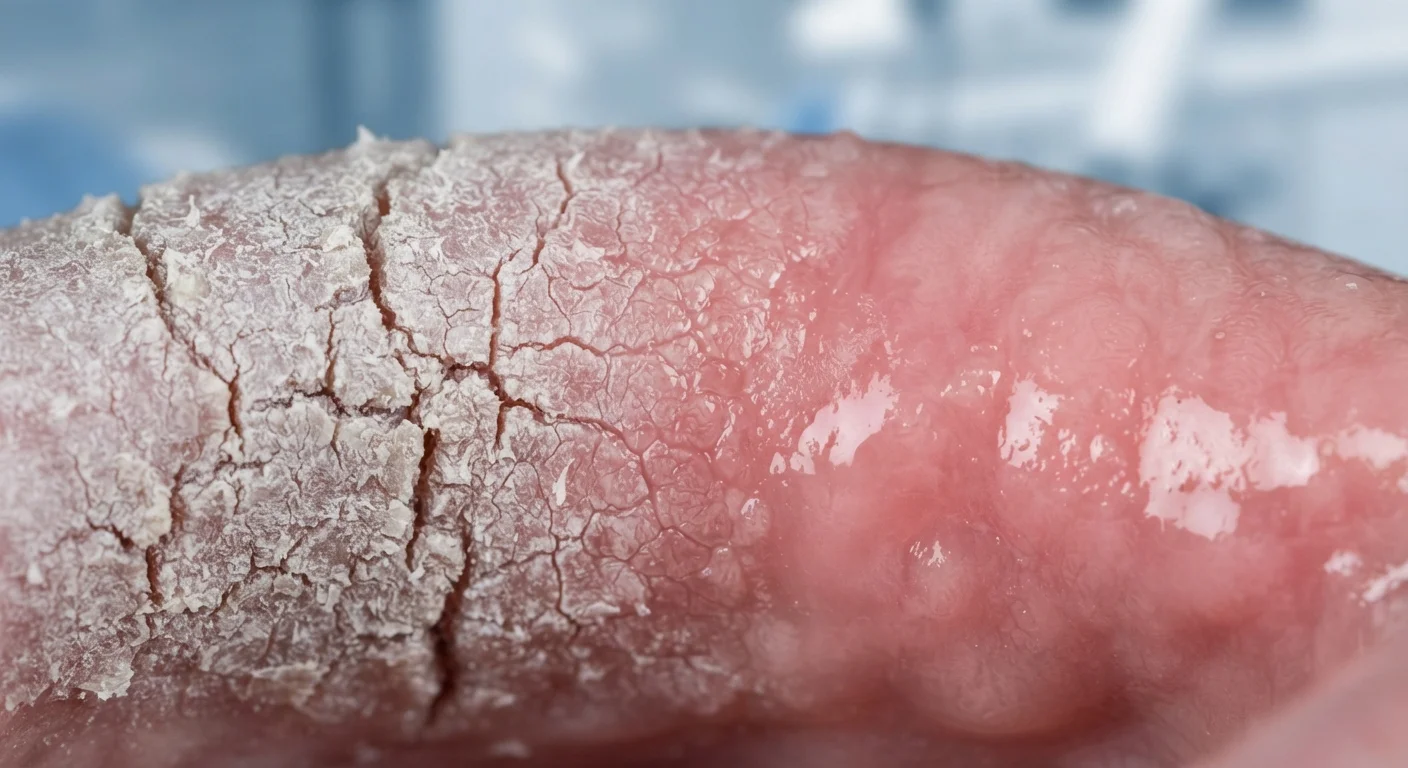
Dry mouth, clinically called xerostomia, is a condition in which the salivary glands do not produce enough saliva to keep the mouth adequately moist. Saliva is essential for neutralising acids, rinsing away food particles, and protecting tooth enamel. When saliva flow is chronically reduced, the oral environment shifts in ways that significantly increase the risk of tooth decay, gum problems, and soft tissue damage.
Xerostomia is distinct from salivary gland hypofunction — the former describes the subjective feeling of dryness, while the latter refers to measurably reduced salivary output. Both can co-occur but do not always.
What Saliva Actually Does in Your Mouth
Most people think of saliva simply as moisture. In reality, it is a complex fluid that performs several critical protective functions every hour of the day.
Saliva neutralises the acids produced when bacteria break down carbohydrates. It delivers calcium and phosphate — the same minerals that make up tooth enamel — directly to tooth surfaces, enabling a process called remineralisation that repairs micro-damage before it becomes a cavity. Saliva also contains antibacterial proteins that help control the bacterial population in the mouth, and it physically rinses food debris away from teeth and gums.
When you eat, saliva production spikes to aid digestion and protect teeth from food acids. Between meals, a baseline flow continues to maintain oral pH and tissue health. Disrupt that flow chronically, and every one of these protective mechanisms is compromised simultaneously.
Dry Mouth Is Not Just a Minor Nuisance
Because dryness develops gradually, many people adapt to the sensation and delay seeking care. However, the structural damage to teeth and soft tissue can accumulate silently over months or years. Treating it as a minor inconvenience rather than a clinical concern is one of the most common reasons the condition progresses further than it needs to.
How Dry Mouth Damages Teeth Over Time
Without adequate saliva, the oral environment becomes more acidic and stays that way. Acid is the direct cause of enamel erosion and tooth decay, so any condition that allows acid to linger raises cavity risk substantially.
The cavities associated with dry mouth tend to appear in specific, telling locations: the gum line, the roots of teeth, and the smooth surfaces between teeth. These are areas that saliva normally bathes continuously. Gum-line cavities — sometimes called cervical caries — are particularly concerning because root surfaces lack the dense enamel layer that protects the crowns of teeth, making them far more vulnerable to acid attack.
People with chronic dry mouth may also notice increased tooth sensitivity as enamel thins. The combination of rapid cavity progression and sensitivity can escalate quickly without intervention, making early identification essential.
400+
Medications known to cause dry mouth
The American Dental Association notes that more than 400 commonly used medications list dry mouth as a potential side effect.
~30%
Older adults affected by dry mouth
Studies suggest roughly 30% of adults over 65 experience significant dry mouth, largely due to polypharmacy (taking multiple medications).
3–5x
Increased cavity risk with reduced saliva
Research in dental literature consistently shows that individuals with significantly reduced salivary flow face markedly higher rates of tooth decay compared to those with normal flow.
Effects on Gums and Soft Tissue
Dry mouth does not only affect teeth. The gums and the soft mucosal lining of the mouth depend on saliva for lubrication, immune defence, and healing support. When saliva is insufficient, these tissues become more prone to irritation, inflammation, and infection.
Oral thrush — a fungal infection caused by Candida species — is significantly more common in people with dry mouth because saliva normally keeps fungal populations in check. Cracked corners of the mouth (angular cheilitis), a burning or raw tongue, and difficulties with chewing, swallowing, or speaking are all recognised consequences of reduced saliva flow.
Ill-fitting dentures also become a more serious problem in a dry mouth. Saliva provides the thin film that helps dentures stay in place and protects the gum tissue beneath them from friction sores.
Common Causes Worth Understanding
Identifying the cause of dry mouth is essential because the cause shapes the management approach. The most frequent contributor is medication: hundreds of prescription and over-the-counter drugs list dry mouth as a side effect, including antihistamines, antidepressants, diuretics, and antihypertensives. Reviewing medications with a doctor — without stopping any treatment independently — is a reasonable starting point for anyone experiencing persistent dryness.
Beyond medications, systemic conditions including Sjögren's syndrome, diabetes, and HIV/AIDS can impair salivary gland function. Radiation therapy to the head and neck region can permanently damage salivary glands. Dehydration, mouth breathing, tobacco use, and alcohol consumption also reduce effective saliva flow, though these factors are often modifiable.
Reviewing your daily oral health habits is a practical way to identify lifestyle factors that may be compounding the problem. Diet also plays a meaningful role — for a closer look at how food choices influence the oral environment, see our guide on diet and dental health.
Managing Dry Mouth: What the Evidence Supports
Management of dry mouth aims to relieve discomfort, protect teeth from accelerated decay, and, where possible, address the underlying cause. A dentist is the appropriate starting point for assessing the degree of damage already present and recommending preventive strategies tailored to the individual.
Commonly recommended approaches include using fluoride-containing products consistently to strengthen remaining enamel, staying well-hydrated throughout the day, and avoiding tobacco, alcohol, and caffeine — all of which worsen dryness. Breathing through the nose rather than the mouth, when possible, helps preserve moisture. Sugar-free chewing gum or lozenges containing xylitol can stimulate saliva production in people whose glands retain some function.
Prescription-strength fluoride treatments and saliva substitutes are clinical options a dentist or physician may consider depending on the severity and cause. No approach replaces professional evaluation — dry mouth is a medical and dental concern that deserves the same attention as any other chronic condition affecting health.
This article is for general informational purposes only and does not constitute medical or dental advice. Always consult a qualified dental or healthcare professional regarding your specific symptoms and circumstances.