

Key Takeaways
- Inlays repair the central chewing surface; onlays also cover one or more cusps of the tooth.
- Both are more durable than direct fillings and preserve more natural tooth structure than crowns.
- Common materials include porcelain, composite resin, and gold alloy, each with different trade-offs.
- Placement typically requires two dental visits: one to prepare the tooth and one to bond the restoration.
- With good oral hygiene, inlays and onlays can last 10 to 30 years depending on material and care.
Inlays and Onlays
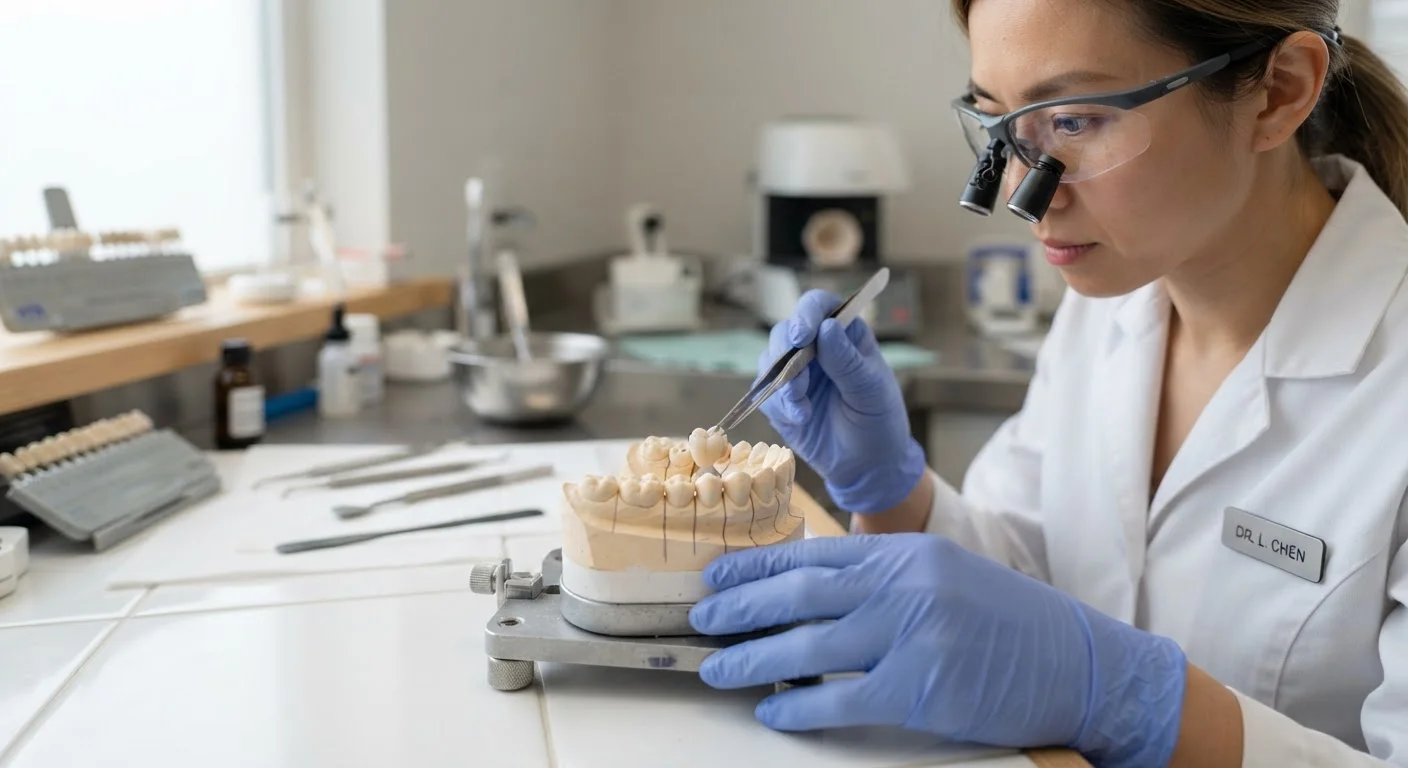
Inlays and onlays are custom-made dental restorations that repair a tooth damaged by decay or fracture when a standard filling is insufficient but a full crown isn't yet necessary. An inlay fills the space between the cusps (the raised points) of a tooth, while an onlay extends further to cover one or more of those cusps. Both are fabricated in a dental lab or by a milling machine and bonded securely into place.
Onlays are sometimes called "partial crowns" because they cover a larger portion of the chewing surface than an inlay without encasing the entire tooth the way a full crown does.
Where Inlays and Onlays Fit in the Restoration Spectrum
Tooth damage exists on a spectrum. At one end, a small cavity can be addressed with a routine filling. At the other, a severely weakened tooth may need a full crown to hold it together. But a meaningful number of teeth fall somewhere in the middle — too damaged for a simple filling to hold reliably, yet still strong enough that covering the entire tooth would mean removing healthy enamel unnecessarily.
That's the space inlays and onlays occupy. Rather than packing soft filling material directly into the prepared tooth, your dentist takes precise measurements and sends them to a dental lab (or uses in-office milling technology) to fabricate a rigid, custom-fitted restoration. This piece is then bonded permanently into or onto the damaged area.
To understand the distinction between the two: an inlay sits within the central chewing surface of a molar or premolar, fitting neatly between the raised points called cusps. An onlay does the same but extends over one or more of those cusps — hence the occasional nickname "partial crown." Both are more conservative than a full crown, which requires shaving down the entire visible tooth. For more on how these options compare, see when dentists recommend a crown versus a filling.
Inlays and Onlays Are Not for Every Tooth
These restorations work best on back teeth (molars and premolars) that experience significant chewing forces. Front teeth, which sustain different bite pressures, are less commonly treated with inlays or onlays. Your dentist will assess whether your specific tooth is a good candidate based on the extent of damage and the amount of healthy structure remaining.
Materials Used and Their Trade-Offs
Inlays and onlays are available in three main materials, and each has distinct characteristics:
- Porcelain (ceramic): Matches tooth color closely, making it the most aesthetically pleasing option for visible back teeth. Porcelain is strong and resistant to staining, though it can be slightly more brittle under very heavy biting forces than other options.
- Composite resin: Also tooth-colored and bonded directly to the tooth structure, composite onlays tend to be somewhat less durable than porcelain over the long term but can be a reasonable choice in certain clinical situations.
- Gold alloy: Gold has been used in dental restorations for well over a century, and for good reason — it is exceptionally durable, gentle on opposing teeth, and rarely chips. Its main drawback is appearance, which makes it less popular for patients prioritizing a natural look.
Your dentist will discuss which material makes the most sense based on the location of the tooth, the size of the restoration, your bite, and your personal preferences.
10–30+ years
Typical lifespan of a well-maintained inlay or onlay
Longevity depends on material choice, bite forces, and consistent oral hygiene; gold restorations tend toward the longer end of this range.
~2 visits
Typical appointments needed for placement
Most inlays and onlays require two visits — preparation and bonding — though CAD/CAM technology can reduce this to one in some practices.
Up to 75%
Tooth structure preserved compared to a full crown
Dental literature generally notes that inlays and onlays require significantly less tooth reduction than full-coverage crowns, conserving more natural enamel.
The Two-Visit Procedure Explained
Unlike a direct filling, which is completed in a single appointment, inlays and onlays typically require two visits.
Visit one — preparation and impression: The dentist numbs the area with local anesthesia, removes any decayed or damaged tooth material, and shapes the cavity to accept the restoration. A precise impression is then taken — either as a physical mold or a digital scan — and sent to a dental laboratory. A temporary filling protects the tooth in the meantime.
Visit two — bonding the restoration: When the custom piece returns (usually within one to two weeks), the temporary is removed, and the inlay or onlay is checked for fit, adjusted as needed, and bonded permanently using a dental adhesive. The dentist checks your bite carefully before you leave.
Some practices equipped with in-office CAD/CAM milling technology can design and fabricate the restoration in a single extended appointment, eliminating the temporary phase entirely — though not all dental offices offer this.
For a point of comparison on how a direct filling procedure works, see our walkthrough of what happens during a dental filling.
How to Care for an Inlay or Onlay
Once bonded, an inlay or onlay functions much like a natural tooth surface. Routine care is straightforward:
- Brush twice daily with fluoride toothpaste and floss once daily, paying attention to the margins where the restoration meets the tooth.
- Attend regular dental check-ups so your dentist can monitor the restoration's condition and catch any early signs of wear or marginal breakdown.
- If you grind or clench your teeth at night, mention this to your dentist — a night guard can protect restorations and natural teeth alike from excessive force.
- Avoid habitually chewing very hard objects, such as ice, which can stress any restoration over time.
With consistent care, many inlays and onlays remain functional for decades. If one ever feels loose, causes sensitivity, or is damaged, contacting your dentist promptly helps prevent further harm to the underlying tooth.
This article is for general informational purposes only and does not constitute dental or medical advice. Always consult a qualified dental professional for evaluation and guidance specific to your oral health needs.