

Key Takeaways
- Tooth discolouration has two distinct types — surface stains and internal discolouration — and they respond very differently to whitening.
- Professional whitening treatments work on natural enamel only; crowns, veneers, and bonding do not respond to bleaching agents.
- Intrinsic stains caused by medication, trauma, or developmental factors often require cosmetic restorations rather than whitening.
- Over-the-counter whitening products contain lower concentrations of active ingredients than professional treatments.
- Results vary significantly between individuals; consulting a dentist before whitening helps set realistic expectations.
Why Teeth Change Colour: The Two-Category Distinction
Tooth colour isn't a single, uniform phenomenon — and understanding that distinction matters before choosing any whitening approach. Dental professionals classify discolouration into two broad categories: extrinsic (surface) staining and intrinsic (internal) discolouration.
Extrinsic stains accumulate on or just below the outer enamel surface. Common culprits include coffee, tea, red wine, tobacco, and certain dark-pigmented foods. These stains sit in the pellicle — the thin protein film coating the tooth — and are generally the most responsive to whitening treatments. For a closer look at how everyday dietary choices affect enamel over time, see our article on foods that protect teeth and those that quietly damage them.
Intrinsic discolouration originates within the tooth's inner structure, the dentin. This can result from tetracycline antibiotic use during tooth development, excessive fluoride exposure during childhood (dental fluorosis), tooth trauma causing internal bleeding, or simply the natural aging process in which dentin gradually darkens and enamel thins. These changes are far less responsive — and in some cases entirely unresponsive — to standard bleaching treatments.
2 types
Categories of tooth discolouration
Dental professionals distinguish between extrinsic (surface) and intrinsic (internal) discolouration, each requiring different treatment approaches.
~3–5 shades
Typical whitening improvement range
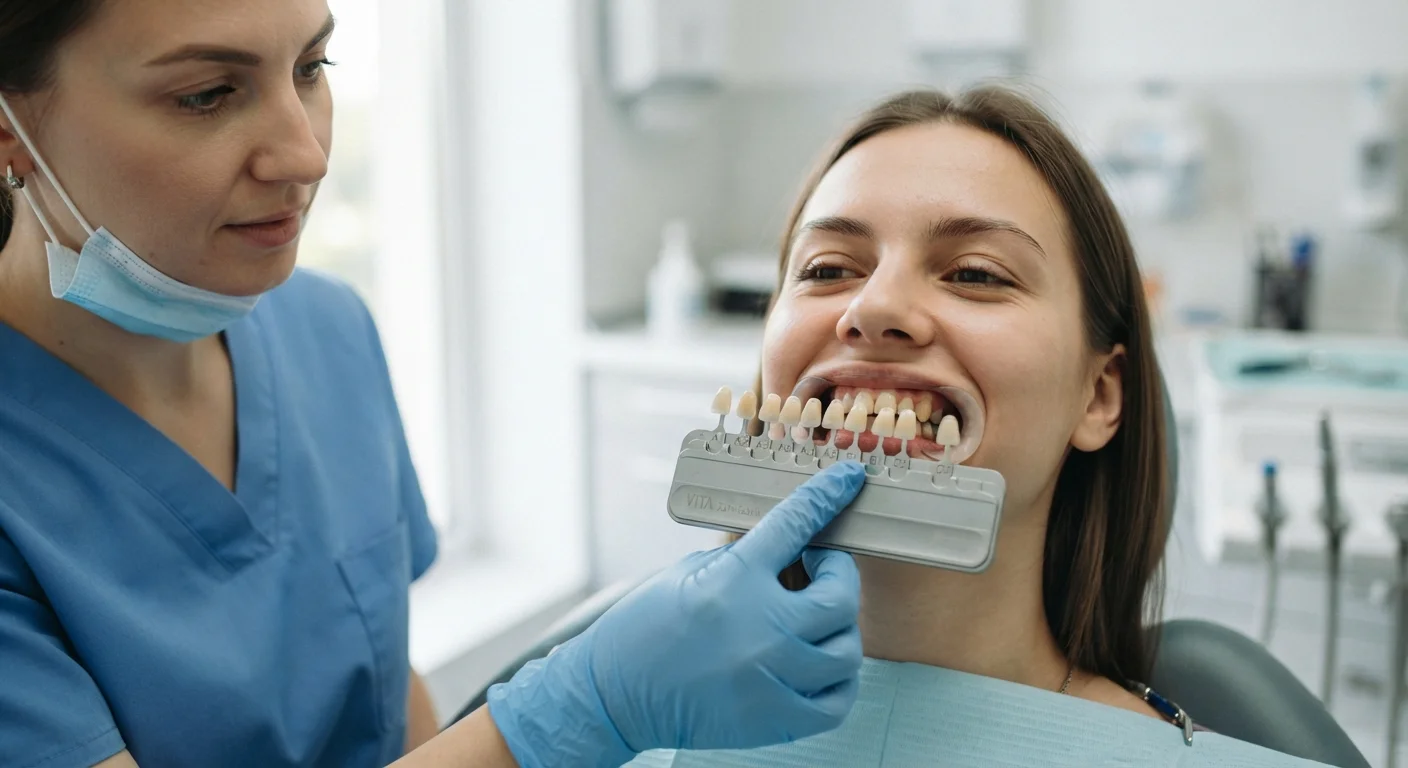
Professional in-office whitening commonly lightens teeth by several shade guide steps, though individual outcomes vary based on discolouration type and baseline shade.
What Whitening Treatments Actually Do
Most professional and over-the-counter whitening products rely on hydrogen peroxide or its precursor carbamide peroxide as the active bleaching agent. These compounds penetrate enamel and break apart the chemical bonds in pigment molecules, reducing the intensity of staining within the tooth structure.
Professional in-office treatments typically use higher peroxide concentrations — applied under controlled conditions by a dental professional — and may be combined with a light or heat source. Take-home trays provided by a dentist use lower concentrations over a longer application period. Over-the-counter strips and gels sit at the lower end of the concentration range, which partly explains why their results are more modest and slower to appear.
A critical point that is often overlooked: whitening agents only affect natural tooth enamel and dentin. Dental restorations — including crowns, veneers, composite bonding, and porcelain fillings — are entirely unaffected by bleaching. If a visible tooth has a crown or large bonded restoration, whitening the surrounding natural teeth may actually create a noticeable colour mismatch. Always disclose any restorations to your dentist before beginning treatment.
Restorations Will Not Whiten With Your Teeth
Crowns, veneers, composite bonding, and tooth-coloured fillings are made from materials that do not respond to peroxide bleaching agents. If you have visible restorations on front teeth, whitening the surrounding natural teeth may create a noticeable colour mismatch. Always inform your dentist about any existing dental work before beginning a whitening regimen so they can advise on the best approach for a consistent result.
Common Myths Corrected
Misconceptions about whitening are widespread — and some can lead people toward ineffective or even damaging approaches. The following myth-and-fact pairs address the questions dental professionals most commonly encounter. For an extended look at popular whitening myths, including charcoal pastes and oil pulling, see our companion article on common myths about teeth whitening that dentists regularly encounter.
Myth
Whitening treatments work on all types of tooth staining, regardless of the cause.
Fact
Whitening is effective primarily on extrinsic (surface) staining. Intrinsic discolouration from medication, trauma, or development often does not respond to bleaching.
The chemistry of peroxide-based whitening is well-suited to breaking apart organic pigment molecules lodged in enamel. However, structural discolouration — where the dentin itself has changed colour due to internal causes — is a different problem. The bleaching agent may penetrate the tooth but cannot reverse the underlying structural change. A dentist can assess the type and likely cause of discolouration before recommending any treatment path.
Myth
Whitening toothpastes work the same way as peroxide bleaching treatments.
Fact
Most whitening toothpastes remove surface stains through mild abrasives or enzymes, not bleaching chemistry. They do not change the intrinsic colour of teeth.
Some whitening toothpastes contain very low concentrations of hydrogen peroxide, but the contact time during brushing is too short for meaningful bleaching to occur. Their primary benefit is mechanical removal of pellicle staining — a useful maintenance step after professional whitening, but not a standalone whitening treatment. Using highly abrasive whitening toothpastes too frequently can also contribute to enamel wear over time.
Myth
Once you whiten your teeth, the results are permanent.
Fact
Whitening results are not permanent. Teeth gradually restain with continued exposure to pigmented foods, beverages, and tobacco, typically requiring maintenance treatments.
How long whitening lasts depends on individual habits, diet, and oral hygiene. People who regularly consume coffee, tea, or red wine, or who smoke, tend to see faster restaining. Most patients benefit from periodic touch-up treatments — either with professional trays or dentist-approved home products — to maintain results. Good oral hygiene and limiting staining foods between treatments can meaningfully extend the duration of whitening effects.
Myth
Whitening treatments damage tooth enamel if used as directed.
Fact
Evidence supports that professionally supervised whitening, used as directed, does not cause clinically significant enamel damage in most patients.
Temporary tooth sensitivity and mild gum irritation are the most commonly reported side effects of whitening treatments, and these typically resolve within a few days of completing treatment. Research published in dental literature has not demonstrated meaningful enamel mineral loss from peroxide bleaching at recommended concentrations. However, overuse — applying products more frequently or for longer than instructed — is associated with greater sensitivity and is not advisable. Patients with pre-existing enamel erosion or exposed root surfaces should consult their dentist before proceeding.
Myth
Natural remedies like activated charcoal or baking soda are safe, effective whitening alternatives.
Fact
These substances can remove surface staining through abrasion but carry a risk of enamel erosion with repeated use, and neither has been shown to produce reliable bleaching results.
Activated charcoal has become a popular ingredient in DIY dental products, but its fine abrasive particles are not selective — they can wear enamel as well as staining. Professional dental associations have raised concerns about the lack of safety and efficacy data for charcoal-based dental products. Baking soda is a milder abrasive and has some evidence supporting its stain-removal effect, but like charcoal, it does not bleach dentin. It can be used occasionally as part of a normal routine, but should not replace fluoride toothpaste as the primary dentifrice.
When Whitening Won't Work — and What Might
Some discolouration simply lies beyond the reach of bleaching chemistry. Severe tetracycline staining, significant dental fluorosis banding, and teeth darkened by pulp necrosis (a non-vital tooth) typically show little to no improvement with peroxide-based treatments.
In these cases, dental professionals may discuss cosmetic alternatives such as veneers — thin porcelain shells bonded to the front of the tooth — or full crowns, which cover the entire visible surface. For isolated dark teeth that result from trauma or root canal treatment, internal bleaching (a procedure performed within the tooth by a dentist) is sometimes an option. Each of these approaches has its own clinical indications, limitations, and cost considerations that a dentist is best placed to explain.
It's also worth noting that whitening is generally not recommended for children with primary (baby) teeth or adolescents whose permanent teeth are still developing. Parents with questions about their child's tooth colour should consult a pediatric dentist rather than applying adult whitening protocols. Questions about fluoride's role in children's dental development are addressed separately in our article on fluoride and children's teeth.
This article provides general dental health information and is not a substitute for professional dental advice. Always consult a qualified dental professional regarding your specific oral health needs before starting any whitening treatment.