

Key Takeaways
- A tooth abscess is a bacterial infection that will not resolve on its own without dental treatment.
- Symptoms include throbbing pain, swelling, fever, and sensitivity to pressure or temperature.
- Treatment typically involves draining the abscess, root canal therapy, or in some cases tooth extraction.
- Antibiotics may be prescribed but do not replace the need for dental intervention.
- Spreading infection can become a medical emergency — seek urgent care if swelling reaches the jaw, neck, or you have difficulty breathing.
Tooth Abscess
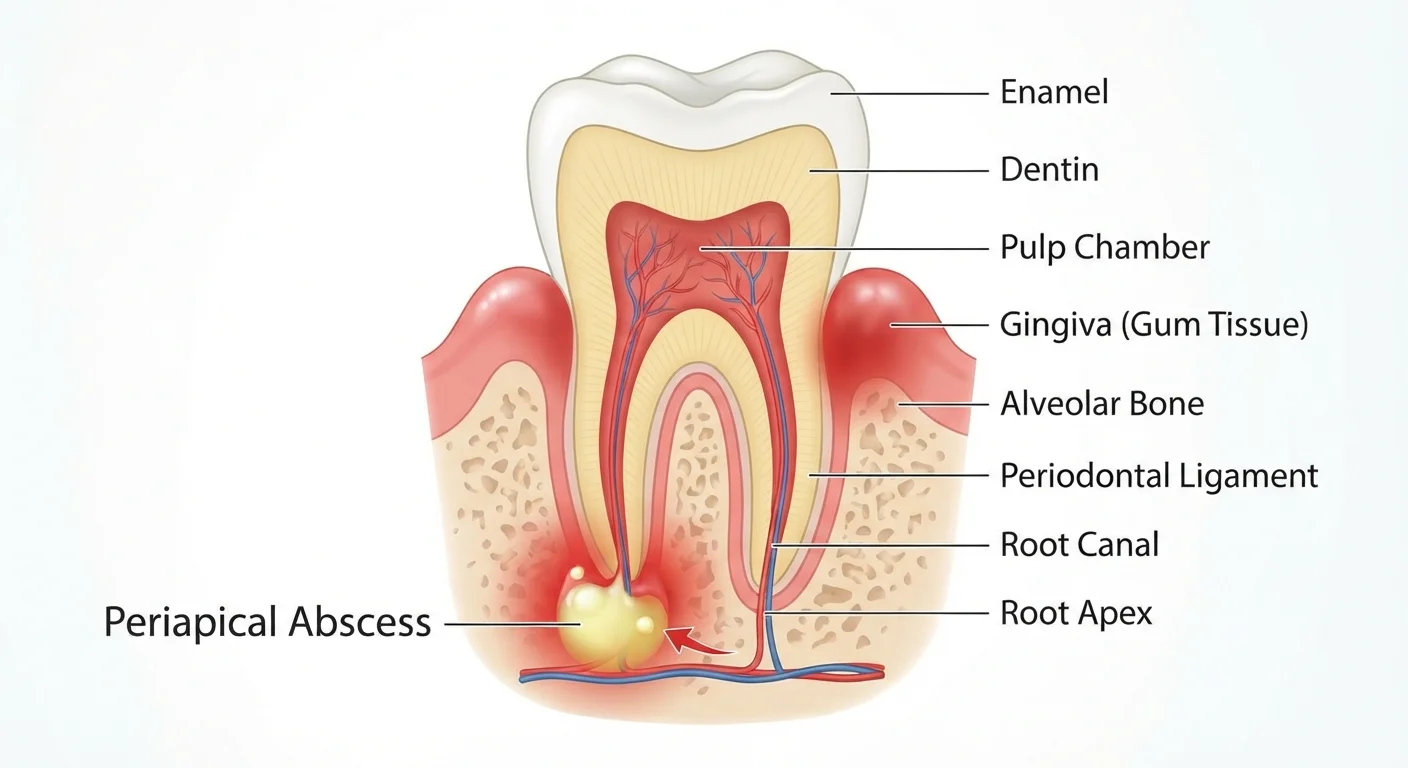
A tooth abscess is a pocket of pus caused by a bacterial infection inside or around a tooth. It typically develops when decay, a crack, or gum disease allows bacteria to reach the inner layers of the tooth or surrounding tissue. The infection can cause significant pain and, if left untreated, may spread beyond the mouth.
Abscesses are classified by location: a periapical abscess forms at the tip of the tooth root, while a periodontal abscess develops in the gum tissue beside the root. Both require professional dental treatment.
What Causes a Tooth Abscess
A tooth abscess develops when bacteria penetrate the protective layers of a tooth and multiply in the pulp — the soft inner tissue containing nerves and blood vessels — or in the gum tissue around the root. Several conditions create pathways for this to happen:
- Untreated tooth decay: Cavities that progress through the enamel and dentin eventually reach the pulp, where bacteria can thrive unchecked.
- Cracked or chipped teeth: Fractures provide bacteria with a direct entry point into the inner tooth structure.
- Gum disease: Advanced gum disease can create deep pockets alongside the tooth root that harbor infection. See our article on how gum disease progresses for more detail on that risk pathway.
- Dental trauma: A blow to the mouth can damage the pulp even without visible cracking.
It's worth noting that abscesses don't always cause obvious pain in early stages, which is one reason regular dental checkups matter — a dentist can identify infection before it escalates.
Recognising the Symptoms
The most common sign of a dental abscess is a persistent, throbbing toothache that may radiate toward the jaw, ear, or neck. Other symptoms include:
- Swelling in the cheek, face, or gum tissue
- Sensitivity to hot or cold temperatures — though this differs from the sharp, fleeting sensitivity described in our guide to tooth sensitivity triggers
- Pain when biting or pressing on the tooth
- A foul taste or smell in the mouth, sometimes indicating the abscess has begun to drain
- Fever and a general feeling of illness
- A visible pimple-like bump on the gum near the affected tooth
When to Seek Emergency Care
A dental abscess can become a medical emergency if infection spreads to the jaw, neck, or airway. Seek immediate emergency care — not just a dental office — if you experience rapidly spreading facial swelling, difficulty swallowing or opening your mouth, high fever, or any trouble breathing. These symptoms suggest the infection has moved beyond the tooth.
If you experience swelling spreading to your jaw, neck, or floor of the mouth, or if you have difficulty breathing or swallowing, seek emergency medical care immediately. These signs suggest infection may be spreading beyond the tooth.
How Dentists Treat a Tooth Abscess
Treatment always aims to eliminate the infection and, where possible, preserve the tooth. The approach a dentist recommends depends on the abscess location, severity, and the overall health of the tooth.
Draining the Abscess
A dentist will typically make a small incision to drain accumulated pus, which immediately reduces pressure and pain. This step addresses the acute infection but is followed by further treatment to remove its source.
Root Canal Therapy
When the tooth can be saved, a root canal is the most common definitive treatment for a periapical abscess. The dentist removes the infected pulp, cleans and shapes the root canals, and seals them to prevent reinfection. The tooth is then restored, usually with a crown. Unfamiliar dental terms? Our dental treatment glossary explains these procedures in plain language.
Tooth Extraction
If the tooth is too damaged to restore, extraction may be necessary to fully clear the infection. For guidance on what that process involves, see our family guide to tooth extractions.
Antibiotics
A dentist may prescribe antibiotics when the infection has spread or the patient is at higher medical risk. However, antibiotics are a supportive measure — they do not replace the need to remove the source of infection through one of the procedures above.
What to Do Before Your Dental Appointment
Over-the-counter pain relievers such as ibuprofen or acetaminophen may help manage discomfort while you wait to be seen — follow package directions and consult a pharmacist if you have any health conditions. Rinsing gently with warm salt water can also provide temporary relief. Do not place aspirin directly on the gum tissue, as this can cause a chemical burn to the surrounding tissue.
Prevention and When to Act
Most dental abscesses are preventable. The foundation is consistent oral hygiene — brushing with fluoride toothpaste twice daily, flossing once daily, and attending professional cleanings and checkups at intervals your dentist recommends. Treating cavities and cracked teeth early, before infection has a chance to develop, is equally important.
If you suspect an abscess — particularly if you have significant pain, visible swelling, or a fever — contact a dental office as soon as possible. Do not wait to see whether symptoms resolve. Pain that quiets after a few days may mean the pulp tissue has died, but the infection is still present and capable of spreading.
This article is for general informational purposes only and does not constitute medical or dental advice. If you have symptoms of a dental abscess or any oral health concern, consult a licensed dental professional for evaluation and personalized guidance.