

Key Takeaways
- Schedule your child's first dental visit by their first birthday or when the first tooth appears.
- Early visits focus on guidance for parents, not complex treatment.
- A pediatric dentist has specialized training in treating infants, toddlers, and young children.
- Preparing your child with positive, calm language reduces dental anxiety.
- Regular check-ups every six months help catch problems before they become serious.
First Dental Visit
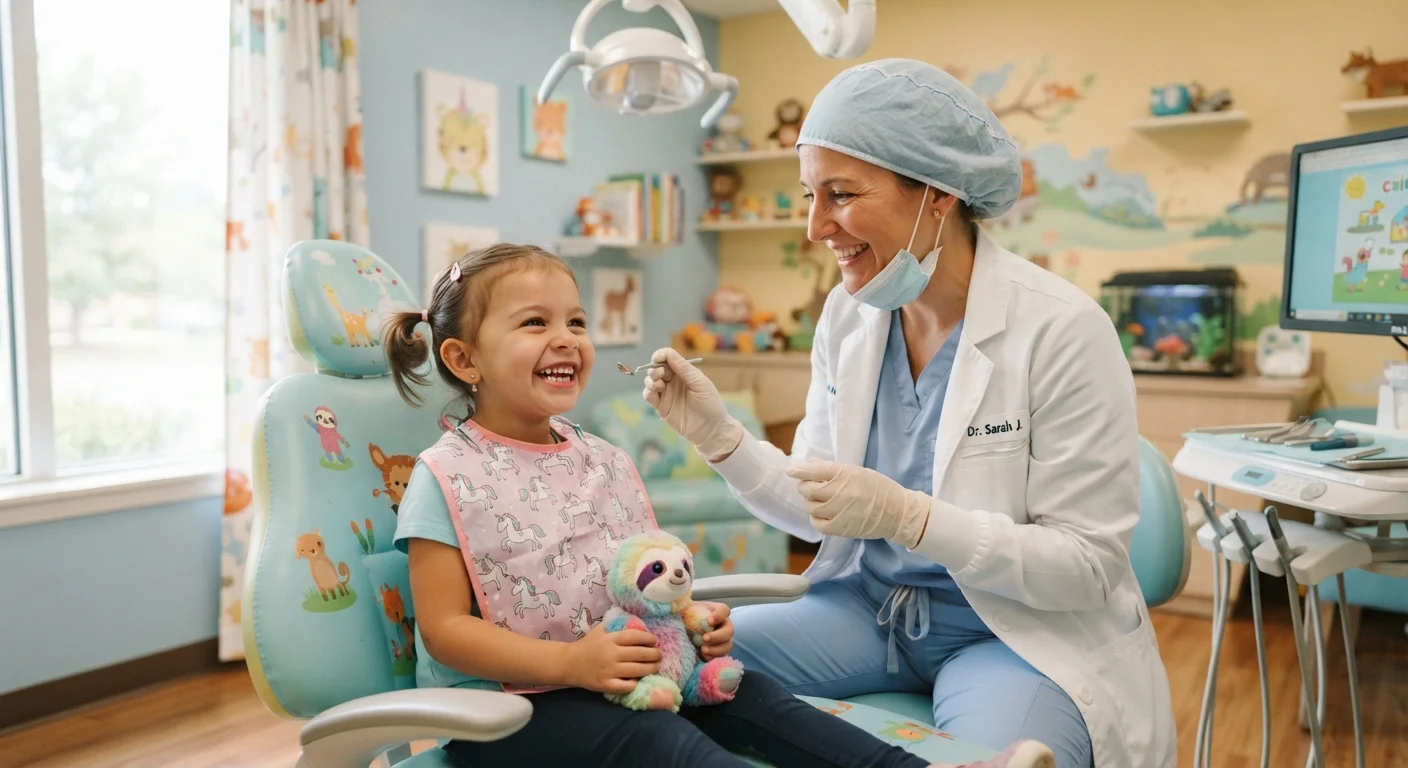
A child's first dental visit is an introductory appointment with a dentist — typically a pediatric dentist or a family dentist comfortable treating young children — that usually happens around the time the first tooth appears or by the child's first birthday. The visit is less about treatment and more about assessment, early education, and building comfort. The dentist checks for signs of early tooth decay, evaluates development, and guides parents on home care habits.
Professional organizations such as the American Academy of Pediatric Dentistry (AAPD) recommend that the first dental visit occur no later than 12 months of age, ideally within six months of the first tooth erupting.
When to Schedule the First Visit
The American Academy of Pediatric Dentistry recommends scheduling a child's first dental appointment by age one or within six months of the first tooth erupting. Many parents wait until their child is two or three, but that window misses an important period when early decay — sometimes called early childhood caries (ECC) — can already begin forming on baby teeth.
Baby teeth matter more than they might seem. They hold space for permanent teeth, support speech development, and allow children to chew properly. Protecting them from the start is an investment in your child's long-term oral health.
If your child is already past their first birthday and hasn't had a dental visit yet, don't worry — just schedule one as soon as you can. For families building a broader oral health routine, our parent's first-year oral care guide covers gum wiping, early brushing, and what to expect in those earliest months.
1 in 5
Children ages 5–11 with untreated cavities
According to the CDC, approximately 20% of children aged 5 to 11 have at least one untreated decayed tooth.
Age 1
Recommended age for first dental visit
The American Academy of Pediatric Dentistry recommends that children see a dentist no later than their first birthday.
~40%
Children with cavities before kindergarten
The AAPD estimates that dental caries (cavities) affect roughly 40% of children by the time they enter kindergarten in the US.
What Happens During the Visit
A first dental visit for a very young child is typically brief — often 30 to 45 minutes — and focuses on assessment and education rather than treatment. Here's what generally takes place:
- Oral examination: The dentist gently checks the gums, any erupted teeth, bite alignment, and jaw development for signs of concern.
- Decay screening: Even small spots of early decay can be identified and monitored before they progress.
- Parent guidance: The dentist will discuss proper brushing technique, fluoride use, diet habits (including bottle use and juice consumption), and pacifier or thumb-sucking considerations.
- Cleaning: A gentle cleaning or tooth polish may be performed depending on the child's age and cooperation level.
- Fluoride application: A fluoride varnish may be applied to strengthen developing enamel — a quick, painless step.
For very young infants, the exam is often done with the baby lying across the parent's lap and the dentist's lap face-to-face, which keeps the child calm and accessible.
How to Choose the Right Dentist
Look for a pediatric dentist (also called a pedodontist) or a general family dentist who regularly treats young children. Pediatric dentists complete two to three years of specialty training beyond dental school, covering child development, behavior management, and treating children with special health needs.
When evaluating a practice, consider:
- Whether the office environment feels child-friendly and calming
- Whether the staff are experienced at putting young patients at ease
- Convenient location and scheduling flexibility for working parents
- Whether the practice accepts your insurance or offers payment options
This early relationship matters. A dentist who is patient and communicative with both parent and child builds the trust that makes future visits easier. For a comparison with how adult dental care is structured, see our guide to what to expect at a regular dental check-up.
Ask About Fluoride Varnish
Fluoride varnish is a safe, quick application that strengthens developing enamel and is recommended for young children even before all baby teeth have erupted. Ask your child's dentist whether it's appropriate at each visit. It's typically applied in under a minute and is well-tolerated by most toddlers.
Preparing Your Child — and Yourself
Young children take emotional cues from their parents, so your attitude going into the visit matters. Speak about the appointment in a calm, matter-of-fact way. Avoid phrases like "it won't hurt" (which introduces the idea of pain) and instead focus on what will happen: "The dentist is going to count your teeth and make sure they're healthy."
A few practical tips:
- Read a children's book about visiting the dentist together in the days before.
- Do a pretend dental check-up at home using a toothbrush and a toy.
- Schedule the appointment at a time when your child is typically rested and fed.
- Bring a comfort object — a familiar toy or blanket — if that helps your child.
After the visit, keep your language positive regardless of how it went. If your child cried or was uncooperative, reassure them without making the experience seem dramatic. Most children settle into routine visits with consistency.
To stay organized about your child's ongoing dental milestones, our parent's dental check-up checklist can help you track questions to ask and habits to review between visits. And for a broader picture of oral health from infancy through the teen years, explore our age-by-age dental care roadmap.
This article is for informational purposes only and is not a substitute for professional dental or medical advice. Parents of infants and young children should consult a qualified dentist or pediatric dentist for guidance specific to their child's needs.