

Key Takeaways
- Nutritional needs remain high in older adulthood even as appetite and portion sizes decrease.
- Strategic shopping, storage, and cooking methods help preserve nutrients in smaller-batch meals.
- Batch cooking single-serve portions reduces waste and supports consistent daily nutrition.
- Protein, calcium, and vitamin D deserve special attention when cooking for one older adult.
- Simple planning strategies can prevent the nutritional shortcuts common in solo cooking.
What you will need
Why Solo Cooking Presents Unique Nutritional Challenges
Cooking for one feels different from cooking for a family — and those differences have real nutritional consequences. Motivation drops when there's no one to share a meal with. Standard recipes produce four to six servings, making scaling down a friction point. Ingredients bought in typical quantities may spoil before a single person can use them. The result, for many older adults, is a pattern of simplified eating: toast, crackers, cereal, or repeated convenience meals that are low in protein, vegetables, and essential micronutrients.
At the same time, nutritional requirements in older adulthood don't shrink proportionally with appetite or portion size. Protein needs may actually increase with age to help preserve muscle mass. Calcium, vitamin D, and vitamin B12 remain critical. Fiber needs stay constant. This gap — eating less while needing just as much nutritional quality — is the core challenge solo cooking for older adults presents.
Solo Cooking Doesn't Mean Lower Nutritional Needs
Older adults generally require the same — and in some cases higher — levels of key nutrients such as protein, calcium, and vitamin B12, even as calorie needs may decrease. Eating less food while still meeting nutrient targets requires deliberate food choices. If you have specific dietary concerns or health conditions, speak with a registered dietitian or your healthcare provider for personalized guidance.
Understanding that challenge is the first step. The practical steps below address it directly, using approaches that are realistic for a single-person household rather than scaled-down versions of family cooking advice.
What You'll Need Before You Start
Getting set up for effective solo cooking doesn't require a major kitchen overhaul. The right tools and a stocked pantry make the difference between a sustainable routine and one that collapses under inconvenience.
What you will need
Small saucepan (1–2 quart)
Right-sized for preparing single portions of grains, soups, or vegetables without excess.
Airtight glass storage containers
Store batch-cooked components safely in the refrigerator or freezer for use throughout the week.
Kitchen scale
Helps accurately portion protein and grains when halving or quartering standard recipes.
Steamer basket or microwave-safe steamer
Steaming preserves more water-soluble vitamins than boiling, making it ideal for vegetables.
Immersion blender
Quickly turns small batches of cooked vegetables and legumes into soups or purees.
Beyond tools, a pantry stocked with long-shelf-life, nutrient-dense staples forms the backbone of solo cooking. Canned fish, dried lentils, oats, nut butters, frozen vegetables, and canned tomatoes are examples of items that don't spoil quickly, require minimal preparation, and deliver meaningful nutrition. If budget is a consideration alongside cooking for one, our article on eating well on a fixed income explores practical strategies in detail.
Step-by-Step: Building a Nutritious Solo Cooking Routine
Audit your current solo eating pattern
Before changing your cooking habits, spend two or three days noting what you actually eat. Look honestly at whether meals include a protein source, vegetables or fruit, and a whole grain at most sittings. Identifying your specific gaps — not enough protein at lunch, skipping vegetables at dinner — lets you target improvements rather than overhaul everything at once. Our household nutrition checklist for aging adults can help structure this self-assessment.
Shop for nutrient density, not volume
When cooking for one, every item in your refrigerator needs to earn its place. Prioritize foods with high nutrient density: eggs, canned sardines or salmon, legumes, low-sodium canned tomatoes, frozen vegetables, plain Greek yogurt, and whole grains like oats or brown rice. These deliver substantial nutrition per dollar and per calorie — important when overall food intake is smaller. Buying smaller quantities more frequently, or using frozen vegetables freely, reduces spoilage and waste. See also our article on eating well on a fixed income for budget-conscious strategies.
Batch-cook protein and grains in single-serve portions
Cooking one portion at a time for every meal is inefficient and increases the temptation to skip meals. Instead, prepare two to four portions of a protein and a grain at one time, then refrigerate or freeze individual servings. Hard-boiled eggs, cooked lentils, baked salmon, roasted chicken thighs, and cooked brown rice all store well. This approach — sometimes called component cooking rather than full recipe cooking — makes assembling a nutritious plate fast on any given day.
Use cooking methods that preserve nutrients
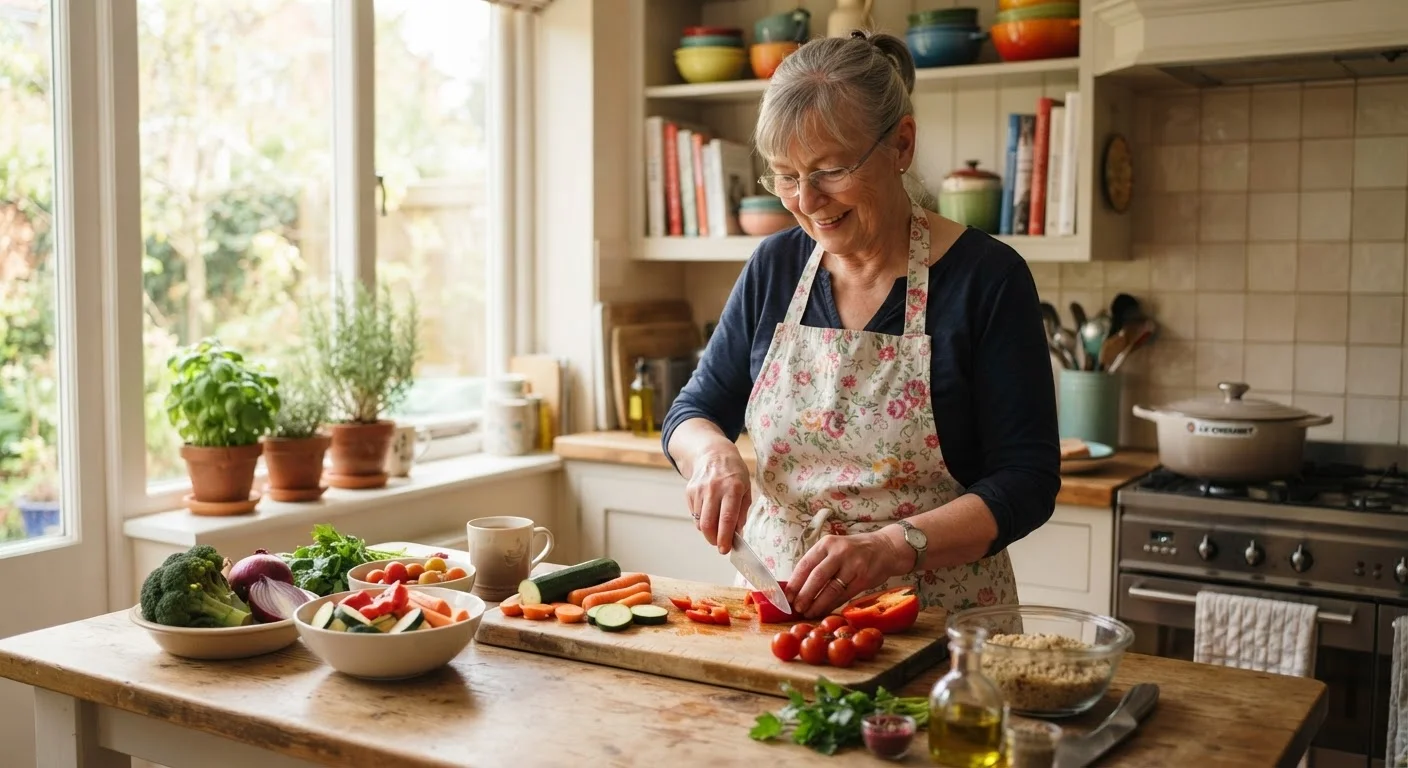
For vegetables, steaming, roasting, or microwaving preserves more water-soluble vitamins (particularly vitamin C and folate) than boiling in large amounts of water. If you do boil vegetables, use minimal water and consider consuming the cooking liquid in a soup or broth. For smaller portions, the microwave is an underused ally: it cooks quickly, uses little water, and retains nutrients effectively. Avoid overcooking vegetables regardless of method — brief cooking times protect both nutrients and texture.
Structure meals around three nutrient anchors
For older adults cooking for one, three nutrients warrant consistent attention at each meal: protein (to maintain muscle mass), calcium (bone health), and fiber (digestive and cardiovascular health). A practical rule of thumb is to build each plate around a palm-sized protein source, a cup or more of vegetables or fruit, and a small serving of whole grain or legume. This structure doesn't require recipes — it's an assembly approach that works with whatever you have on hand.
Plan a weekly simple meal map
A loose weekly plan — not a rigid schedule — reduces decision fatigue and prevents the habit of defaulting to low-nutrition convenience foods. Plan for five to six main meals per week, leaving room for leftovers or flexible evenings. Keep it simple: two or three different protein choices, two grain options, and a rotation of vegetables. This is a different scale from family meal planning, but the underlying logic is the same. For contrast with household-scale approaches, see our family meal planning hub.
Think in Building Blocks, Not Full Recipes
Rather than scaling down complex recipes, build meals from simple components: a protein (egg, canned fish, legumes), a cooked vegetable, and a whole grain. This approach takes less time, reduces waste, and makes it easier to hit your nutritional targets consistently.
The goal of these steps isn't perfection — it's building a low-friction routine that reliably delivers nutritious meals without requiring significant time or culinary skill. Once the habits are in place, cooking for one becomes less of a chore and more of a reliable structure supporting your health.
Watch for Nutritional Shortcuts Over Time
When cooking feels like too much effort, it's easy to default to crackers, toast, or processed convenience foods repeatedly. Over time, this pattern can lead to gaps in protein, fiber, and micronutrients. If fatigue or low appetite is making cooking consistently difficult, this is worth raising with a healthcare provider. Our guide on meal planning for adults with changing appetites covers practical approaches for this situation.
Staying on Track: Troubleshooting Common Solo Cooking Pitfalls
Even with good intentions, certain patterns tend to derail solo cooking nutrition over time. Recognizing them early helps prevent nutritional drift.
- Recipe fatigue: Eating the same two or three meals repeatedly leads to boredom and eventually abandonment of cooking altogether. Rotate your protein and vegetable choices weekly, even slightly.
- Portion distortion: Without the social cues of eating with others, it's easy to undereat. Use a consistent plate or bowl size to anchor your portions visually.
- Skipping meals: Low appetite is common in older adults but skipping meals makes it harder to meet daily nutritional targets. Small, frequent eating occasions can substitute for three full meals when appetite is limited.
- Over-reliance on supplements: Supplements may fill specific gaps but don't replicate the full nutritional profile of whole foods, including fiber, phytonutrients, and protein. Whole food sources should remain the foundation.
For a broader look at how appetite changes with age and how to plan around it, our article on meal planning for adults with changing appetites offers complementary guidance.
This article is for general informational purposes only and is not a substitute for personalized medical or dietary advice. Please consult a qualified healthcare provider or registered dietitian for guidance specific to your health needs.