

Key Takeaways
- Thirst sensation naturally diminishes with age, making it an unreliable hydration guide for older adults.
- Dehydration in seniors can impair kidney function, cognition, and increase fall risk.
- Older adults should drink fluids consistently throughout the day rather than waiting to feel thirsty.
- Certain medications and health conditions common in seniors can worsen fluid imbalance.
- Caregivers and family members play an important role in monitoring an older adult's fluid intake.
Age-Related Thirst Impairment
As people age, the body's ability to detect and signal low fluid levels becomes less accurate. The sensation of thirst — which normally prompts drinking before dehydration sets in — weakens over time, meaning older adults may not feel thirsty even when their bodies genuinely need water. This creates a gap between actual hydration needs and the drive to drink.
Research suggests this blunting involves reduced sensitivity of osmoreceptors in the hypothalamus, which monitor blood concentration and normally trigger thirst when fluid levels drop.
Why Thirst Is No Longer a Reliable Guide After 60
In younger adults, thirst works as a fairly dependable early-warning system. As blood becomes more concentrated due to fluid loss, specialized receptors in the brain fire a signal that registers as the urge to drink — typically before any real harm is done. In older adults, this mechanism becomes significantly less responsive.
Studies have found that when older and younger adults are experimentally deprived of water for the same duration, older participants report substantially less thirst despite having comparable or greater degrees of dehydration. This blunting is not a behavioral quirk; it reflects genuine physiological change in how the aging brain monitors fluid status.
The practical consequence is straightforward but serious: an older adult can be meaningfully dehydrated and feel no particular urge to drink. Waiting for thirst to direct hydration behavior is therefore an unreliable strategy in this population. Scheduled, consistent fluid intake — regardless of thirst — becomes the safer approach.
Thirst Blunting Is Normal, Not a Disease
Reduced thirst sensitivity in older adults is a normal physiological change, not a medical condition requiring treatment. It does not mean something is wrong — it simply means that the usual internal signal for drinking can no longer be relied upon as a primary guide. Awareness of this change is what allows families and individuals to compensate effectively.
The Real Consequences of Chronic Low-Level Dehydration
Dehydration in older adults is not simply a matter of feeling dry-mouthed. Even mild, ongoing fluid deficits carry measurable health consequences across multiple organ systems.
- Kidney function: The kidneys rely on adequate fluid flow to filter waste products. Chronic low fluid intake strains the kidneys and is associated with a higher risk of urinary tract infections and kidney stones.
- Cognitive performance: Research has linked even mild dehydration to reduced concentration, slower reaction times, and increased confusion in older adults — symptoms that can easily be misattributed to other causes.
- Fall risk: Dehydration can contribute to orthostatic hypotension (a drop in blood pressure when standing), which increases dizziness and the likelihood of falls — a major concern for older populations.
- Constipation: Inadequate fluid intake is a leading dietary contributor to constipation, a problem that disproportionately affects older adults.
For families monitoring an older relative's overall wellbeing, hydration belongs on the same checklist as nutrition. See our guide to signs an older family member may not be eating enough for a broader picture of nutritional warning signs.
Up to 40%
Older adults estimated to be chronically underhydrated
Estimates from geriatric nutrition literature suggest a substantial proportion of community-dwelling older adults consume less fluid than recommended on a daily basis.
~10%
Reduction in total body water with aging
The proportion of body weight composed of water typically decreases by roughly 10 percentage points between young adulthood and older age, reducing fluid reserve.
17–28%
Of hospital admissions in older adults linked to dehydration
Research published in geriatric medicine journals has identified dehydration as a contributing factor in a significant share of preventable hospital admissions among seniors.
Factors That Compound the Risk in Older Adults
Reduced thirst sensitivity is not the only hydration challenge that comes with age. Several interconnected factors raise the stakes further.
Reduced total body water: The proportion of the body composed of water decreases with age, partly because lean muscle mass — which holds water — tends to decline. This means older adults have less fluid reserve to draw on when intake dips.
Kidney efficiency: Aging kidneys become less efficient at concentrating urine, meaning the body loses more fluid than it needs to in the process of waste excretion.
Medications: Diuretics, certain blood pressure medications, and laxatives — all common in older adults — can increase fluid losses. Anyone on these medications should discuss hydration needs with their prescriber.
Mobility and access: For those with limited mobility, repeatedly getting up for water throughout the day may be inconvenient or uncomfortable, creating a practical barrier to adequate intake.
Cognitive changes: Older adults experiencing early memory or attention difficulties may simply forget to drink regularly, particularly if they live alone.
These compounding factors explain why general hydration guidance, such as that found in our overview of daily fluid needs across age groups, needs to be adapted specifically for older adults rather than applied uniformly.
Practical Strategies to Support Consistent Fluid Intake
Because waiting for thirst is unreliable, building hydration habits around routine and environment is more effective for older adults.
Start the Day With a Glass of Water
Encouraging an older adult to drink a full glass of water first thing in the morning — before coffee or breakfast — is a simple, low-effort way to start each day with a meaningful fluid contribution. Overnight is one of the longest periods without fluid intake, so morning hydration helps close that gap before the day's activity begins.
Schedule fluid intake: Pairing a glass of water or other fluid with each meal and snack creates a reliable structure — most older adults eat at regular times, making this an easy anchor for hydration habits.
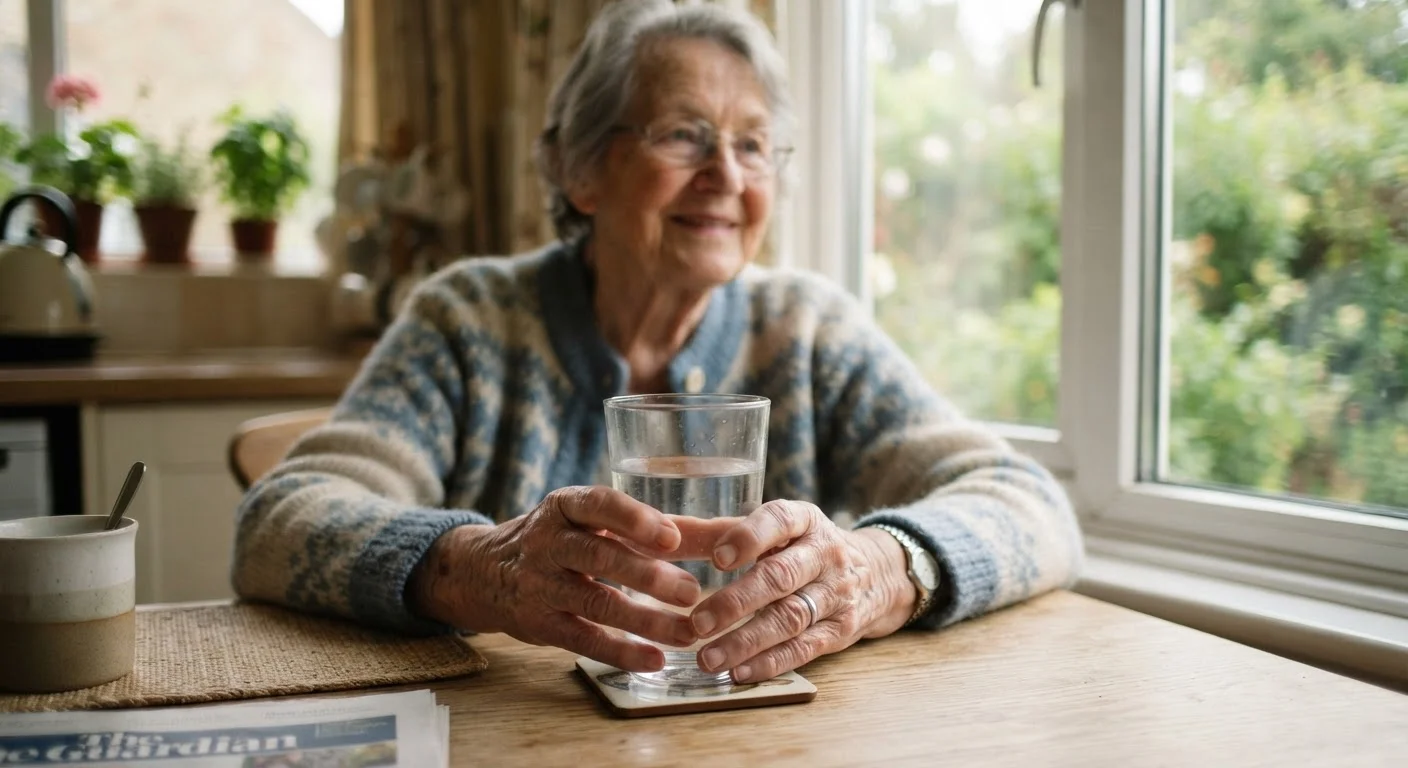
Use visual reminders: Keeping a filled water bottle or glass in a visible, accessible spot (on the kitchen table, beside a favorite chair) acts as a passive prompt to drink without relying on internal cues.
Incorporate water-rich foods: Soups, broths, yogurt, and fruits and vegetables with high water content — such as cucumber, melon, and tomatoes — all contribute to overall fluid intake. This is particularly useful for older adults who struggle with drinking large volumes of liquid at once.
Track urine color: Pale yellow urine generally indicates adequate hydration; dark yellow or amber suggests more fluid is needed. This is a practical, accessible self-check that does not require any equipment.
Families and caregivers can also play an active role. Routinely offering fluids during visits, checking in on drinking habits, and using a household nutrition checklist to assess an older relative's overall intake are all meaningful contributions.
This article is for general informational purposes only and does not constitute medical advice. Always consult a qualified healthcare professional regarding any health concerns, symptoms, or decisions about an older adult's care.