
Over-the-Counter vs. Prescription Medications: Understanding the Core Differences

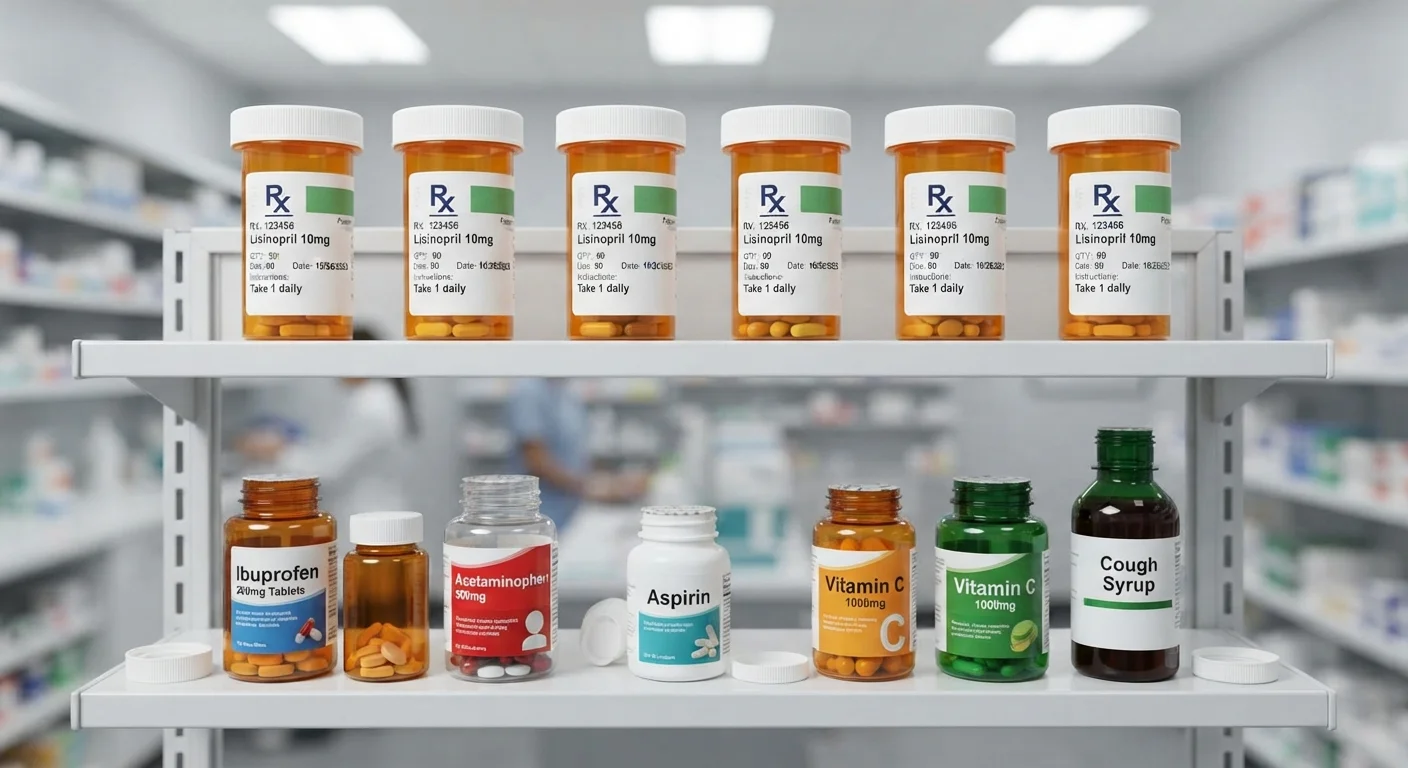
Key Takeaways
- OTC drugs are FDA-reviewed as safe for unsupervised use; prescriptions require a licensed clinician's authorization.
- Prescription medications generally carry higher risk profiles and require professional monitoring.
- Some drugs start as prescription-only and later receive OTC status after extensive safety review.
- OTC does not mean interaction-free — these products can still affect prescription medications.
- Always consult a pharmacist or healthcare provider when unsure which category of medication is appropriate.
Option A
Over-the-Counter (OTC) Medications
The self-care option available without a clinician's authorization.
Best for: Managing minor, self-diagnosable conditions like headaches, colds, heartburn, and allergies without a provider visit.
Option B
Prescription Medications
Clinician-authorized drugs for conditions requiring professional oversight.
Best for: Treating diagnosed conditions that carry greater risk, require monitoring, or involve complex dosing decisions.
If you're managing a minor, clearly recognizable symptom like a mild headache or seasonal allergy
Over-the-Counter (OTC) Medications
OTC drugs are specifically approved for conditions consumers can self-identify and treat safely without a clinician's involvement.
If you have a diagnosed condition, chronic illness, or symptoms that don't improve with self-care
Prescription Medications
Prescription drugs offer stronger or more targeted treatment and the benefit of professional monitoring for safety and effectiveness.
If you're managing multiple medications for different family members
Over-the-Counter (OTC) Medications
For routine, low-risk needs, OTC products reduce the burden of provider visits, though checking for interactions with existing prescriptions is essential.
If you're pregnant, caring for a young child, or managing a chronic condition
Prescription Medications
Special populations face higher risks from both OTC and prescription drugs; professional guidance is critical before using any medication in these groups.
What Makes a Drug OTC or Prescription?
The classification of a medication as over-the-counter (OTC) or prescription-only is not arbitrary — it reflects a formal regulatory determination made by the U.S. Food and Drug Administration (FDA). The central question the FDA asks is: can a person safely select and use this drug without the supervision of a licensed healthcare provider?
For OTC drugs, the answer is yes. These medications must meet criteria showing that the condition they treat is self-diagnosable, that the benefits clearly outweigh risks when used as directed, and that labeling alone can adequately guide safe use. Common examples include acetaminophen for pain relief, loratadine for allergies, and antacids for heartburn.
Prescription medications, by contrast, require a licensed prescriber — a physician, nurse practitioner, or physician assistant — to authorize each use. This is because their risk profiles, complexity of dosing, or potential for serious side effects make unsupervised use unsafe for the general public. Antibiotics, blood pressure medications, and controlled substances fall into this category.
To explore what the OTC designation means in more depth, see our OTC medications explained guide.
| Criterion | OTC Medications | Prescription Medications |
|---|---|---|
| Authorization required | None — available without a prescription | Licensed prescriber required |
| Where dispensed | Pharmacy shelves, grocery stores, online | Licensed pharmacy only |
| FDA safety standard | Safe for unsupervised, self-directed use | Requires professional oversight for safe use |
| Label design | Standardized consumer-facing directions | Patient-specific, clinician and pharmacist guided |
| Insurance coverage | Typically not covered by insurance | Often partially or fully covered |
| Monitoring requirement | Self-monitored per label instructions | Clinician-monitored for effects and dosing |
| Risk profile | Lower — wide safety margins for general public | Higher — potential for serious side effects |
Key Differences That Matter for Families
Beyond the prescription pad, several practical differences shape how each category affects daily family life.
Access and Cost
OTC products are available directly from pharmacy shelves, grocery stores, and online retailers without any authorization step. Prescription drugs must be dispensed by a licensed pharmacist following a valid prescription, which adds both a time and cost layer — though insurance often covers a portion of prescription costs that OTC products typically do not.
Labeling and Guidance
OTC drug labels are designed to be self-sufficient. Federal regulations require them to include directions, warnings, active ingredients, and dosage information in plain language. Prescription labels, on the other hand, are tailored to the individual patient by the prescribing clinician and dispensing pharmacist, and they often come with additional counseling about monitoring or side effects.
Risk and Oversight
Prescription medications generally carry a higher potential for serious adverse effects, dependency, or drug interactions. That's why they require ongoing oversight — a prescriber monitors effectiveness and adjusts treatment as needed. OTC drugs are not risk-free, but their safety margins are wide enough for self-directed use when label instructions are followed carefully.
300,000+
OTC drug products marketed in the U.S.
The FDA estimates there are more than 300,000 marketed OTC drug products, reflecting the scale of self-care medication use across the country.
~80%
Adults who use OTC medicines as first response
According to the Consumer Healthcare Products Association, approximately 8 in 10 U.S. adults use OTC medicines as a first response to minor ailments.
Families should be aware that OTC does not mean harmless in combination with other drugs. Our article on OTC interactions with prescription drugs covers the most common combinations to watch.
When Drugs Switch Categories
One often-overlooked fact is that a drug's OTC or prescription status is not permanent. The FDA reviews evidence over time, and medications that once required a prescription can be reclassified as OTC if post-market data demonstrates a strong enough safety record. Familiar examples include certain antihistamines, proton pump inhibitors for heartburn, and low-dose hormonal contraceptives in some states.
This process — sometimes called a "Rx-to-OTC switch" — involves rigorous review of whether consumers can appropriately self-select and use the drug based on labeling alone. It's a meaningful signal of accumulated confidence in a drug's safety profile, not a relaxation of standards.
The reverse can also occur: if new safety data emerges about an OTC product, the FDA can require it to be pulled from shelves or restricted to prescription status. This bidirectional movement underscores why staying informed about the medications your family uses is important, even for products that seem routine.
For a broader look at prescription drug categories and what distinguishes standard prescriptions from more tightly controlled substances, see our piece on controlled substances vs. standard prescriptions.
This article is for general informational purposes only and does not constitute medical advice. Always consult a qualified healthcare professional or licensed pharmacist before making decisions about medications for yourself or your family.