

Key Takeaways
- DEXA scans measure bone mineral density and help detect osteoporosis before fractures occur.
- The U.S. Preventive Services Task Force recommends screening for women aged 65 and older.
- Younger postmenopausal women with risk factors may also qualify for earlier screening.
- Results are reported as T-scores and Z-scores, each serving a different diagnostic purpose.
- Men can also develop osteoporosis; screening guidelines for men are still evolving.
- Lifestyle factors like calcium intake and weight-bearing exercise directly influence bone density.
Bone Density Scan (DEXA)
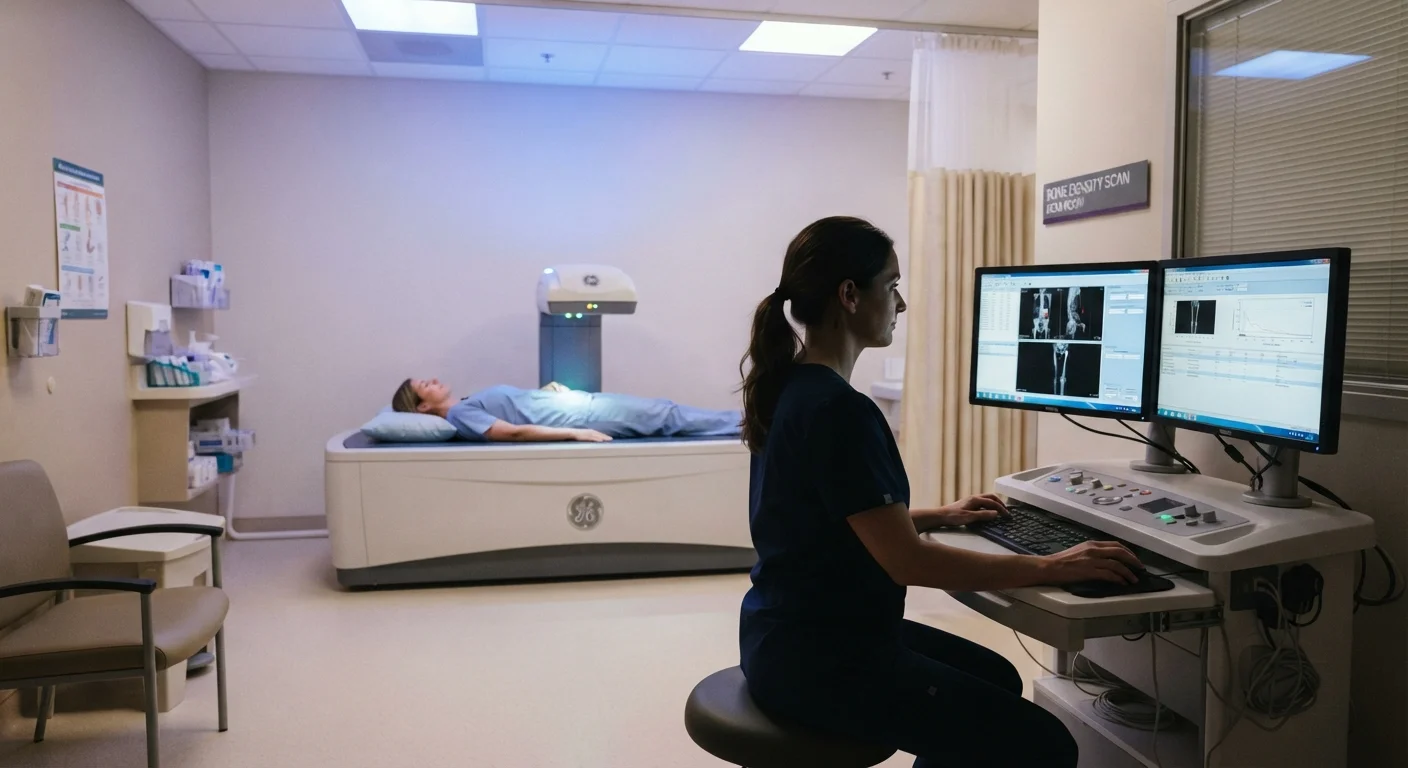
A bone density scan — most commonly performed using a technology called DEXA (dual-energy X-ray absorptiometry) — is a painless imaging test that measures the mineral content of your bones, particularly calcium. It helps clinicians determine how strong or fragile your bones are. Results are used to identify osteoporosis or its early-stage precursor, osteopenia, before a fracture occurs.
DEXA scans emit very low levels of ionizing radiation — far less than a standard chest X-ray — and typically focus on the lumbar spine and hip, the sites most prone to osteoporotic fractures.
Why Bone Density Screening Matters
Osteoporosis is often called a "silent disease" because bones lose density gradually, with no pain or outward symptoms, until a fracture occurs. By the time a wrist, hip, or spinal fracture happens, significant bone loss has usually already taken place. This is precisely why preventive scanning is valuable — it reveals a problem that has no visible warning signs.
A DEXA scan gives clinicians a concrete measurement of bone mineral density (BMD) and enables risk stratification long before a fracture becomes likely. Combined with other clinical information, it helps guide decisions about lifestyle changes, nutritional support, or medical treatment. For more on how these scans fit into the broader landscape of routine preventive care, see Women's Preventive Health Screenings.
10 million
Americans estimated to have osteoporosis
According to the National Osteoporosis Foundation, approximately 10 million Americans have osteoporosis and another 44 million have low bone density.
~50%
Lifetime fracture risk for women over 50
Research published by the National Institutes of Health estimates that roughly half of women over age 50 will experience an osteoporosis-related fracture in their lifetime.
10–30 min
Typical DEXA scan duration
A standard DEXA scan of the hip and lumbar spine is usually completed in under 30 minutes with no special preparation required.
Who Should Be Screened — and When
Screening recommendations are primarily evidence-based and tied to fracture risk, which rises sharply with age and hormonal changes.
- Women aged 65 and older: The USPSTF recommends routine bone density screening for all women in this group, regardless of risk factors.
- Postmenopausal women under 65: Screening may be appropriate when risk factors are present, including low body weight, smoking, early menopause (before age 45), prolonged corticosteroid use, rheumatoid arthritis, or a parent who experienced a hip fracture.
- Men aged 70 and older: While formal USPSTF guidance for men is limited, many clinical societies recommend individualized screening for older men, especially those with significant risk factors.
- Individuals on certain medications: Long-term use of corticosteroids, aromatase inhibitors, or anticonvulsants can accelerate bone loss and may warrant earlier screening at any age.
If you are uncertain whether you qualify, reviewing your risk profile with your provider is the best starting point. Our companion article on bone density and osteoporosis risk explores these factors in greater depth.
Bring a Risk Factor List to Your Appointment
Before your visit, write down any relevant personal or family history: previous fractures, early menopause, long-term medication use (especially corticosteroids), smoking history, and dietary habits. This information helps your provider assess whether and when bone density screening is appropriate for you.
How to Read Your Results: T-Scores and Z-Scores
DEXA results are expressed using two scoring systems, each serving a different purpose:
- T-score
- Compares your bone density to the average peak bone density of a healthy young adult. This is the primary score used to diagnose osteoporosis and osteopenia in postmenopausal women and men over 50.
- Z-score
- Compares your bone density to people of your same age, sex, and body size. A Z-score below -2.0 suggests bone loss greater than expected for your demographic, which may prompt investigation into secondary causes such as hormonal disorders or malabsorption conditions.
The World Health Organization defines the diagnostic thresholds for T-scores as follows:
| T-Score Range | Classification |
|---|---|
| -1.0 and above | Normal bone density |
| -1.0 to -2.5 | Osteopenia (low bone mass) |
| -2.5 or lower | Osteoporosis |
A score alone does not determine treatment. Providers also use fracture risk assessment tools — such as the FRAX calculator, which incorporates age, sex, weight, and other factors — to estimate 10-year fracture probability before recommending a course of action.
Supporting Bone Health Between Scans
A DEXA scan is a snapshot, not a verdict. Bone density responds to nutrition, physical activity, and certain medical interventions over time. Families can take meaningful steps at every life stage to build and preserve bone strength.
Nutrition: Adequate calcium and vitamin D intake is foundational throughout life — not just in older age. Children and teenagers build the majority of their peak bone mass, making early dietary habits especially impactful. For a detailed breakdown of how these nutrients work together, see our guide on calcium and vitamin D for bone health. Parents of younger children may also find value in our article on calcium and vitamin D in growing bones.
Exercise: Weight-bearing and resistance exercises — such as walking, jogging, and strength training — stimulate bone formation. Balance training also reduces fall risk, which is equally important in older adults.
Lifestyle factors: Smoking and excessive alcohol consumption are associated with lower bone density. Avoiding these reduces modifiable risk.
When a scan reveals osteoporosis or significant osteopenia, a provider may also discuss prescription medications that slow bone loss or promote bone formation. Any medication decisions should always be made in direct consultation with a qualified clinician.
This article is for general health information and educational purposes only. It does not constitute medical advice. Please consult a qualified healthcare provider for guidance specific to your health history, symptoms, or questions about screening and treatment.