

Key Takeaways
- Most newborn screens happen before hospital discharge, usually within the first 24–72 hours of life.
- The heel-prick blood test screens for more than 35 metabolic, hormonal, and genetic conditions.
- Hearing screening is painless and takes only minutes — it catches hearing loss in otherwise healthy-appearing babies.
- A pulse oximetry check screens for critical congenital heart defects using a small sensor on the skin.
- A positive screening result does not confirm a diagnosis — follow-up testing is always needed.
- Parents should keep records of all newborn screening results for their child's long-term health history.
Newborn Screening Tests
Newborn screening tests are a series of standardized medical checks performed on babies shortly after birth — typically within the first 24 to 72 hours. They look for rare but serious conditions that may not show visible symptoms yet but can cause significant health problems if left untreated. Early identification allows healthcare teams to begin treatment before complications develop.
In the United States, newborn screening programs are coordinated at the state level, guided by the federal Recommended Uniform Screening Panel (RUSP), which currently lists more than 35 core conditions and 26 secondary conditions for consideration.
Why the First Days Matter So Much
The hours and days immediately following birth are a critical window for detection. Many serious conditions — including metabolic disorders, hormone deficiencies, and hearing loss — produce no outward signs in a newborn, yet they can cause irreversible developmental harm if untreated. Identifying these conditions early, before symptoms appear, is exactly what makes newborn screening one of the most impactful preventive health tools available.
Newborn screening is a cornerstone of preventive health screening — the practice of identifying risk before illness progresses. For a family welcoming a new baby, understanding what each test involves helps reduce anxiety and supports informed decision-making.
Screening Panels Vary by State
While all US states follow federal RUSP guidance, the specific conditions included in each state's newborn screening panel can differ. Some states screen for additional conditions beyond the core federal list. Ask your OB, midwife, or hospital care team for a complete list of what is included in your state's program.
The Heel-Prick Blood Test (Metabolic Screen)
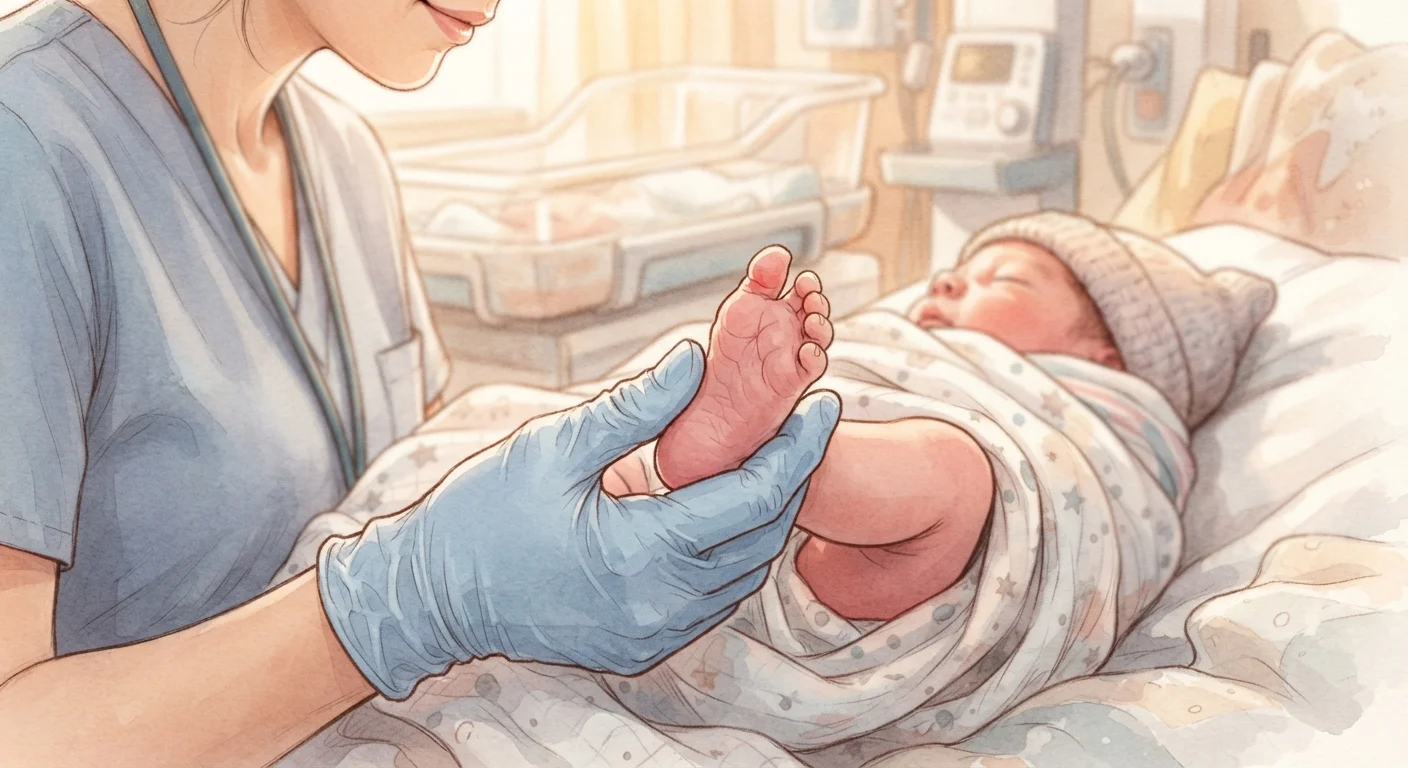
The most familiar newborn screening is the heel-prick test, also called the dried blood spot test or metabolic screen. A small blood sample is collected from the baby's heel and applied to a special filter paper card, which is then sent to a state laboratory for analysis.
This single test screens for a wide range of conditions, including:
- Phenylketonuria (PKU): An inherited inability to break down the amino acid phenylalanine, which can cause brain damage if dietary intervention is not started promptly.
- Congenital hypothyroidism: Insufficient thyroid hormone production that, if untreated, can impair brain development and growth.
- Sickle cell disease: An inherited red blood cell disorder that affects oxygen transport and increases infection risk.
- Cystic fibrosis: A genetic condition affecting the lungs and digestive system.
- Fatty acid oxidation disorders: Conditions that affect how the body converts fats to energy, which can cause serious metabolic crises.
The exact list of conditions screened varies somewhat by state, but all programs are guided by the federal Recommended Uniform Screening Panel (RUSP).
4 million+
US newborns screened annually
According to the Health Resources and Services Administration (HRSA), more than 4 million babies are screened through newborn screening programs in the US each year.
1 in 300
Newborns with a detectable condition
The American College of Medical Genetics estimates that approximately 1 in every 300 newborns has a condition identifiable through the core newborn screening panel.
1–3 in 1,000
Newborns born with hearing loss
The CDC reports that 1 to 3 per 1,000 babies are born with detectable hearing loss, making it one of the most common conditions identified through newborn screening.
Newborn Hearing Screening
Hearing loss is one of the most common conditions detected at birth, affecting approximately 1 to 3 in every 1,000 newborns in the US. Because babies cannot self-report what they hear, a standardized screening test is essential for early identification.
Two methods are commonly used:
- Otoacoustic Emissions (OAE): A small probe placed in the ear canal plays soft sounds and measures whether the inner ear responds correctly.
- Auditory Brainstem Response (ABR): Electrodes placed on the baby's head measure how the auditory nerve and brain respond to sounds.
Both tests are painless and can be completed while the baby sleeps. A "refer" result — meaning the test was not passed — does not confirm hearing loss; it means additional evaluation is needed. Research consistently shows that children identified early and enrolled in intervention programs before six months of age have significantly better language outcomes than those identified later.
Pulse Oximetry and the Physical Examination
Pulse oximetry screening uses a small sensor clipped painlessly to the baby's hand and foot to measure blood oxygen levels. It is designed to detect CCHDs — structural heart problems that reduce oxygen in the bloodstream. Many CCHDs, including conditions like hypoplastic left heart syndrome and transposition of the great arteries, may not be apparent on physical examination alone but can be life-threatening within days if unaddressed.
Beyond these targeted tests, every newborn receives a thorough physical examination conducted by a physician or midwife. This check assesses:
- Heart rate, breathing, and skin color
- Hip joint stability (screening for developmental dysplasia)
- Eye appearance (checking for cataracts or signs of eye disease)
- Reflexes and muscle tone
- Palate, limbs, spine, and genitalia
This examination may be repeated at the newborn's first outpatient well-child visit. Families can learn more about building a long-term screening routine by reviewing preparing your family for routine health screenings.
Ask Before You Leave the Hospital
Before discharge, ask your care team which screening tests have been completed and when you should expect results. Some results, like hearing screening, are typically available immediately; others, like the metabolic blood spot, may take several days. Knowing the timeline helps you follow up appropriately with your pediatrician.
Understanding Results and Next Steps
Receiving a notification about an abnormal or out-of-range newborn screening result can be alarming — but it is important to understand that screening tests are designed to be sensitive, meaning they flag potential concerns that require further investigation. A positive screen is not a diagnosis.
If a result requires follow-up, a specialist or state screening program coordinator will typically contact the family within days. Confirmatory testing, which may include a repeat blood test, genetic analysis, or imaging, will clarify whether a condition is truly present.
Parents are encouraged to:
- Keep a copy of all screening results in the child's personal health records.
- Ask the pediatrician what each result means and what follow-up, if any, is recommended.
- Attend all recommended follow-up appointments promptly, especially if further testing is advised.
Newborn screening represents one of the earliest — and most powerful — steps in a lifetime of preventive care. It sets the stage for the broader health journey that families will navigate together, from early childhood checkups to adult preventive visits.
This article is for general informational and educational purposes only and does not constitute medical advice. Always consult a qualified healthcare professional for guidance specific to your newborn's health needs.