

Key Takeaways
- Herd immunity protects vulnerable people who cannot be vaccinated, such as newborns or immunocompromised individuals.
- Coverage thresholds vary widely by disease — measles requires roughly 95% immunity, while polio requires around 80–85%.
- Vaccination is the safest and most reliable way to build population-level immunity without widespread illness.
- Local drops in vaccination rates can allow outbreaks to restart, even in historically protected communities.
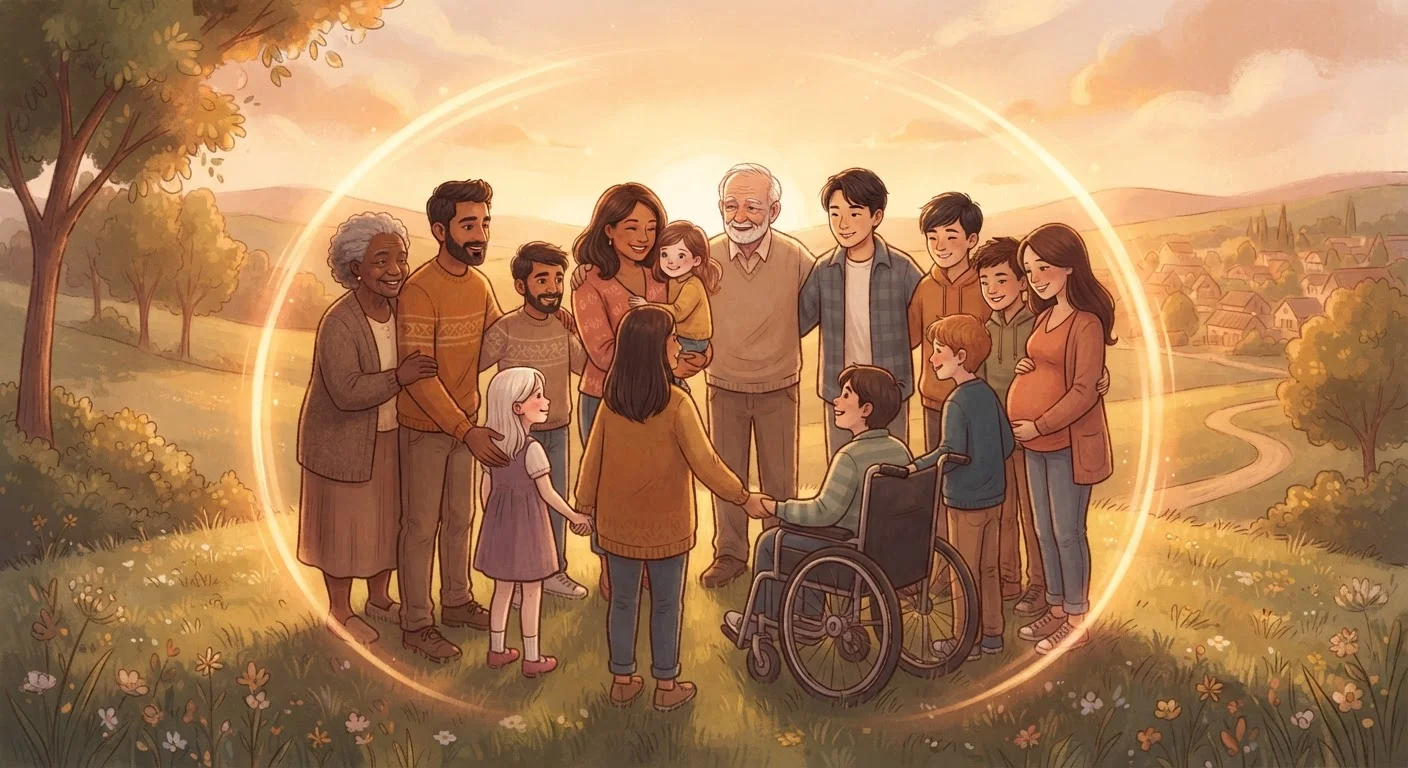
- Every eligible person who gets vaccinated contributes to the shield that protects the whole community.
Herd Immunity
Herd immunity (also called population immunity or community immunity) occurs when enough people in a population are immune to an infectious disease — through vaccination or prior infection — that the disease can no longer spread efficiently. When this threshold is reached, even people who are not immune gain indirect protection because the pathogen cannot find enough susceptible hosts to maintain a chain of transmission.
The exact coverage threshold depends on a disease's basic reproduction number (R₀) — a measure of how many people one infected person typically infects in a fully susceptible population. More contagious diseases require higher coverage to break transmission chains.
How Herd Immunity Actually Works
Think of an infectious disease as a fire and susceptible people as dry fuel. Vaccination removes fuel from the environment. Once enough fuel is gone, the fire cannot sustain itself — even if a spark lands nearby. This is the core logic of herd immunity.
When a pathogen enters a community and encounters mostly immune individuals, transmission chains break quickly. The infected person simply does not pass the disease to enough others to keep an outbreak going. The pathogen, in effect, runs out of hosts.
This protection is not uniform across a population. It depends on three key variables: how contagious the disease is, how durable the immunity is (whether from vaccine or prior infection), and how evenly immunity is distributed across communities. Geographic clustering of unvaccinated individuals — even within a region with high overall coverage — can leave pockets vulnerable enough to sustain localized outbreaks.
~95%
Community immunity needed to stop measles transmission
The CDC and WHO cite approximately 95% population immunity as the threshold required to interrupt measles transmission chains, reflecting the disease's very high contagiousness.
12–18
Measles basic reproduction number (R₀)
Measles is among the most contagious infectious diseases ever documented, with one infected person potentially exposing 12 to 18 susceptible individuals in an unprotected population.
80–85%
Coverage threshold estimated for polio control
Because poliovirus is less contagious than measles, public health models indicate that community immunity around 80–85% is sufficient to prevent sustained transmission.
For a solid grounding in how vaccines generate individual immunity before building to population-level protection, see A Family's Complete Introduction to Vaccines and Immune Health.
Why Coverage Thresholds Differ by Disease
Not all infectious diseases require the same level of community immunity to stop spreading. The key variable is the basic reproduction number, often written as R₀ ("R-naught"). This number estimates how many people, on average, one infected person will infect in a completely susceptible population.
- Measles has an R₀ estimated between 12 and 18, making it one of the most contagious diseases known. Stopping its spread requires approximately 95% of the population to be immune.
- Polio has a lower R₀ and can be controlled with roughly 80–85% coverage.
- Seasonal influenza is more complex — its R₀ varies by strain and season, and immunity from prior vaccination or infection is less durable, which is why annual vaccination is recommended.
Understanding these thresholds helps explain why a small decline in vaccination rates for a disease like measles can have an outsized effect. Moving from 96% to 92% coverage may seem minor numerically but can push a community below the critical threshold, allowing an outbreak to take hold.
Check Your Family's Vaccination Status
Herd immunity depends on consistent, up-to-date coverage — not just a single dose years ago. Ask your healthcare provider to review your family's immunization records, including any boosters that may be due for adults. Keeping everyone current is the most direct contribution each household can make to community protection.
Who Herd Immunity Protects — and Who It Does Not
The most direct beneficiaries of community immunity are individuals who cannot receive vaccines for medical reasons. This group includes:
- Newborns too young to complete their vaccination series (most routine immunizations begin at 2 months, and full protection requires multiple doses over time)
- Immunocompromised individuals, such as those undergoing chemotherapy, organ transplant recipients on immunosuppressive drugs, or people with certain immune disorders
- Individuals with rare but documented severe allergies to vaccine components
For families with members in these categories, herd immunity is not an abstract concept — it is active daily protection. Immunization for Children with Chronic Conditions face unique vaccination considerations, and specialist guidance is essential for their care.
Importantly, herd immunity does not provide absolute personal protection. An unvaccinated person living in a well-vaccinated community has a lower risk of exposure than in a low-coverage community — but that risk is not zero. Individual immunity remains the most reliable personal protection.
How Individual Choices Shape Community Outcomes
Vaccination decisions do not exist in isolation. Each individual's immune status either contributes to — or draws from — the community's collective protection. When vaccination rates in a community remain consistently above the disease-specific threshold, outbreaks struggle to take hold. When rates fall, the margin of safety shrinks.
This dynamic makes vaccination one of the clearest examples in medicine of how personal health behavior directly intersects with public health outcomes. Adults, in particular, are sometimes unaware that their own immunization schedules require updating as they age. See adult immunizations most families overlook — keeping adults current is as important to community immunity as childhood vaccination schedules.
Men specifically may be behind on several recommended vaccines; vaccinations adults still need from a men's health perspective outlines which doses matter after childhood.
Beyond vaccines, consistent everyday habits contribute to immune resilience at the household level. Nutrition, sleep, and everyday habits that support immune resilience can complement — though never replace — vaccination as part of a whole-family wellness strategy.
This article is for general informational and educational purposes only and does not constitute medical advice. Always consult a qualified healthcare professional for personalized guidance about vaccines, immune health, or any medical condition.