

Key Takeaways
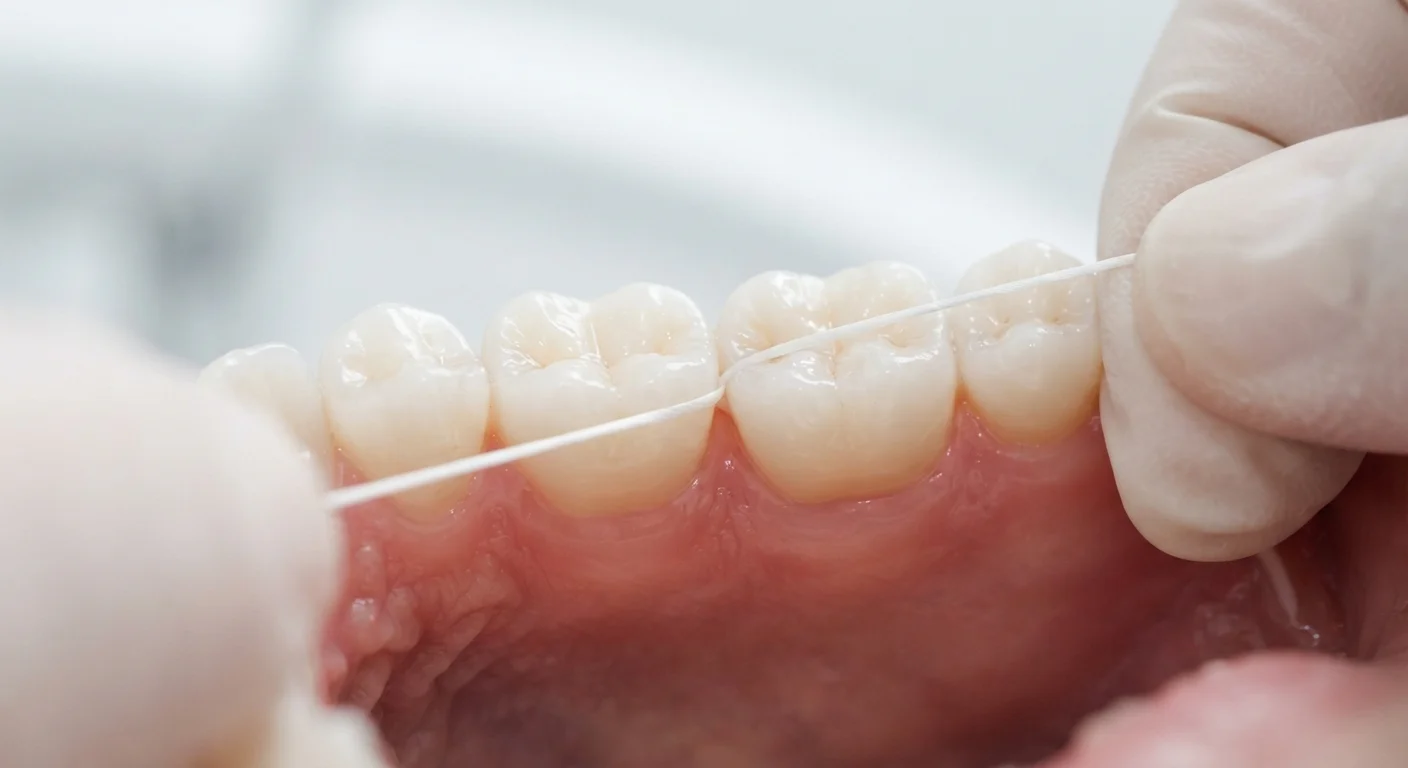
- Most people floss too quickly or skip the curved C-shape motion that clears plaque below the gumline.
- Flossing once daily is the professional standard; timing matters less than consistency and correct form.
- Bleeding gums during flossing often signal inflammation, not injury — though persistent bleeding warrants a dental visit.
- Floss picks and water flossers can supplement traditional floss but may not fully replicate its plaque-removal effect.
- Skipping floss allows plaque to harden into tartar between teeth — a problem only a professional cleaning can reverse.
Why Flossing Deserves More Attention Than It Gets
Brushing cleans the flat surfaces of your teeth. Flossing cleans the spaces between them — roughly 35% of each tooth's total surface area that a toothbrush simply cannot reach. Without it, plaque accumulates undisturbed in those crevices, eventually hardening into tartar and contributing to both cavities and gum disease.
Despite being a standard part of professional dental guidance for decades, flossing remains the most skipped step in most people's routines. When it is done, it's frequently done incorrectly — undermining the effort entirely. Understanding what goes wrong is the fastest way to start doing it right. As brushing alone isn't enough, flossing bridges the gap that no brush can fill.
The Most Common Flossing Mistakes — and How to Fix Them
The errors below are widespread across all age groups. Correcting even one or two can meaningfully improve your gum health within weeks.
Snapping the floss down hard between teeth instead of easing it gently into the gap.
Why it happens: People assume more force equals better cleaning, especially when floss feels tight between teeth.
Moving the floss straight up and down without curving it around the tooth.
Why it happens: The straight in-and-out motion feels intuitive and faster, so most people default to it without being taught otherwise.
Using the same section of floss for every tooth throughout the session.
Why it happens: Reusing the same inch of floss seems efficient, but it simply transfers bacteria and debris from one gap to the next.
Skipping the back surfaces of the last molars on each side.
Why it happens: Back teeth are harder to reach, and the technique feels less certain there, so people unconsciously stop one tooth too early.
Flossing only when gums bleed, then stopping because of the bleeding.
Why it happens: Bleeding feels like a sign of damage, so stopping seems like the right response. In fact, the opposite is usually true.
Flossing only occasionally — typically the night before a dental appointment.
Why it happens: Dental visits serve as reminders, and people hope a single session will compensate for weeks of skipping.
Persistent Bleeding Is a Signal, Not a Reason to Stop
Gums that bleed consistently with gentle flossing may indicate gingivitis — early-stage gum inflammation — rather than flossing injury. Stopping flossing in response allows plaque to continue accumulating, which typically worsens the problem. If bleeding is heavy, involves pain, or hasn't improved after two weeks of daily gentle flossing, schedule a visit with your dentist to rule out more advanced gum disease.
This article is for general informational purposes only and is not a substitute for professional dental advice. If you experience persistent gum bleeding, pain, or other oral symptoms, consult a licensed dentist.
Building a Flossing Habit That Sticks
Correct technique matters, but consistency is what drives long-term results. Flossing once a day — any time of day — is the baseline recommendation from dental professionals. Many people find it easiest to floss before brushing at night, when there's less time pressure and loosened debris can be cleared away by the subsequent brush.
If traditional string floss feels awkward, it's worth exploring your options before abandoning the habit altogether. Interdental brushes, floss picks, and water flossers each have distinct advantages depending on tooth spacing, dexterity, and orthodontic hardware. A dentist or dental hygienist can help identify the best fit for your anatomy.
If you're building oral care habits from scratch, starting a routine in adulthood is very achievable — and flossing is one of the highest-impact additions you can make. For parents, note that flossing education matters for children too; common gaps in kids' dental knowledge often start with the assumption that young teeth don't need flossing yet. For a full audit of your current habits, reviewing your oral health routine is a practical next step.
~35%
Tooth surface unreachable by brushing alone
Dental professionals commonly cite that interdental surfaces — the sides of teeth — make up roughly a third of total tooth surface area and require flossing or interdental cleaning to address.
30%
US adults who floss daily
According to data from the American Dental Association and national health surveys, only about 30% of American adults report flossing every day, despite professional recommendations.