

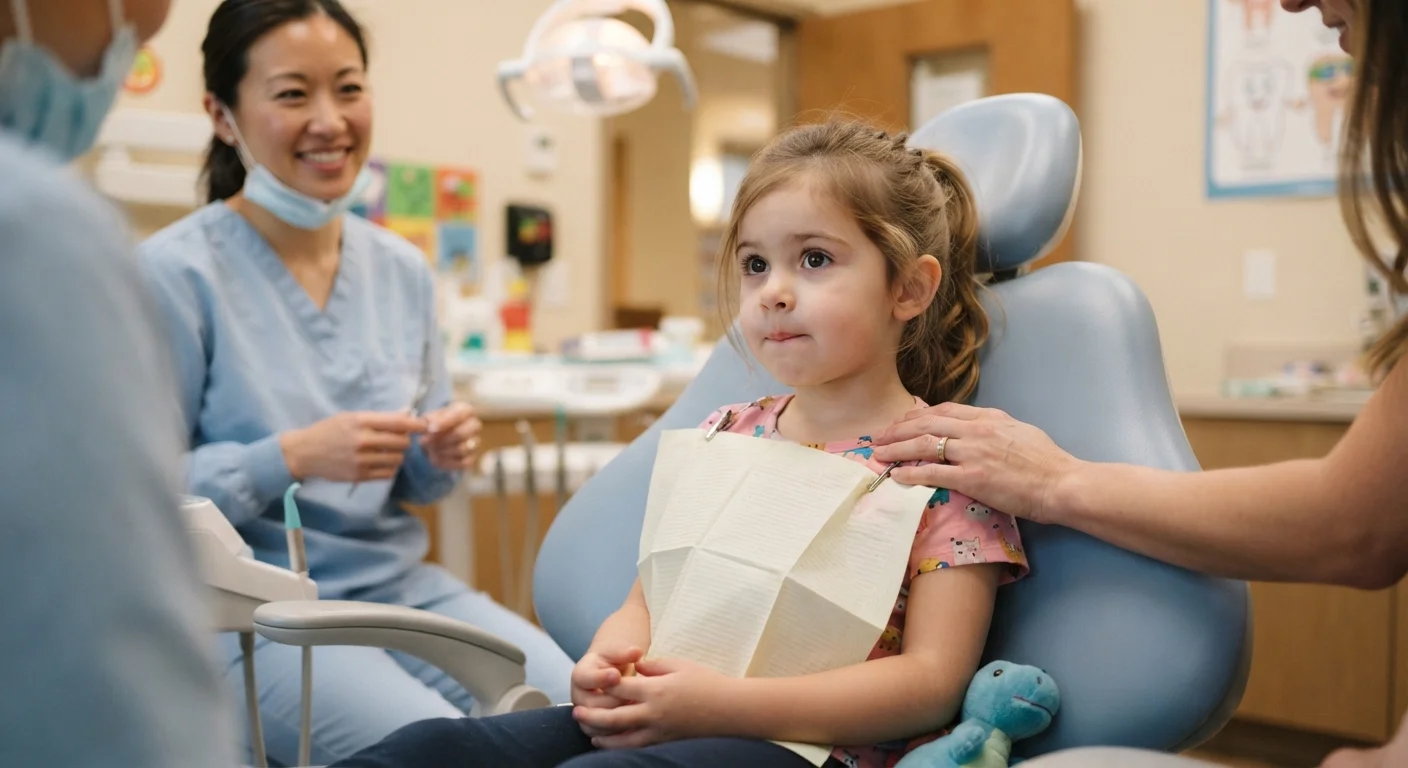
Key Takeaways
- Dental anxiety affects up to 20% of children and can lead to avoided care and worsening oral health if unaddressed.
- Parental language and attitude before appointments significantly shape how children perceive dental visits.
- Early, positive dental experiences — ideally starting by age one — are among the most effective prevention strategies.
- Dentists trained in pediatric behavior management have specific, evidence-based tools to reduce children's fear.
- Consistent home routines and honest, age-appropriate preparation reduce anxiety over time.
Why Dental Anxiety Is So Common in Kids
Fear of the dentist is one of the most frequently reported childhood anxieties. Estimates vary, but research consistently suggests that between 10% and 20% of children experience significant dental anxiety — enough to interfere with receiving care. Understanding where that fear comes from is the first step toward helping.
Common causes include fear of pain (often based on stories rather than direct experience), loss of control in an unfamiliar environment, unexpected sounds and sensations, and previous negative experiences. Younger children — particularly those under age six — are also in a developmental stage where stranger anxiety and separation from caregivers are naturally heightened, which can amplify dental-setting stress.
Parental anxiety is another well-documented contributor. Studies have found that children of anxious dental patients are more likely to develop anxiety themselves, partly through direct observation and partly through the way adults talk about dental visits at home. Offhand comments like "it won't hurt too much" or "just be brave" can inadvertently signal that there is something to fear.
When Anxiety May Signal Something More
Most childhood dental fear is situational and responds well to gradual, supportive exposure. However, some children experience anxiety severe enough to qualify as a specific phobia, which may benefit from input from a pediatric psychologist or behavioral therapist alongside dental care. If your child's distress is extreme or worsening despite consistent, positive experiences, consult both your pediatric dentist and your child's primary care provider for coordinated guidance.
The Real Consequences of Untreated Dental Fear
Dental anxiety doesn't resolve on its own in most cases — and when left unaddressed, it tends to grow. Children who avoid the dentist miss routine cleanings and early cavity detection, which can allow small problems to become larger, more uncomfortable, and more expensive to treat. This can create a cycle: the more care is avoided, the more likely a child is to eventually need more invasive treatment, which reinforces the fear.
Beyond oral health, research has linked persistent dental anxiety to broader effects, including disrupted sleep before appointments, school absence on dental visit days, and — in severe cases — avoidance of dental care well into adulthood. The factors that drive cavity risk in children are already significant; anxiety-driven avoidance adds another layer of vulnerability.
Up to 20%
Children affected by significant dental anxiety
Multiple systematic reviews and surveys in pediatric dental literature place the prevalence of dental anxiety in children between 10% and 20%, with variation by age group and definition used.
~50%
Anxious children who avoid future dental care as adults
Research published in dental psychology literature has found that childhood dental anxiety is one of the strongest predictors of dental avoidance in adulthood, with many anxious children continuing to avoid care decades later.
Best Practices for Families: What Actually Helps
The good news is that dental anxiety in children is manageable — and parents play a central role. The practices below reflect standard guidance from pediatric dental organizations and behavioral health research.
Start dental visits early — ideally by the child's first birthday.
Early visits familiarize children with the dental environment before fear has a chance to take root. The American Academy of Pediatric Dentistry recommends a first dental visit by age one or when the first tooth appears. Familiarity is one of the most reliable anxiety-reducers.
Use neutral, honest, age-appropriate language when discussing dental visits.
Children pick up emotional cues from adult language. Framing dental visits as scary, painful, or something to endure primes children for fear. Equally, false promises that "it won't hurt at all" can backfire if a child feels deceived. Honest, calm language builds trust.
Choose a pediatric dentist experienced in child behavior management.
Pediatric dentists receive specialized training in communicating with children, managing anxiety, and adapting techniques to different developmental stages. Techniques like tell-show-do (explaining and demonstrating before doing) and positive reinforcement are standard in pediatric practice and have a strong evidence base.
Establish consistent home oral hygiene routines that make dental care feel normal.
Children who brush and floss regularly at home experience dental tools and sensations as familiar rather than foreign. Routine reduces novelty, and novelty is a primary driver of anxiety in clinical settings. Good home habits also reduce the likelihood of needing uncomfortable treatment.
Avoid using dental visits as a threat or punishment.
Phrases like "if you don't brush, the dentist will pull your teeth" embed fear and shame into dental care. This kind of framing reliably increases anxiety and can persist for years. Dental care should be framed as health maintenance, not consequence.
For families preparing for specific procedures, our guide on preparing your child for their first dental procedure offers step-by-step support before, during, and after the appointment.
Quick Actions Parents Can Take Now
Some anxiety-reducing strategies don't require a dentist at all — they start at home, in the days and weeks before any appointment.
Building a positive dental culture at home also means modeling good oral hygiene. Children who see adults taking their own oral health seriously are more likely to internalize dental care as a normal, valued part of life rather than something to dread.
This article is for general informational purposes only and does not constitute medical or dental advice. Every child is different — if your child's dental anxiety is severe or interfering with their ability to receive necessary care, consult a licensed pediatric dentist or a qualified mental health professional for personalized guidance.