

Key Takeaways
- Dental sealants are thin protective coatings applied to the chewing surfaces of back teeth to help prevent cavities.
- They are most effective for children aged 6–14, when permanent molars are newly erupted and most vulnerable.
- Sealants significantly reduce cavity risk in molars but do not protect all tooth surfaces or replace good oral hygiene.
- They can last several years but require regular dental check-ups to monitor for wear or gaps.
- Not every child may need sealants — a dentist can help assess individual risk and appropriateness.
Significantly reduces cavity risk in back teeth
The CDC reports that school-age children without sealants have nearly three times more cavities in first molars than those with sealants. This makes sealants one of the more impactful single preventive interventions available.
Quick, painless, and drill-free procedure
Sealant application typically takes only a few minutes per tooth and requires no drilling or anesthesia, making it far less stressful than restorative treatments and suitable even for younger or anxious children.
Can last several years with proper care
When correctly applied and regularly monitored, sealants can remain effective for up to nine years according to some studies, providing long-term protection during a child's most cavity-vulnerable period.
Protects the hardest-to-clean tooth surfaces
The deep pits and fissures on molar chewing surfaces are notoriously difficult to clean with a toothbrush alone. Sealants smooth over these areas, reducing the spots where bacteria and food debris can hide.
Cost-effective compared to treating cavities
Preventing a cavity with a sealant is generally far less expensive — in both time and cost — than filling, crowning, or extracting a decayed tooth, particularly in the context of permanent molars.
Only protect chewing surfaces, not all tooth areas
Sealants cover the tops of molars but leave the sides and spaces between teeth unprotected. Cavities between teeth (interproximal decay) remain a significant risk and are only addressed by consistent flossing.
Can wear, chip, or fall off over time
Sealants are not permanent. They can crack or detach due to normal biting forces or grinding, and gaps in the sealant can actually trap bacteria if not detected — making regular dental check-ups essential.
Do not replace brushing, flossing, or fluoride
Some parents may mistakenly assume sealants provide comprehensive protection, but they are a supplement to — not a substitute for — a complete oral hygiene routine and professional fluoride treatments.
Not appropriate for every child or tooth
Teeth that already show signs of decay, or that have shallow grooves unlikely to trap food, may not be good candidates. A careful clinical assessment is needed before sealant placement is recommended.
Some older materials contained trace BPA
Earlier generations of some sealant resins contained trace amounts of bisphenol A (BPA). While dental and health authorities have generally assessed exposure levels as negligible, some parents remain concerned and may wish to discuss material options with their dentist.
Our Verdict
Dental sealants are a well-established, evidence-backed preventive tool that can meaningfully reduce cavity risk in children's back teeth. They work best as one layer of a broader oral health strategy that includes fluoride, consistent brushing and flossing, and regular dental visits. Sealants are not a guarantee against decay, and their value depends on proper application, ongoing monitoring, and individual cavity risk.
Sealants are most beneficial for school-age children with newly erupted permanent molars, particularly those assessed by their dentist as having moderate to high cavity risk.
What Are Dental Sealants and How Do They Work?
Dental sealants are thin, plastic-like coatings painted onto the chewing surfaces of back teeth — primarily the premolars and molars. Once applied and hardened, they form a smooth barrier over the naturally deep grooves and pits in these teeth, making it harder for food particles and bacteria to accumulate and trigger decay.
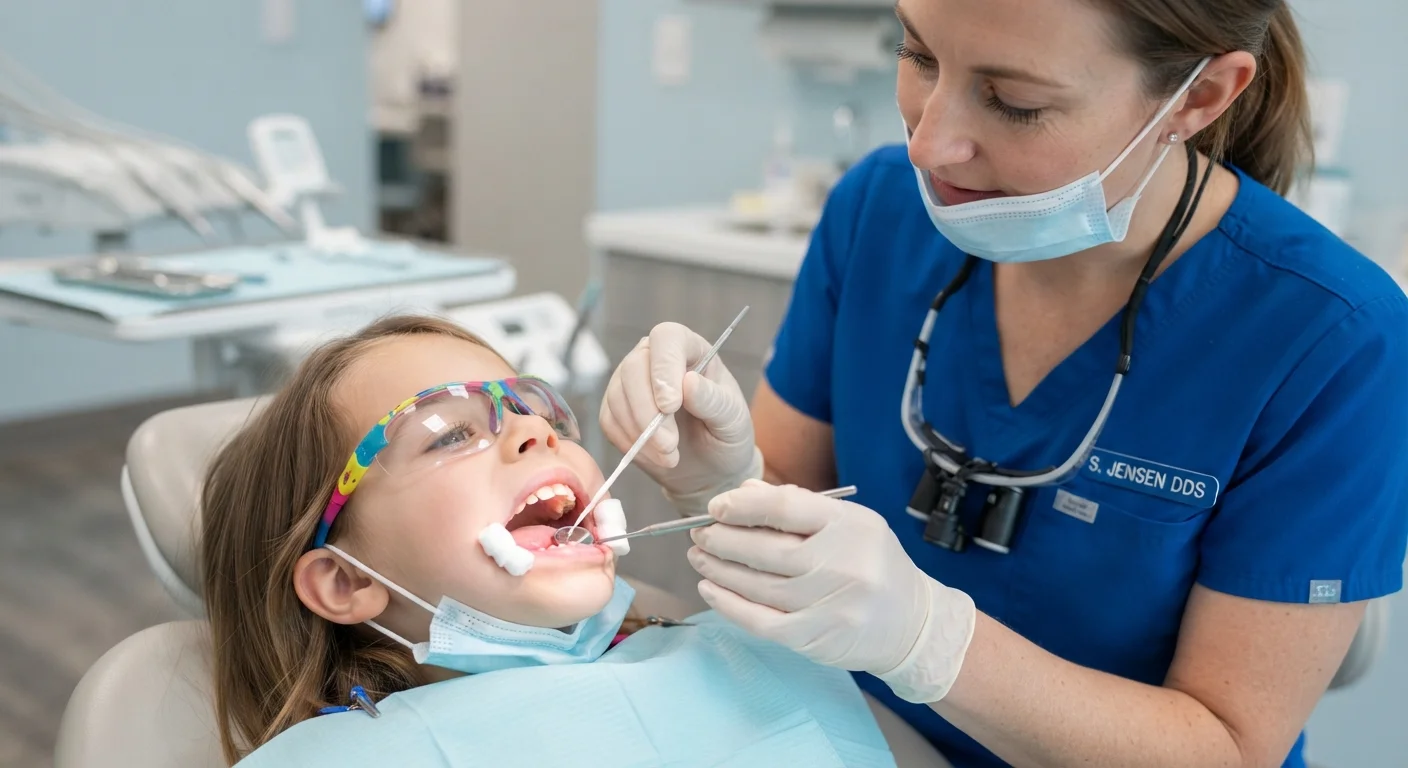
The application is quick and painless: the tooth surface is cleaned, conditioned with a mild gel, rinsed, dried, and then coated with the sealant material, which is typically cured with a special light. No drilling or anesthesia is involved, which makes it well-tolerated even by children with some dental anxiety. See our guide to managing dental anxiety in children for ways to help kids feel comfortable at appointments.
The American Dental Association (ADA) and the Centers for Disease Control and Prevention (CDC) recognize sealants as an effective preventive measure, particularly for children. Most sealants are applied when permanent first molars emerge around age 6, and again when second molars appear around age 12.
The Benefits of Dental Sealants
When used appropriately, sealants offer meaningful protection during some of the most cavity-prone years of childhood.
Significantly reduces cavity risk in back teeth
The CDC reports that school-age children without sealants have nearly three times more cavities in first molars than those with sealants. This makes sealants one of the more impactful single preventive interventions available.
Quick, painless, and drill-free procedure
Sealant application typically takes only a few minutes per tooth and requires no drilling or anesthesia, making it far less stressful than restorative treatments and suitable even for younger or anxious children.
Can last several years with proper care
When correctly applied and regularly monitored, sealants can remain effective for up to nine years according to some studies, providing long-term protection during a child's most cavity-vulnerable period.
Protects the hardest-to-clean tooth surfaces
The deep pits and fissures on molar chewing surfaces are notoriously difficult to clean with a toothbrush alone. Sealants smooth over these areas, reducing the spots where bacteria and food debris can hide.
Cost-effective compared to treating cavities
Preventing a cavity with a sealant is generally far less expensive — in both time and cost — than filling, crowning, or extracting a decayed tooth, particularly in the context of permanent molars.
~3x
More cavities in molars without sealants
According to the CDC, school-age children without dental sealants have approximately three times more first molar cavities than those with sealants.
Up to 9 years
How long sealants can remain effective
Research published in dental literature suggests that properly applied sealants can remain fully intact and protective for up to nine years when monitored regularly.
Sealants complement — but do not replace — other preventive strategies. Pairing them with fluoride is a common clinical recommendation, since each works differently: sealants physically block bacteria from grooves, while fluoride helps remineralize and strengthen enamel. Learn more about fluoride's role in children's dental health.
The Limitations of Dental Sealants
Sealants are a valuable tool, but they have real boundaries that parents should understand before assuming their child is fully protected.
Only protect chewing surfaces, not all tooth areas
Sealants cover the tops of molars but leave the sides and spaces between teeth unprotected. Cavities between teeth (interproximal decay) remain a significant risk and are only addressed by consistent flossing.
Can wear, chip, or fall off over time
Sealants are not permanent. They can crack or detach due to normal biting forces or grinding, and gaps in the sealant can actually trap bacteria if not detected — making regular dental check-ups essential.
Do not replace brushing, flossing, or fluoride
Some parents may mistakenly assume sealants provide comprehensive protection, but they are a supplement to — not a substitute for — a complete oral hygiene routine and professional fluoride treatments.
Not appropriate for every child or tooth
Teeth that already show signs of decay, or that have shallow grooves unlikely to trap food, may not be good candidates. A careful clinical assessment is needed before sealant placement is recommended.
Some older materials contained trace BPA
Earlier generations of some sealant resins contained trace amounts of bisphenol A (BPA). While dental and health authorities have generally assessed exposure levels as negligible, some parents remain concerned and may wish to discuss material options with their dentist.
Diet also matters enormously alongside any preventive treatment. Frequent consumption of sugary drinks and snacks can still drive decay in unprotected surfaces. Our article on how diet shapes children's teeth explores which eating patterns dental professionals consistently flag as high-risk.
What Parents Should Ask the Dentist
Sealants Are Not One-Size-Fits-All
Dental sealants are a clinical recommendation, not a universal requirement. A child's cavity risk, tooth anatomy, hygiene habits, and history of decay all factor into whether sealants are a worthwhile intervention. Some children with excellent home care and low decay history may not gain significant added benefit. Always discuss the decision with a qualified pediatric or family dentist rather than assuming sealants are automatically needed.
Not every child needs sealants, and the decision should be made in conversation with your child's dentist based on individual cavity risk, tooth anatomy, and oral hygiene habits. Children who brush and floss consistently and have naturally shallow tooth grooves may gain less benefit than those with deeper fissures or a history of cavities.
Questions worth raising at your child's next check-up include:
- Has my child's dentist assessed their personal cavity risk level?
- Which teeth, if any, are candidates for sealants?
- How will we monitor the sealants over time?
- How do sealants fit alongside fluoride treatments for my child?
Use our parent's dental check-up checklist to track your child's oral health milestones and keep these conversations organized at every visit. Sealants are just one piece of a broader picture — good habits at home remain the foundation of long-term dental health.
This article is for general informational and educational purposes only and does not constitute medical or dental advice. Always consult a qualified dental professional for guidance specific to your child's oral health needs.