

Key Takeaways
- Children need adult supervision and assistance with brushing until around age 7–8.
- Two minutes of brushing twice daily is the standard recommendation for all ages.
- Making brushing predictable and fun dramatically reduces nightly resistance.
- The right tools — child-sized brush, age-appropriate toothpaste — matter for technique and safety.
- Modeling good habits yourself is one of the most powerful teaching strategies available.
What you will need
Why Brushing Battles Happen — and What's Actually Going On
Nightly resistance to toothbrushing is one of the most common parenting frustrations, but it's rarely about the brushing itself. Young children resist routines that feel imposed, unfamiliar, or unpleasant — and a two-minute task with an adult hovering over them can tick all three boxes. Understanding this helps parents respond strategically rather than reactively.
Sensory sensitivity plays a role for some children — the taste of toothpaste, the feeling of bristles, or the gag reflex can make brushing genuinely uncomfortable. In these cases, experimenting with a milder-flavored toothpaste or a softer brush can make a real difference. If sensory challenges are significant and persistent, mention them to your child's dentist, who may have specific suggestions.
For most children, though, the resistance is behavioral. Toddlers are wired to test limits; school-age children resist transitions between activities. A calm, consistent approach — where brushing is simply a non-negotiable part of the evening, not a power struggle — resolves most battles over time. For a broader look at how brushing fits into an overall evening routine, see evening wind-down habits for children.
Use Disclosing Tablets for Honest Feedback
Dental disclosing tablets are a low-cost tool that temporarily tints any remaining plaque a bright pink or purple. Using them occasionally turns brushing into a game — your child can see exactly where they missed and try again. It provides honest, visual feedback without any criticism from you, which children often respond to better.
What You'll Need Before You Start
Getting the right equipment in place before you try to build the habit removes friction at the moment it matters most.
What you will need
Child-sized toothbrush (soft bristles)
A small head and soft bristles reach all areas of a child's mouth comfortably without irritating gums.
Age-appropriate fluoride toothpaste
Provides cavity protection at a concentration and flavor suited to the child's age and ability to spit.
Two-minute timer or brushing song
Helps children brush for the full recommended duration without guesswork or negotiation.
Dental disclosing tablets
Temporarily stain plaque a visible color so you and your child can see exactly where brushing needs improvement.
If you're unsure whether to start with a manual or powered toothbrush, our guide on manual vs. electric toothbrushes for children walks through the key differences in a practical, age-specific way.
Step-by-Step: Building the Brushing Habit
The steps below are designed to be introduced gradually — you don't need to implement all of them at once. Start with consistent timing and the right tools, then layer in technique and engagement strategies as the routine stabilizes.
Fluoride Toothpaste: Get the Amount Right
For children under 3, most dental guidelines recommend only a smear of fluoride toothpaste — roughly the size of a grain of rice. Children aged 3–6 should use a pea-sized amount. Using too much increases the risk of fluorosis, a cosmetic condition affecting developing teeth. Always consult your child's dentist or pediatrician if you have questions about fluoride for your specific child.
Choose the right brush and toothpaste for your child's age
A toothbrush with a small head, soft bristles, and a chunky handle is easiest for little hands to hold. Replace it every three months or sooner if bristles splay. Pair it with an age-appropriate fluoride toothpaste — check the label for the recommended age range. If your child strongly dislikes mint, many children's varieties come in milder flavors, which can reduce brushing resistance significantly.
Set a consistent time — and anchor it to something else
Habits form fastest when they're tied to an existing anchor event. Brushing immediately after breakfast and immediately before getting into bed works well because the trigger (the meal, the bedtime routine) does the remembering for you. Inconsistent timing is one of the most common reasons brushing becomes a nightly argument — children thrive on predictability.
Demonstrate the technique, then guide their hand
Stand behind your child at the mirror so they see the same angle you do. Use small, gentle circles along the gumline, working systematically — outer surfaces, inner surfaces, then chewing surfaces. Count two seconds per tooth out loud at first. Once your child understands the pattern, let them try while you watch, then follow up by brushing the spots they missed.
Make the two minutes feel shorter
Two minutes is genuinely long for a young child. Use a dedicated timer, play a two-minute brushing song, or use a sand timer they can watch. Many children's dental apps display a visual countdown with characters, which shifts attention from the discomfort of waiting to something engaging. The goal is to reach two full minutes consistently, not to rush through it.
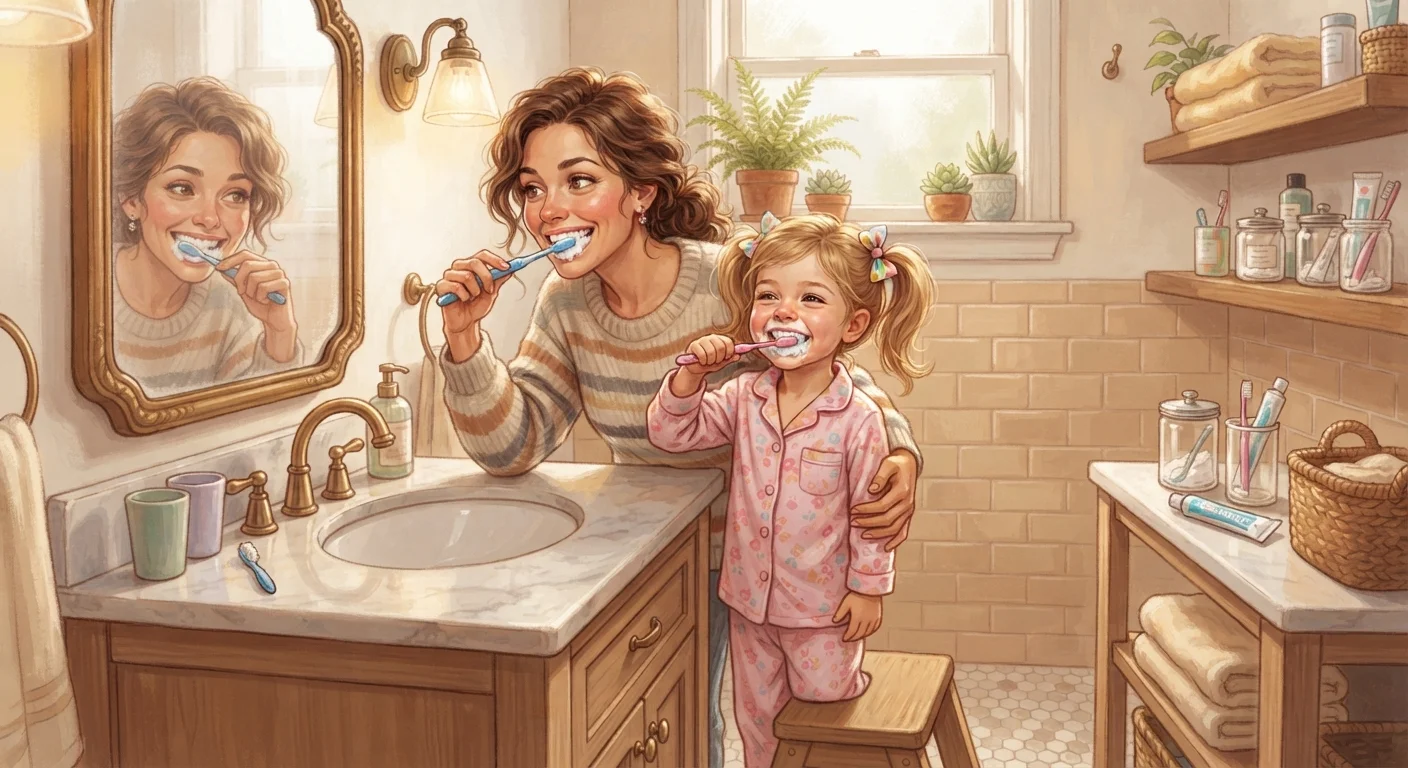
Brush alongside your child whenever possible
Children learn by imitation. When they see you brushing carefully — for the full two minutes, not just a quick pass — they internalize that this is what adults actually do. Brushing together also turns a solo chore into a shared activity, which reduces resistance. This is especially effective for toddlers and early school-age children who want to do what their parents do.
Respond to resistance calmly and consistently
Resistance is normal, especially in toddlers asserting independence. Acknowledge the feeling without giving in: "I know you don't feel like it right now — let's get it done quickly together." Avoid bargaining or skipping nights as rewards. Consistency is the single most important factor in building the habit. If a child knows brushing is non-negotiable, the argument tends to fade within a few weeks.
Keeping the Habit Going as Kids Get Older
The brushing techniques taught in early childhood should carry through adolescence, but the supervision level changes. By age 7–8, most children have the coordination to brush effectively on their own — though a periodic check-in is still worthwhile. Tweens and teenagers often backslide on consistency, particularly around bedtime, so keeping brushing visible and expected (rather than assumed) matters.
As your child's oral health needs evolve, an age-by-age dental care roadmap can help you anticipate what's coming — from the arrival of permanent teeth to orthodontic considerations. And at every routine check-up, use our parent's checklist for kids' dental check-ups to make sure no oral health milestones are slipping through the cracks.
Never Let Young Children Brush Unsupervised
Children under 7 or 8 typically lack the fine motor control to clean all tooth surfaces effectively on their own. Even if your child brushes independently, follow up with a parent-assisted brush to cover missed spots. Your child's dentist can show you exactly where children most commonly miss during your next check-up.
This article is for informational purposes only and is not a substitute for professional dental or medical advice. Always consult your child's dentist or pediatrician with questions about your child's specific oral health needs.