

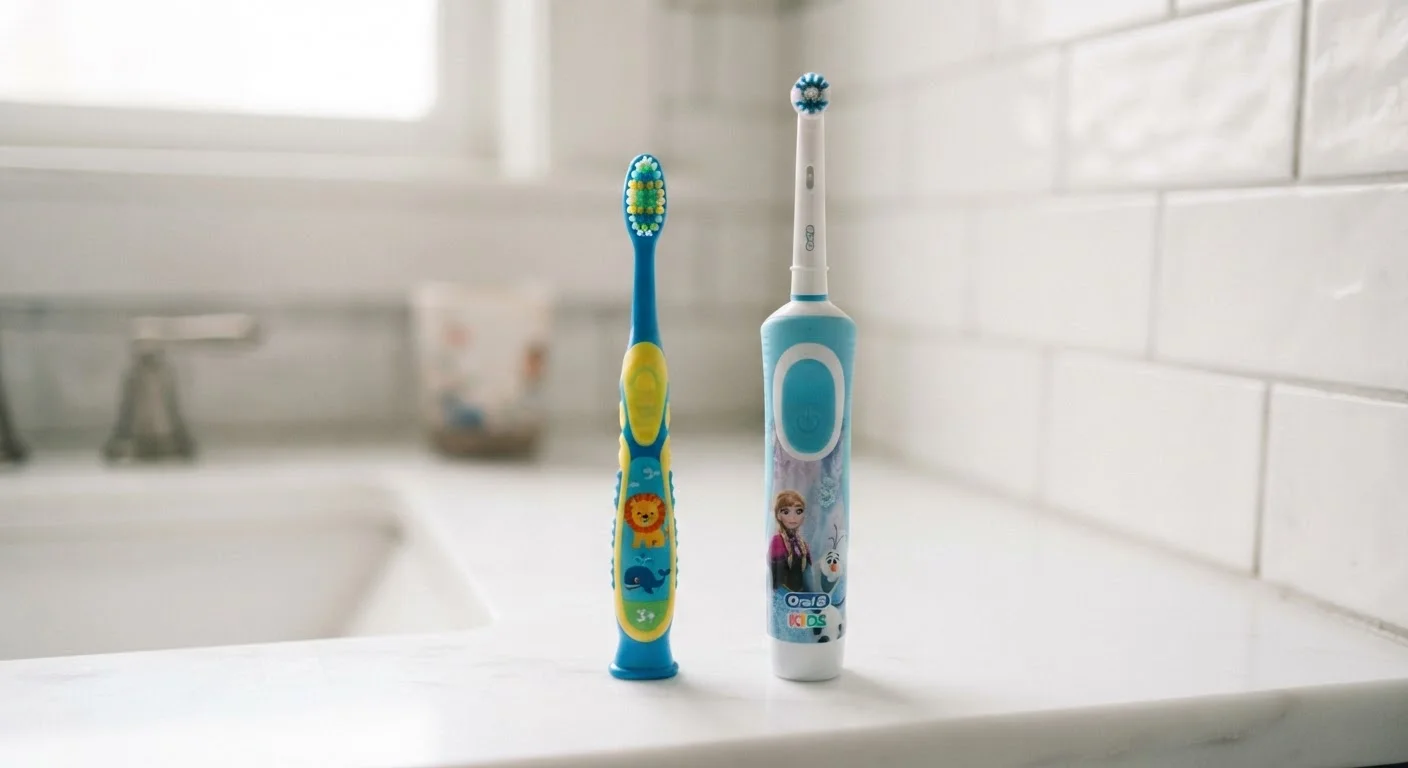
Key Takeaways
- Both manual and electric toothbrushes can effectively clean children's teeth when used correctly and consistently.
- Electric toothbrushes may offer a plaque-removal advantage, particularly for children with limited brushing technique.
- Manual brushes are more affordable and widely accessible, making them a practical everyday choice.
- Children under 3 should use only soft-bristled manual brushes unless a dentist advises otherwise.
- The brush a child will actually use twice a day is always the better choice for their long-term oral health.
- Always consult your child's dentist for personalized guidance on the right tool for their age and dental needs.
Option A
Manual Toothbrush
The simple, time-tested starting point for children's brushing.
Best for: Young children just learning to brush, families seeking a low-cost, low-maintenance option, and kids who brush with consistent adult supervision.
Option B
Electric Toothbrush
The tech-assisted option that does more of the work for the child.
Best for: Children aged 3 and up who need extra motivation, those with limited hand strength or coordination, or kids whose plaque control needs improvement.
If your child is under age 3 or just starting to brush
Manual Toothbrush
Small, soft-bristled manual brushes are the standard starting point for very young children. They're easier for adults to control during supervised brushing sessions.
If your child struggles with brushing technique or motivation
Electric Toothbrush
Electric brushes remove more of the manual effort and often feature timers and fun designs that make brushing more engaging for reluctant kids.
If budget and simplicity are top priorities
Manual Toothbrush
Manual brushes are inexpensive and require no charging or replacement heads — an accessible option that works well when used correctly.
If your child has a physical disability or limited hand dexterity
Electric Toothbrush
The oscillating or sonic action of electric brushes compensates for limited wrist movement, making thorough cleaning more achievable with less fine motor control required.
If your child's dentist has flagged recurring plaque buildup
Electric Toothbrush
Clinical evidence suggests electric toothbrushes provide a measurable improvement in plaque removal, which may benefit children who consistently miss spots.
What the Evidence Says About Plaque Removal
The core question parents ask is straightforward: which brush actually cleans better? The short answer is that both types can do the job — but they don't perform identically.
A widely cited Cochrane review of studies comparing electric and manual toothbrushes found that electric brushes reduced plaque and gingivitis (gum inflammation) more effectively over short and long-term use. While most of this research focused on adults, smaller studies in pediatric populations point in a similar direction: children using electric toothbrushes tend to show modestly better plaque scores, especially when their brushing habits are inconsistent or their technique is still developing.
That said, a child who brushes thoroughly with a manual brush — spending a full two minutes, covering all surfaces — can achieve excellent results. The difference in outcomes between the two tools narrows considerably when technique and time are adequate. For a deeper look at how these brushes compare in adult research, see our article electric vs. manual toothbrush evidence review.
| Criterion | Manual Toothbrush | Electric Toothbrush |
|---|---|---|
| Recommended starting age | From first tooth (~6 months) | Generally from age 3 |
| Plaque removal | Effective with good technique | Modest advantage in studies |
| Ease of use for kids | Requires more developed technique | Does more of the work automatically |
| Built-in timer | No | Yes, on most models |
| Cost | Low — a few dollars | Higher upfront; ongoing head costs |
| Travel convenience | Very easy — no charging needed | Requires charging or batteries |
| Sensory tolerance | Universally tolerated | Some kids dislike vibration |
| Motivational appeal | Basic — depends on child | Often higher due to novelty |
Age, Safety, and What Dentists Typically Recommend
Age matters considerably when choosing a toothbrush for a child. Most pediatric dental guidelines suggest introducing a soft-bristled manual toothbrush as soon as the first tooth appears — typically around 6 months. At this stage, parents do all the brushing, and a small manual brush offers the most control.
Electric toothbrushes designed for children are generally considered safe from around age 3, once a child can tolerate the vibration and sensation without distress. Look for brushes with small round heads, soft bristles, and a two-minute timer. Many models include pressure sensors that alert children (or parents) when they're pressing too hard — a useful safeguard since over-brushing can wear down enamel over time.
Children with special sensory sensitivities may find electric brush vibrations uncomfortable. In these cases, a manual brush remains the better-tolerated option. Parents should always introduce electric brushes gradually and watch for signs of discomfort.
~21%
Extra plaque reduction with electric brushes
A Cochrane review found electric toothbrushes reduced plaque by approximately 21% more than manual brushes after three months of use.
2 min
Recommended brushing duration per session
The American Dental Association recommends brushing for two full minutes, twice daily — a target that electric timers help children meet more reliably.
3 months
How often to replace any toothbrush
Both manual brushes and electric replacement heads should be swapped out every three months, or sooner when bristles show visible wear.
For detailed guidance on what to expect at each dental check-up stage, the parent's dental check-up checklist is a practical resource to keep on hand.
Cost, Convenience, and the Compliance Factor
Manual toothbrushes are inexpensive, widely available, and require no charging or replacement heads beyond the brush itself (which should be replaced every three months, or sooner if bristles fray). They're a reliable, zero-maintenance option that travels easily.
Electric toothbrushes for children carry a higher upfront cost, and replacement brush heads add to ongoing expenses. They require charging and are less convenient to pack for travel. However, many parents find the investment worthwhile if it meaningfully improves their child's willingness to brush.
That last point — compliance — may be the most important variable of all. The best toothbrush is the one a child will actually use consistently, twice a day, for two minutes. Electric brushes often win on engagement: built-in timers, fun colors, and the novelty of the vibration can transform brushing from a nightly battle into a routine kids accept more readily. For strategies that work regardless of brush type, see our guide on teaching kids to brush properly.
Finally, remember that thorough brushing addresses only some of the surfaces where plaque accumulates. As children's teeth develop and spaces between them widen, interdental cleaning becomes important too. Our comparison of interdental cleaning tools explains the options available for older children and adults.
This article is for general informational purposes only and does not constitute dental or medical advice. Always consult your child's dentist for personalized recommendations based on their age, dental development, and oral health needs.