

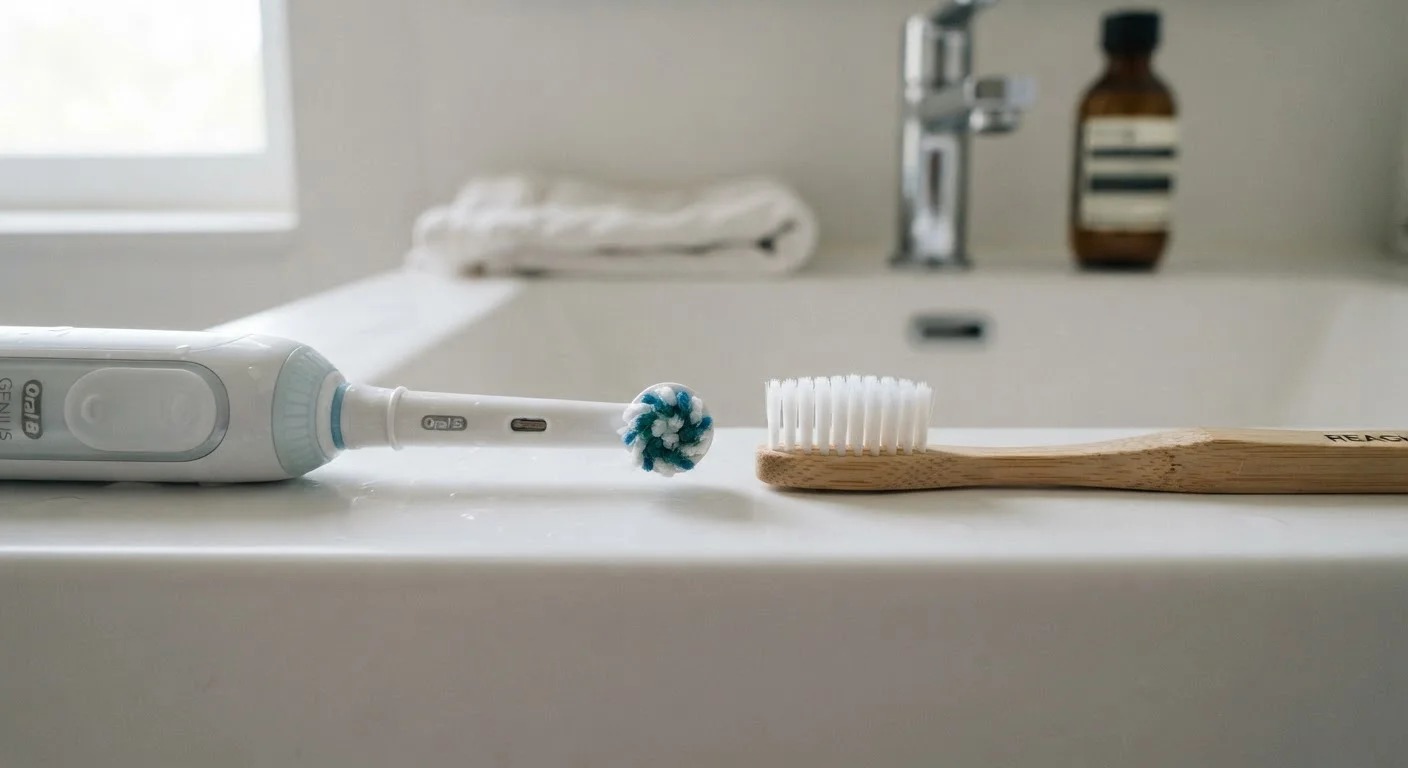
Key Takeaways
- Electric toothbrushes reduce plaque and gingivitis more effectively than manual brushes, according to systematic reviews.
- Manual toothbrushes can be equally effective when used with correct technique for a full two minutes.
- Electric brushes offer a meaningful advantage for people with arthritis, braces, or poor brushing habits.
- Neither brush type replaces daily interdental cleaning with floss or an interdental tool.
- Brush head replacement schedules are similar for both — every three months, or sooner if bristles fray.
- Consult your dentist to identify which option best supports your individual oral health needs.
Option A
Electric Toothbrush
The higher-performance, lower-effort option.
Best for: Adults who struggle with technique, have limited dexterity, or want an edge in plaque and gingivitis reduction.
Option B
Manual Toothbrush
The accessible, time-tested standard.
Best for: Adults who brush with good technique, travel frequently, or prefer a simple, low-cost routine.
If you have limited hand dexterity or arthritis
Electric Toothbrush
The motorized action does most of the cleaning work, reducing the need for precise manual movement — a significant practical advantage.
If you already brush with good technique for two minutes
Manual Toothbrush
A consistent, well-executed manual brushing routine can achieve clinically comparable plaque removal without additional cost or charging.
If you have orthodontic appliances such as braces
Electric Toothbrush
Electric brushes more effectively remove plaque around brackets and wires, where manual cleaning is inherently harder to standardize.
If you travel often or prefer a low-maintenance routine
Manual Toothbrush
No charging, no batteries, and easily replaceable anywhere — manual brushes remain the most practical choice for frequent travelers.
If you have early or established gum disease (gingivitis)
Electric Toothbrush
Clinical evidence consistently shows electric brushes produce greater reductions in gingival inflammation compared with manual brushing alone.
What the Research Says About Plaque and Gum Health
The most comprehensive evidence comes from a Cochrane systematic review — one of the most rigorous forms of research synthesis — which analyzed data from multiple controlled trials comparing powered and manual toothbrushes. The findings are consistent: electric toothbrushes reduce plaque by approximately 21% more and gingivitis (gum inflammation) by roughly 11% more than manual brushes after three months of use.
These are meaningful clinical differences, though it is important to understand the context. Most trial participants were not dental professionals, and many brushed with less-than-ideal technique — a condition that closely mirrors real-world behavior. When brushing technique and duration are carefully controlled in study settings, the gap between the two types narrows considerably.
The takeaway is not that manual brushing is ineffective. It is that most people, in practice, do not brush with optimal technique or for a full two minutes. Electric toothbrushes reduce the reliance on perfect technique, which may explain much of the observed benefit.
| Criterion | Electric Toothbrush | Manual Toothbrush |
|---|---|---|
| Plaque removal | Superior in most users | Effective with good technique |
| Gingivitis reduction | Clinically greater reduction | Adequate with consistent use |
| Technique dependence | Low — motorized action compensates | High — relies on user skill |
| Ease of use (limited dexterity) | Strong advantage | Can be difficult |
| Travel convenience | Requires charging or batteries | Lightweight and universally available |
| Brush head replacement | Every 3 months | Every 3 months |
| Upfront cost | Higher | Lower |
| Ongoing cost | Replacement heads required | Replace full brush each time |
Technique, Time, and the Human Factor
Whether you use an electric or manual brush, the fundamentals remain the same: brush all surfaces of every tooth, angle the bristles toward the gumline at roughly 45 degrees, and spend at least two minutes per session. Twice-daily brushing is the standard recommendation across major dental organizations.
Electric toothbrushes — particularly oscillating-rotating designs — tend to be more forgiving of poor technique. Some models include built-in timers, pressure sensors, and connectivity features that provide real-time feedback. These additions can help build better habits, especially for adults who have brushed carelessly for years without realizing it.
Manual brushes, by contrast, demand more from the user. Over-scrubbing with a manual brush — a common mistake — can abrade enamel and cause gum recession over time. The same risk exists with electric brushes, but pressure sensors in many models help mitigate it.
~21%
More plaque reduction with electric brushes
According to a Cochrane systematic review of controlled trials comparing powered and manual toothbrushes.
~11%
Greater gingivitis reduction with electric brushes
The same Cochrane review found consistent gingival improvement favoring powered toothbrushes after three months of use.
2 minutes
Recommended minimum brushing duration
Major dental organizations recommend brushing for at least two minutes, twice daily, with either brush type.
Whichever brush you choose, pairing it with an appropriate interdental cleaning tool is essential. Toothbrushes, regardless of type, cannot reach the spaces between teeth. See our guide to interdental cleaning tools for a comparison of floss, picks, and water flossers.
Special Considerations: Sensitivity, Braces, and Dexterity
For adults with orthodontic appliances, electric toothbrushes offer a practical edge. Plaque accumulates rapidly around brackets and wires, and the consistent motion of a powered brush helps compensate for the difficulty of maneuvering around hardware. Your orthodontist or dentist can advise on bristle type and technique for your specific appliance.
Adults with rheumatoid arthritis, Parkinson's disease, stroke-related weakness, or other conditions affecting grip or fine motor control often find electric brushes substantially easier to use. The larger handle and automated bristle action reduce the physical demand of brushing to a manageable level.
For those with tooth sensitivity or gum recession, bristle firmness matters more than brush type. Dentists generally recommend soft-bristled brushes — electric or manual — to minimize further irritation. Some electric brush heads are specifically designed for sensitive teeth, but always confirm with your dentist before switching.
The toothpaste you use matters as well. For more on choosing between fluoride and fluoride-free options, see our comparison of fluoride and fluoride-free toothpastes. Parents researching options for younger family members may also find our article on electric vs. manual toothbrushes for children a useful companion.
A Note on Brush Head and Full-Brush Replacement
Both electric and manual toothbrushes should have their bristles replaced approximately every three months, or sooner if bristles appear frayed or splayed. Worn bristles — regardless of brush type — are significantly less effective at plaque removal. Most electric brush head packaging indicates when replacement is due, and some models include bristle-fade indicators.
This article is for general informational purposes only and does not constitute dental or medical advice. Consult a licensed dentist for guidance specific to your oral health needs.