

Key Takeaways
- Sodium raises blood pressure by prompting the kidneys to retain more fluid; potassium works in the opposite direction.
- Most American adults consume too much sodium and not enough potassium — both sides of the imbalance matter.
- The ratio of sodium to potassium in the diet may be as important as either mineral in isolation.
- Whole foods like fruits, vegetables, legumes, and dairy are the most reliable sources of dietary potassium.
- People with kidney disease or certain medications should consult a healthcare provider before significantly changing mineral intake.
Option A
Sodium
The widely consumed mineral linked to elevated blood pressure.
Best for: Essential in small amounts for nerve and fluid function, but most American adults consume far more than needed.
Option B
Potassium
The underconsumed mineral that counteracts sodium's pressure-raising effects.
Best for: Adults looking to support healthy blood pressure through diet, particularly those with high sodium intake.
If you are working to lower mildly elevated blood pressure through diet alone
Potassium
Increasing potassium intake from whole foods — while moderating sodium — is one of the most evidence-supported dietary strategies for blood pressure management.
If you need to understand which mineral has a bigger direct impact on fluid retention
Sodium
Sodium is the primary driver of fluid and blood volume regulation; reducing high intake has a measurable and relatively rapid effect on blood pressure in sodium-sensitive individuals.
If you want a sustainable, whole-diet approach to cardiovascular health
Potassium
Prioritizing potassium-rich foods naturally crowds out high-sodium processed foods, addressing both sides of the imbalance simultaneously.
If you are managing a chronic condition such as kidney disease
Sodium
For those with impaired kidney function, sodium restriction is often clinically prioritized; potassium adjustments require careful medical supervision in this context.
How Sodium and Potassium Influence Blood Pressure
Sodium and potassium are electrolytes — minerals that carry an electrical charge and regulate fluid balance throughout the body. Their relationship to blood pressure is well-established in nutritional science, yet one mineral tends to dominate public health messaging while the other is frequently overlooked.
Sodium causes the kidneys to retain water, which increases blood volume. Greater blood volume means the heart pumps more fluid through the arteries, raising the pressure against vessel walls. Over time, consistently elevated pressure — hypertension — increases risk of heart attack, stroke, and kidney damage.
Potassium works through complementary but opposing mechanisms. It signals the kidneys to excrete sodium in urine, relaxes blood vessel walls, and reduces the fluid volume the heart must pump. In this sense, potassium does not simply counteract sodium — it actively supports the physiological conditions associated with healthier blood pressure.
Research consistently shows that dietary patterns featuring both lower sodium and higher potassium are associated with meaningfully better cardiovascular outcomes than sodium reduction alone. Understanding both minerals — and the ratio between them — gives adults a more complete picture. See our guide to blood pressure and cholesterol screening for context on how these numbers are measured and interpreted.
Sodium vs. Potassium: A Head-to-Head Comparison
The table below outlines how these two minerals compare across the dimensions most relevant to blood pressure and cardiovascular health.
| Criterion | Sodium | Potassium |
|---|---|---|
| Primary effect on blood pressure | Raises pressure by increasing fluid volume | Lowers pressure by promoting sodium excretion |
| Typical US intake vs. recommended | Excess — most adults consume too much | Insufficient — most adults fall short |
| Main dietary sources | Processed foods, bread, restaurant meals | Fruits, vegetables, legumes, dairy |
| Effect on kidneys | Prompts water and sodium retention | Promotes sodium excretion in urine |
| Blood vessel effect | Can stiffen vessel walls over time | Supports relaxation of vessel walls |
| Risk with excess intake | Hypertension, cardiovascular strain | Dangerous in kidney disease; generally safe from food |
| Recommended daily intake (general adults) | Under 2,300 mg (ideally less) | 3,400 mg (men); 2,600 mg (women) |
One important nuance: not everyone responds to sodium the same way. Roughly half of adults with hypertension are considered "sodium-sensitive," meaning their blood pressure rises and falls more sharply with changes in sodium intake. Age, ethnicity, baseline kidney function, and genetic factors all influence this sensitivity. This is why individualized guidance from a healthcare provider is valuable — and why broad dietary patterns, rather than single-nutrient targets, are the most reliable framework for most adults.
Where Americans Go Wrong — and How to Rebalance
Data from national dietary surveys consistently find that US adults consume significantly more sodium than recommended — primarily from processed and packaged foods, restaurant meals, and bread products — while falling short on potassium, which requires consistent consumption of whole plant foods and dairy.
~3,400 mg
Average daily sodium intake for US adults
The CDC estimates most American adults consume well above the 2,300 mg daily limit recommended in the Dietary Guidelines for Americans.
< 3%
US adults meeting potassium intake targets
The National Institutes of Health notes that potassium is considered a nutrient of public health concern due to widespread inadequate intake across the US population.
Up to 8 mmHg
Potential blood pressure reduction with DASH diet
Clinical trials of the DASH eating pattern — high in potassium, calcium, and magnesium, and lower in sodium — have demonstrated systolic blood pressure reductions in hypertensive individuals.
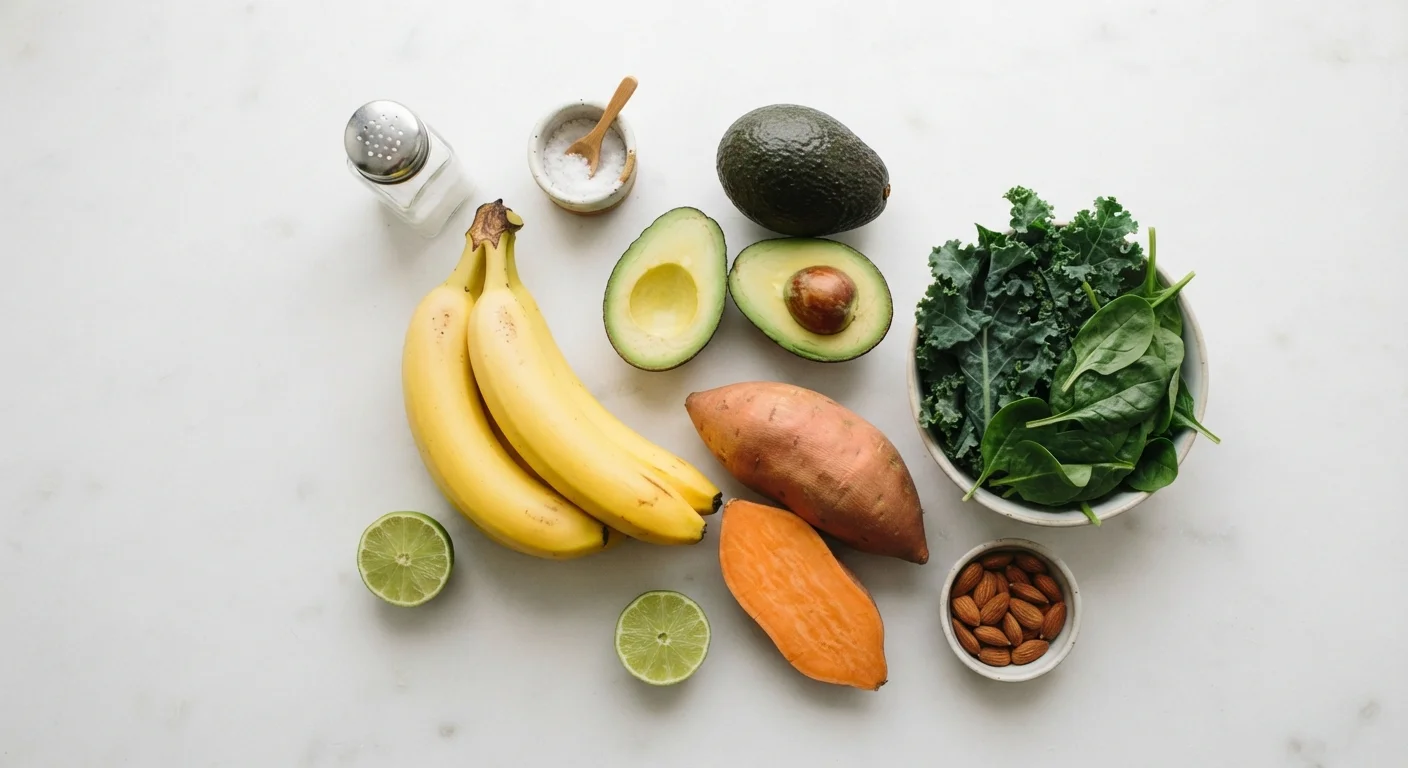
The practical implication is that rebalancing does not require counting milligrams with precision. Shifting toward a diet rich in fruits, vegetables, legumes, low-fat dairy, and whole grains — such as the DASH (Dietary Approaches to Stop Hypertension) eating pattern — naturally increases potassium while reducing the processed sodium load. Foods particularly high in potassium include sweet potatoes, white beans, spinach, avocado, bananas, yogurt, and salmon.
For adults managing chronic conditions, this guidance requires a layer of individualization. Kidney disease impairs potassium excretion, meaning high potassium intake can be genuinely hazardous in that population. Certain diuretics and blood pressure medications also alter electrolyte balance. Anyone in these categories should consult their healthcare provider before making significant changes. For broader context on dietary management of chronic illness, see general nutrition principles for adults with chronic conditions.
For most healthy adults, however, the evidence-based direction is clear: eat fewer processed foods high in added sodium, and prioritize whole foods that naturally deliver potassium. The two strategies reinforce each other — and together, they address the underlying imbalance that matters most for blood pressure and long-term heart health.
This article is for general informational and educational purposes only and does not constitute medical advice. Always consult a qualified healthcare professional before making significant dietary changes, especially if you have a chronic condition, take medications, or have been diagnosed with high blood pressure.