
Blood Pressure Monitoring vs. Cholesterol Testing: Two Screenings Every Adult Needs

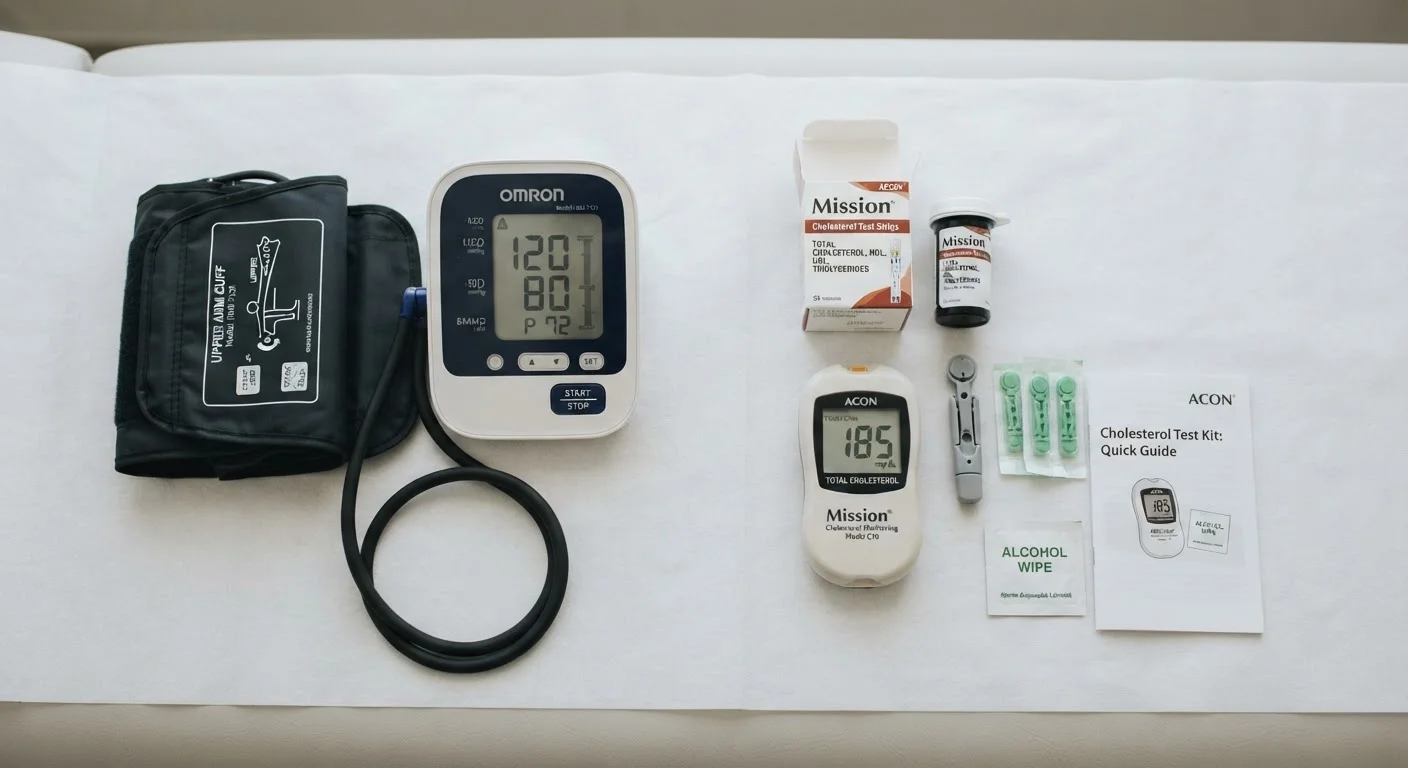
Key Takeaways
- Blood pressure monitoring is painless, instant, and recommended at every healthcare visit for adults.
- Cholesterol testing requires a blood draw and is typically recommended every four to six years for healthy adults.
- Both screenings reveal distinct cardiovascular risks that the other cannot detect.
- Elevated readings in either test usually produce no symptoms — making routine checks essential.
- Frequency of both tests should increase with age, family history, or existing risk factors.
- Neither result should be acted on without discussing findings with a qualified healthcare provider.
Option A
Blood Pressure Monitoring
The silent-threat detector checked at every visit.
Best for: Adults of all ages who want to catch hypertension early, especially those with family history, stress, or salt-heavy diets.
Option B
Cholesterol Testing
The lipid snapshot that reveals long-term arterial risk.
Best for: Adults starting in their 20s who want to understand their lifetime heart disease and stroke risk profile.
If you want the most frequent, lowest-barrier cardiovascular check
Blood Pressure Monitoring
Blood pressure can be measured in seconds at a clinic, pharmacy kiosk, or at home with a validated device — no fasting or blood draw required.
If you want a fuller picture of your long-term heart disease risk
Cholesterol Testing
A lipid panel breaks down LDL, HDL, triglycerides, and total cholesterol, giving clinicians the data needed to calculate your decade-long cardiovascular risk.
If you are a healthy adult with no known risk factors
Blood Pressure Monitoring
Guidelines recommend blood pressure checks at every routine visit. Cholesterol testing can follow the standard every-four-to-six-year schedule until risk factors change.
If you have a family history of heart attack, stroke, or high cholesterol
Cholesterol Testing
Family history substantially raises cardiovascular risk; earlier and more frequent lipid panels help clinicians assess whether intervention is needed sooner.
If you want the most complete preventive picture
Both screenings together
Blood pressure and cholesterol address separate but complementary risk pathways — only by tracking both can you and your provider make fully informed decisions.
What Each Screening Actually Measures
Blood pressure and cholesterol are frequently mentioned in the same breath — and for good reason. Both are key indicators of cardiovascular health. But they measure fundamentally different things, and neither can substitute for the other.
Blood pressure records the force your blood exerts against artery walls as your heart pumps. It is expressed as two numbers: systolic pressure (when the heart contracts) over diastolic pressure (when it relaxes), measured in millimeters of mercury (mmHg). A reading below 120/80 mmHg is considered normal by most clinical guidelines. Hypertension — persistently elevated pressure — damages blood vessels over time and dramatically raises stroke and heart failure risk. Crucially, most people with high blood pressure feel no symptoms.
Cholesterol testing, delivered as a lipid panel, measures the concentration of fats circulating in your blood. Key values include low-density lipoprotein (LDL, often called "bad" cholesterol), high-density lipoprotein (HDL, or "good" cholesterol), triglycerides, and total cholesterol. Excess LDL gradually deposits in artery walls, narrowing them — a process called atherosclerosis — that can lead to heart attack or stroke decades later.
See our guide to at-home cholesterol tests to understand what home lipid kits can and cannot tell you.
| Criterion | Blood Pressure Monitoring | Cholesterol Testing |
|---|---|---|
| What it measures | Force of blood against artery walls | Blood lipid levels (LDL, HDL, triglycerides) |
| Method | Arm cuff, no blood draw | Blood sample (vein or fingerstick) |
| Fasting required | No | Sometimes (varies by protocol) |
| Time to result | Seconds to minutes | Minutes to days (lab dependent) |
| Recommended frequency | Every routine visit (adults 18+) | Every 4–6 years (average risk adults) |
| Can be done at home | Yes, with validated device | Limited (basic kits available, less comprehensive) |
| Primary risk detected | Hypertension, stroke, heart failure | Atherosclerosis, heart attack, stroke |
| Symptoms when abnormal | Usually none | Usually none |
How Each Test Is Performed and How Often
The practical differences between these two screenings are significant, and understanding them helps families plan their preventive care calendar.
Blood pressure monitoring involves an inflatable cuff placed around the upper arm, which briefly restricts blood flow to generate a pressure reading. The test takes under two minutes, requires no preparation, and can be performed at a clinic, pharmacy, or at home using a validated automated device. The U.S. Preventive Services Task Force (USPSTF) recommends blood pressure screening for adults 18 and older at routine healthcare visits. Those with elevated readings or risk factors may be asked to monitor more frequently or to track readings at home over time. For guidance on accurate home technique, see our article on getting a reliable home blood pressure reading.
Cholesterol testing requires a blood sample, typically drawn from a vein in the arm or obtained via a fingerstick. Traditionally, patients were asked to fast for nine to twelve hours beforehand, though many clinical guidelines now accept non-fasting samples for initial screening. The USPSTF and the American Heart Association generally recommend a baseline lipid panel for adults starting in their 20s, with repeat testing every four to six years for those at average risk. Adults with elevated LDL, diabetes, or family history of cardiovascular disease may need annual or more frequent panels.
47%
U.S. adults with hypertension
The CDC estimates nearly half of American adults have high blood pressure, yet many are unaware because the condition typically causes no symptoms.
11.5%
Adults with high total cholesterol
According to CDC data, roughly 1 in 8 U.S. adults has total cholesterol above 240 mg/dL, placing them in the high-risk range.
~4 in 10
Adults who've had a cholesterol check in 5 years
CDC surveillance data suggest a significant share of adults are not meeting recommended cholesterol screening intervals, leaving risk undetected.
For a broader look at how these numbers fit into a man's overall health picture, see the three core numbers men should know.
Interpreting Results and What Comes Next
A number on a screen or lab report is only meaningful in context. Both screenings produce results that require professional interpretation — not just comparison to a reference range.
For blood pressure, a single elevated reading does not confirm hypertension. White-coat hypertension (elevated readings in clinical settings due to anxiety) is well-documented, which is why providers often take multiple readings across visits before making a diagnosis. A pattern of elevated readings typically prompts lifestyle counseling — around diet, physical activity, sodium intake, and weight — before or alongside any medical treatment discussion.
For cholesterol, LDL levels are interpreted alongside other factors: age, sex, smoking status, blood pressure, diabetes, and family history. Clinicians use validated risk-calculation tools to estimate a person's probability of a cardiovascular event over the next ten years. A moderately elevated LDL in a 35-year-old with no other risk factors carries very different implications than the same number in a 60-year-old with hypertension.
Women face a particular challenge: cardiovascular risk is frequently underestimated in women, and symptoms of heart disease can present differently. The article on blood pressure and cholesterol monitoring in women's long-term health provides additional context specific to that population.
Special Populations: Ask Your Provider
Screening recommendations can differ meaningfully for pregnant individuals, children and adolescents, older adults, and those with chronic conditions such as diabetes or kidney disease. If you or a family member falls into one of these groups, discuss an individualized screening timeline with a qualified healthcare provider rather than relying on general adult guidelines.
This article is for general informational and educational purposes only and is not a substitute for professional medical advice, diagnosis, or treatment. Always consult a qualified healthcare provider about your individual screening schedule and what your results mean for you.