

Key Takeaways
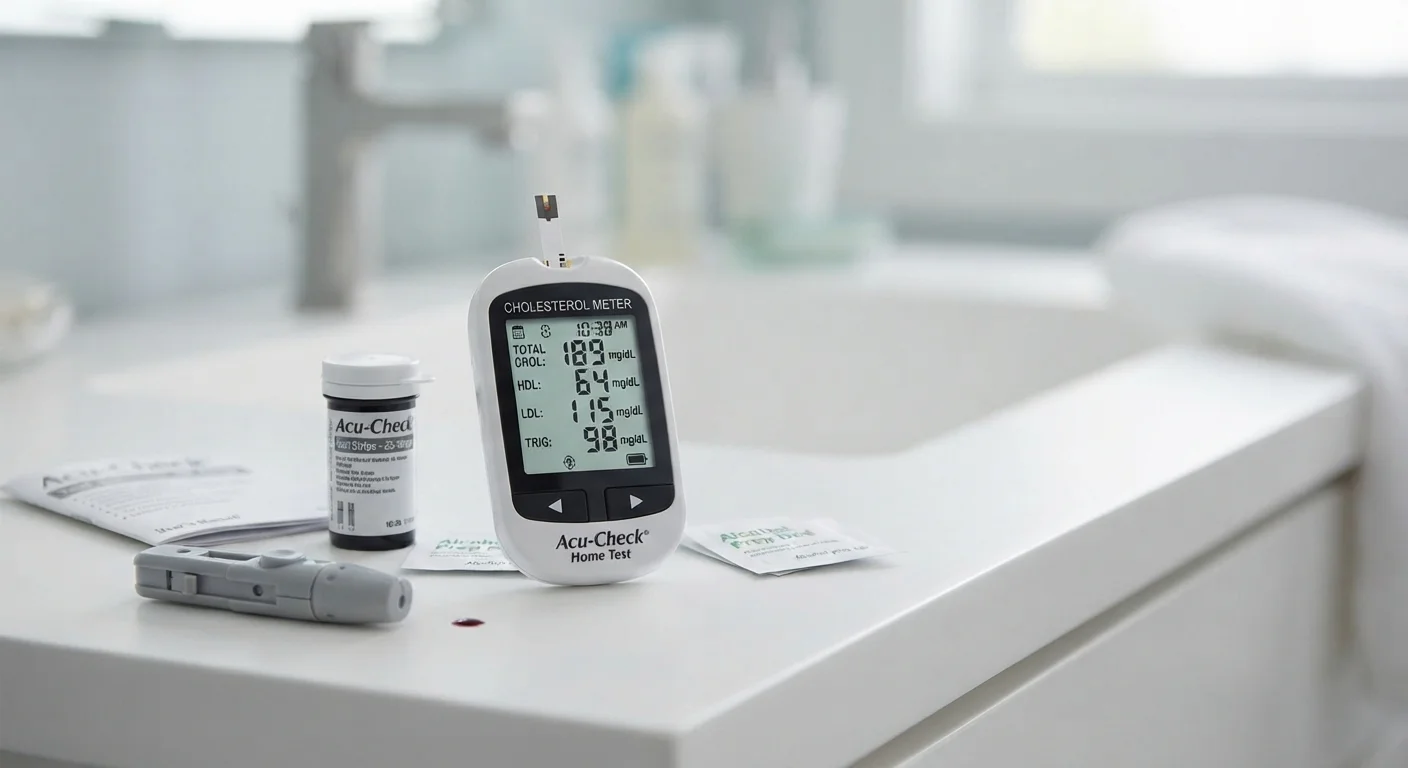
- At-home cholesterol tests typically measure total cholesterol, HDL, LDL, and triglycerides from a fingerstick blood sample.
- Results can vary in accuracy depending on test technique, fasting status, and device calibration.
- Home tests cannot assess all cardiovascular risk factors — a clinician's full panel provides important additional context.
- A normal home reading does not rule out cardiovascular risk; abnormal readings should always prompt a clinical follow-up.
- Home testing can be a useful monitoring tool between clinical visits, not a replacement for them.
Convenient access without a lab appointment
Families can collect a sample and get results at home in minutes, removing barriers like scheduling, travel, and wait times that may delay routine monitoring.
Encourages proactive heart-health awareness
Having a tangible number can motivate dietary and lifestyle changes, particularly for people who respond to concrete feedback about their health metrics.
Useful for trend tracking between clinical visits
For individuals already under medical supervision, periodic home readings can help assess whether lifestyle or medication adjustments are moving lipid values in the right direction.
Can prompt earlier clinical follow-up
An unexpectedly high reading at home may prompt someone to schedule a clinical lipid panel sooner than their next routine appointment, potentially identifying a problem earlier.
Misses advanced cardiovascular risk markers
Key indicators like ApoB, lipoprotein(a), and hsCRP are not measured by consumer devices, leaving significant gaps in a complete cardiovascular risk picture.
Accuracy limited by user technique and conditions
Fingerstick sample quality, fasting status, strip storage, and device handling all introduce variability that laboratory analyzers are specifically designed to eliminate.
Results lack clinical interpretive context
A lipid number means different things for different individuals; without a clinician reviewing personal risk factors together, a raw number can be misleading or falsely reassuring.
Risk of over-reliance or delayed professional care
A normal home reading may lead some individuals to skip scheduled clinical testing, potentially missing abnormalities that a full laboratory panel would have detected.
Cannot assess non-lipid cardiovascular risk factors
Blood pressure, blood glucose, inflammation, and family history all contribute to cardiovascular risk and require separate evaluation that home cholesterol devices cannot provide.
Our Verdict
At-home cholesterol tests offer a convenient way to track basic lipid values between clinical appointments, and they can motivate heart-health awareness. However, they miss key risk markers, carry accuracy limitations, and should never substitute for a full laboratory lipid panel interpreted by a healthcare provider.
Adults who are already under medical supervision for cholesterol management and want a simple way to track trends between scheduled lab visits.
How At-Home Cholesterol Tests Work
Most at-home cholesterol tests use a small lancet to collect a fingerstick blood sample, which is then applied to a test strip. The strip reacts chemically with lipids in the blood, and a handheld reader or color-change indicator converts the reaction into a numerical result. The process typically takes five to fifteen minutes.
Consumer devices generally report four values: total cholesterol, HDL (high-density lipoprotein, often called "good" cholesterol), LDL (low-density lipoprotein, sometimes called "bad" cholesterol), and triglycerides (a type of fat in the blood). These four markers together constitute a basic lipid panel.
For context on how home diagnostic tools fit into a broader monitoring picture, see our guide to at-home diagnostic tools.
Convenient access without a lab appointment
Families can collect a sample and get results at home in minutes, removing barriers like scheduling, travel, and wait times that may delay routine monitoring.
Encourages proactive heart-health awareness
Having a tangible number can motivate dietary and lifestyle changes, particularly for people who respond to concrete feedback about their health metrics.
Useful for trend tracking between clinical visits
For individuals already under medical supervision, periodic home readings can help assess whether lifestyle or medication adjustments are moving lipid values in the right direction.
Can prompt earlier clinical follow-up
An unexpectedly high reading at home may prompt someone to schedule a clinical lipid panel sooner than their next routine appointment, potentially identifying a problem earlier.
What At-Home Tests Don't Capture
A basic lipid panel is only one piece of cardiovascular risk assessment. At-home tests cannot measure apolipoprotein B (ApoB), a particle count that many cardiologists consider a more precise marker of arterial plaque risk than LDL alone. They also don't assess lipoprotein(a) — an inherited lipid fraction associated with elevated heart attack and stroke risk that standard panels often omit.
Beyond blood lipids, cardiovascular risk depends on blood pressure, blood glucose, inflammation markers like high-sensitivity C-reactive protein (hsCRP), family history, age, and smoking status. None of these appear on a home cholesterol reading. For a comparison of two key cardiovascular screenings families commonly track, see blood pressure monitoring vs. cholesterol testing.
Misses advanced cardiovascular risk markers
Key indicators like ApoB, lipoprotein(a), and hsCRP are not measured by consumer devices, leaving significant gaps in a complete cardiovascular risk picture.
Accuracy limited by user technique and conditions
Fingerstick sample quality, fasting status, strip storage, and device handling all introduce variability that laboratory analyzers are specifically designed to eliminate.
Results lack clinical interpretive context
A lipid number means different things for different individuals; without a clinician reviewing personal risk factors together, a raw number can be misleading or falsely reassuring.
Risk of over-reliance or delayed professional care
A normal home reading may lead some individuals to skip scheduled clinical testing, potentially missing abnormalities that a full laboratory panel would have detected.
Cannot assess non-lipid cardiovascular risk factors
Blood pressure, blood glucose, inflammation, and family history all contribute to cardiovascular risk and require separate evaluation that home cholesterol devices cannot provide.
Accuracy Factors Families Should Understand
Consumer cholesterol devices are regulated by the FDA as in vitro diagnostic devices and must meet defined accuracy standards, but real-world performance can vary. Key factors that affect result reliability include:
- Fasting status: Triglyceride readings in particular can be significantly elevated after eating. Most clinical lipid panels require a 9–12 hour fast; home test instructions should be followed carefully.
- Sample volume and technique: An inadequate blood drop or contaminated strip can skew results.
- Storage conditions: Test strips exposed to heat, humidity, or light may degrade before use.
- Device calibration: Unlike laboratory analyzers, handheld readers are not recalibrated regularly.
When to Seek a Clinical Lipid Panel
Major medical organizations generally recommend that adults have their cholesterol checked by a laboratory at regular intervals, with frequency depending on age, risk factors, and existing conditions. A home test does not substitute for this baseline. If you have not had a clinical lipid panel, or if a home reading is outside the normal range, consult a healthcare provider. People with diabetes, a family history of early cardiovascular disease, or other risk factors may need more frequent clinical monitoring.
A single abnormal home reading is not a diagnosis. Similarly, a result that appears normal does not confirm healthy arteries. Always discuss unusual readings with a qualified healthcare provider.
Putting Home Results in Context
Home cholesterol tests are most useful as a trend-tracking tool for people already being managed by a clinician — for example, someone monitoring the effect of dietary changes between scheduled lab visits. They are less useful as a stand-alone screening tool for people who have never had a clinical lipid panel.
Families should also be aware that result interpretation depends on individual health context. The same LDL number carries different implications for a 35-year-old with no risk factors versus a 55-year-old with diabetes and a family history of early heart disease. Common misconceptions about at-home health tests explores how families frequently misread what home results actually confirm.
~50%
Adults with high cholesterol unaware of their status
The CDC has reported that approximately half of adults who have high LDL cholesterol are not receiving treatment, highlighting gaps in routine lipid screening.
9–12 hrs
Recommended fasting window before lipid testing
Clinical guidelines generally recommend fasting for 9–12 hours before a lipid panel to obtain accurate triglyceride measurements, a requirement home tests often underscore.
This article is for general informational purposes only and does not constitute medical advice. Always consult a qualified healthcare professional for personal health decisions, interpretation of test results, or concerns about cardiovascular health.