

Key Takeaways
- Batch cooking reduces total weekly time in the kitchen but requires upfront planning and storage capacity.
- Daily cooking preserves more nutrients in heat-sensitive vegetables and supports greater meal variety.
- Neither approach is universally superior — household size, schedules, and food preferences all matter.
- Combining both strategies can offer a practical middle ground for most families.
- Food safety is a key consideration with batch cooking; proper storage and reheating practices are essential.
Option A
Batch Cooking
The strategic, time-efficient approach for planned-ahead families.
Best for: Households with busy weekday schedules who can dedicate one or two blocks of time per week to cooking in bulk.
Option B
Daily Cooking
The fresh, flexible approach for families who value variety and spontaneity.
Best for: Families with lighter weekday time constraints or those who prioritize freshly prepared meals and rotating menus.
If your weeknights are consistently hectic and time is your biggest barrier
Batch Cooking
Preparing staples in bulk on weekends or days off means nutritious meals are always within reach without daily effort, reducing the temptation of less healthful convenience options.
If your family values freshness, variety, and interactive meal preparation
Daily Cooking
Cooking each meal fresh preserves the most heat-sensitive nutrients and allows menu flexibility based on what produce is available and what your family is craving.
If you're feeding children with very different nutritional needs alongside adults
Batch Cooking
Pre-cooked base ingredients like grains, legumes, and proteins can be quickly assembled into age-appropriate portions, reducing the need for multiple separate meal preparations.
If your household has unpredictable schedules or fluctuating headcounts
Daily Cooking
Daily cooking scales easily to whoever is home that night, minimizing food waste from over-prepared batches that go uneaten.
If you want a sustainable, long-term system that balances effort and freshness
Batch Cooking
A hybrid model — batch-cooking proteins and grains while finishing dishes fresh — captures efficiency benefits without sacrificing variety or nutritional quality.
Understanding the Two Approaches
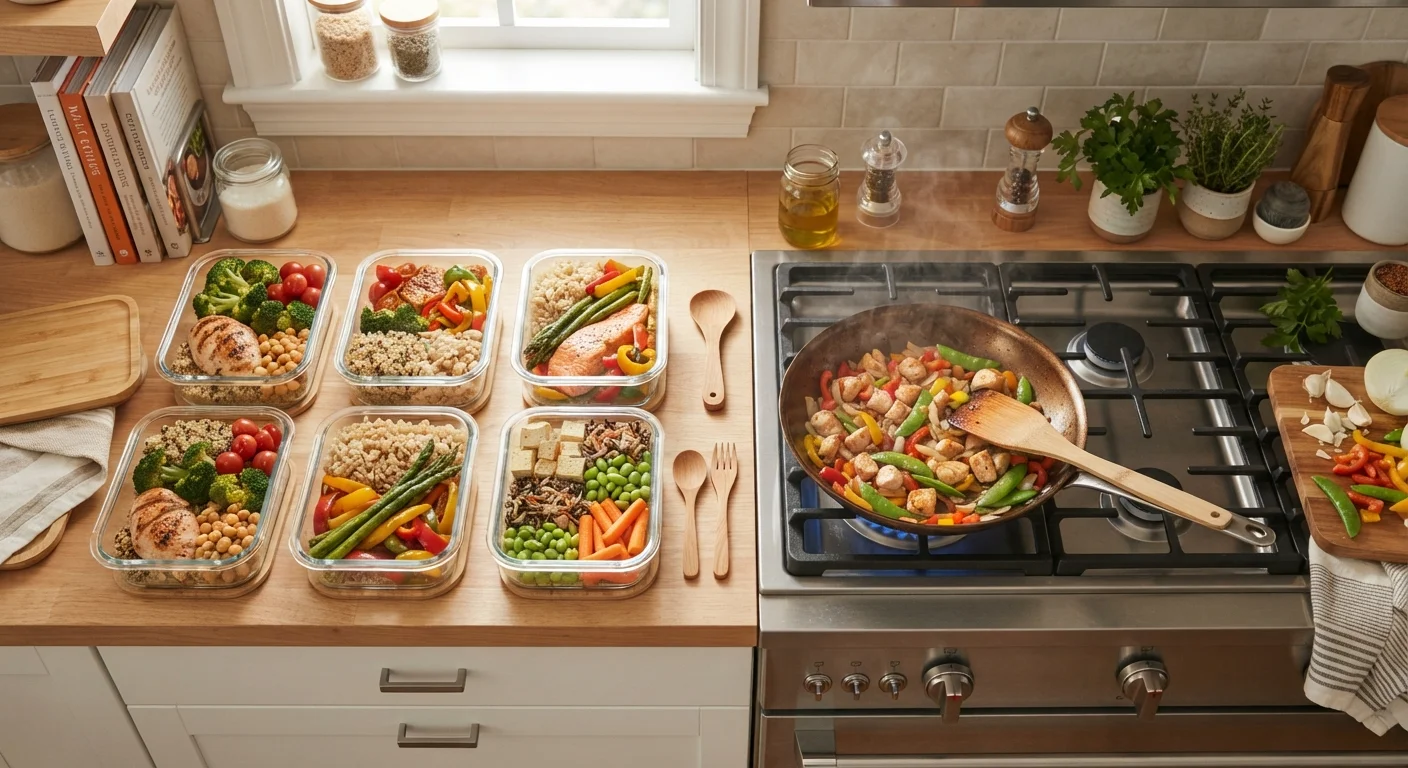
Batch cooking involves preparing large quantities of food during one dedicated session — typically on a weekend — then portioning and storing meals or components to use throughout the week. Daily cooking, by contrast, means preparing each meal from scratch (or close to it) at the time it will be eaten.
Both are legitimate, evidence-supported strategies for maintaining healthy family eating. The distinction isn't really about which is "healthier" in absolute terms — it's about which aligns better with a given household's time, energy, and food preferences. If you're still building a framework for how meals fit into your week, the Family Meal Planning From the Ground Up guide covers the foundational concepts worth understanding first.
| Criterion | Batch Cooking | Daily Cooking |
|---|---|---|
| Weekly time in kitchen | Concentrated (1–2 long sessions) | Distributed (shorter, daily sessions) |
| Upfront planning required | High — menus planned in advance | Low — decide day-of |
| Nutrient freshness | May decline in stored produce | Highest — consumed shortly after cooking |
| Meal variety day-to-day | Lower unless components are mixed creatively | Higher — fully flexible each day |
| Food waste risk | Higher if batch isn't fully consumed | Lower — cook only what's needed |
| Storage requirements | Significant fridge/freezer space needed | Minimal — standard pantry and fridge |
| Food safety complexity | Higher — proper cooling and reheating critical | Lower — food consumed same day |
| Best household size | Medium to large families | Smaller households or variable headcounts |
Time, Effort, and the Weekly Math
Time investment is often the deciding factor for busy families. Batch cooking consolidates labor into one or two sessions, which can feel more manageable than returning to the kitchen six nights a week. Research in behavioral nutrition suggests that decision fatigue — the mental toll of repeated daily choices — contributes to less healthful food decisions late in the week. Having ready-made components removes that friction.
Daily cooking, however, distributes effort more evenly. For families where one or more members genuinely enjoy cooking, the daily ritual can be a source of stress relief rather than additional burden. It also eliminates the upfront planning load that batch cooking requires — knowing what your household will want to eat four days from now isn't always easy.
~40%
Of US families skip dinner at least once per week
Survey data from the American Heart Association has highlighted weeknight dinner skipping as a persistent barrier to consistent family nutrition.
3–4 days
Safe refrigerator storage window for cooked proteins
The USDA Food Safety and Inspection Service recommends consuming most cooked meats and legumes within 3–4 days of refrigeration.
25–50%
Potential vitamin C loss in stored cooked vegetables
Nutritional science literature indicates water-soluble vitamins can decrease significantly in cooked vegetables stored over several days, varying by food type and storage conditions.
The question of scheduling structure is broader than just meals. Structured routines versus flexible schedules is a tension that shows up across many aspects of family health, and your comfort with rigid planning will likely predict which cooking approach you'll sustain.
Nutritional Considerations: Freshness vs. Consistency
A common concern about batch cooking is nutrient degradation during storage. This is worth taking seriously, though the picture is nuanced. Water-soluble vitamins — particularly vitamin C and some B vitamins — do decrease over time after cooking, especially in vegetables stored for more than two or three days. Fat-soluble vitamins (A, D, E, K) and minerals are generally more stable.
That said, batch-cooked legumes, whole grains, and proteins retain excellent nutritional value after proper refrigeration. The more significant nutrition risk with daily cooking is what happens when families don't have time: meals get skipped, or ultra-processed alternatives fill the gap. A nutritious batch-cooked meal eaten on day three is far preferable to a skipped dinner or a high-sodium drive-through option.
For families adapting portions across age groups — young children through adults — pre-cooked batch components also simplify the assembly of appropriately sized servings. See portion guidance for mixed-age households for practical strategies on this front.
This article is for general informational purposes only and does not constitute medical or dietary advice. Consult a registered dietitian or qualified healthcare professional for personalized guidance.