

Key Takeaways
- Auditing nutrition variety before shopping helps prevent repetitive, unbalanced weekly menus.
- Aligning meals with your weekly schedule reduces last-minute takeout decisions.
- Checking pantry inventory first cuts grocery costs and reduces food waste.
- Involving the whole family in planning increases mealtime cooperation and food acceptance.
- Batch-prep decisions made before the week starts save meaningful time on busy evenings.
Summary
22 items · 20–40 minutes
Why a Weekly Meal Planning Checklist Works
Sitting down once a week to plan meals before you shop is one of the most evidence-supported habits for improving household nutrition and reducing food costs. Without a structured review, it is easy to default to the same five meals, skip vegetable variety, or overbuy ingredients that expire unused. This checklist gives you a repeatable framework to catch those gaps before they cost you.
If you are new to the process altogether, the beginner's guide to family meal planning covers the foundational concepts worth understanding first. For families ready to go deeper on dinner structure specifically, structuring a realistic five-dinner week is a practical companion to this checklist.
Work through the checklist groups below in order — they are designed to move from big-picture nutrition decisions down to logistics and prep, mirroring a natural planning workflow.
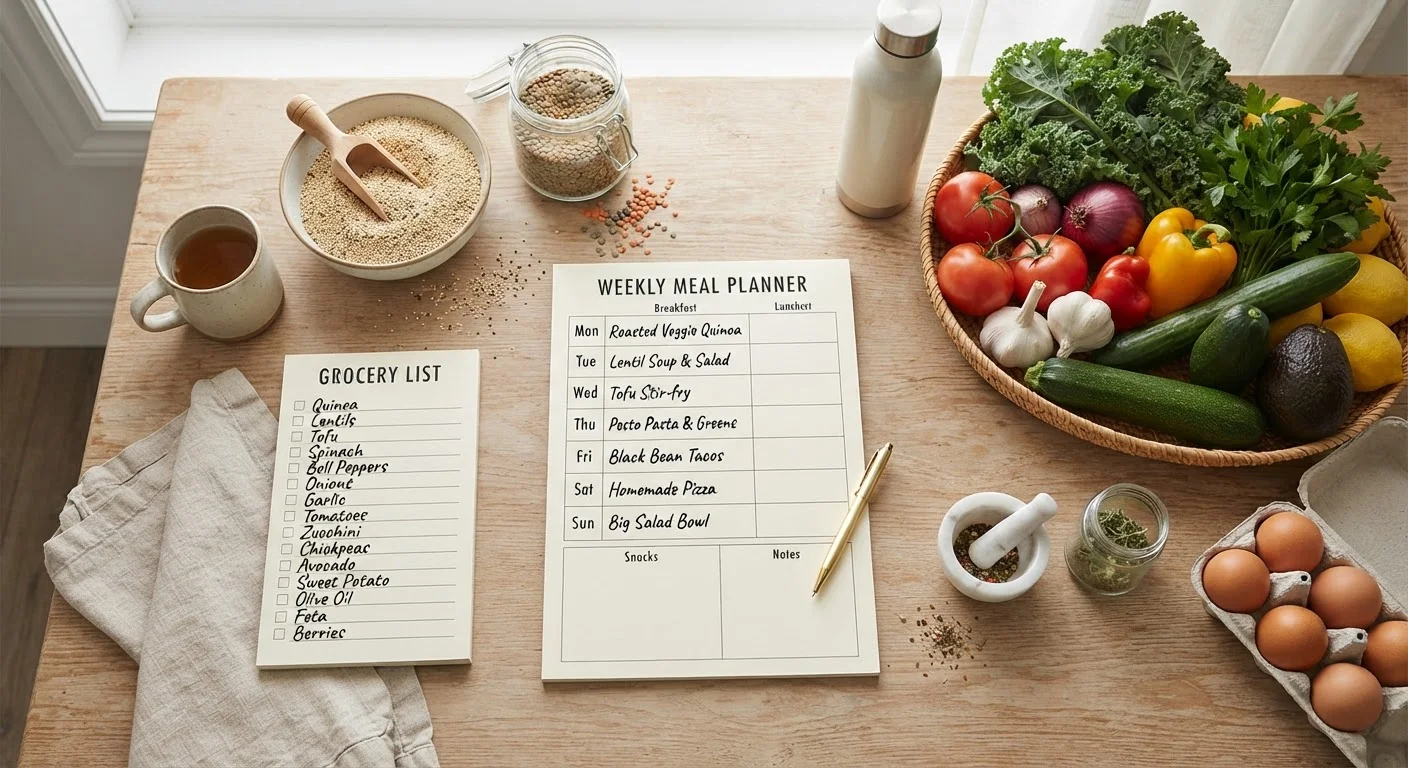
Weekly meal planner template (paper or digital)
Provides a structured grid to assign meals to each day and track variety across the week.
Running pantry inventory list
Helps you audit existing staples before writing your shopping list, reducing duplicate purchases.
Household calendar or scheduling app
Used to cross-reference busy evenings with meal complexity so quick dinners land on the right nights.
Grocery budget tracker (spreadsheet or app)
Allows you to estimate and track weekly food spend against your household budget.
Nutrition reference guide (e.g., MyPlate)
Provides a quick reference for recommended food group proportions when reviewing meal balance.
How to Use This Checklist Effectively
Set aside 20 to 40 minutes before your weekly grocery shop — ideally the evening before or the morning of. Keep your calendar open alongside this checklist: a packed Tuesday evening calls for a different dinner than a relaxed Sunday. Note which nights you will need meals in under 30 minutes and flag them during the planning stage, not at 6 p.m. when everyone is hungry.
Run through the Nutrition Variety and Portion and Balance groups first to set your menu targets. Then move to the Pantry Audit and Budget Alignment groups before writing your shopping list — this order typically cuts both over-purchasing and forgotten items. Finish with the Prep Logistics group to identify any batch-cooking or advance prep that will save time mid-week.
Special Dietary Needs Require Professional Input
This checklist is a general planning aid for healthy families. If any family member has a diagnosed condition, food allergy, eating disorder, or specific clinical nutritional need, the planning process should be guided by a registered dietitian or relevant healthcare professional. General meal planning frameworks are not a substitute for individualized medical nutrition therapy.
For a broader view of how meal planning fits into overall family wellness habits, the Family Healthy Habits Audit provides a complementary weekly review covering sleep, activity, and screen time alongside nutrition.
Nutrition Variety
Portion and Balance
Pantry and Fridge Audit
Budget Alignment
Schedule and Logistics
This article is for general informational and educational purposes only and does not constitute medical or dietary advice. Consult a qualified healthcare professional or registered dietitian before making significant changes to your family's diet, particularly for children, pregnant individuals, older adults, or those managing chronic health conditions.