

Key Takeaways
- Toddlers need calorie-dense foods to support rapid brain and body growth in a small stomach.
- School-age children benefit most from consistent meals built around whole foods and adequate iron and calcium.
- Teenagers have the highest absolute calcium and iron requirements of any life stage.
- Protein, healthy fats, and micronutrients matter more than total calories at every growth stage.
- Consulting a pediatric healthcare provider is the best way to identify individual nutritional gaps.
- A diet rich in varied whole foods — not supplements — should be the foundation for children's nutrition.
Child Nutritional Needs by Stage
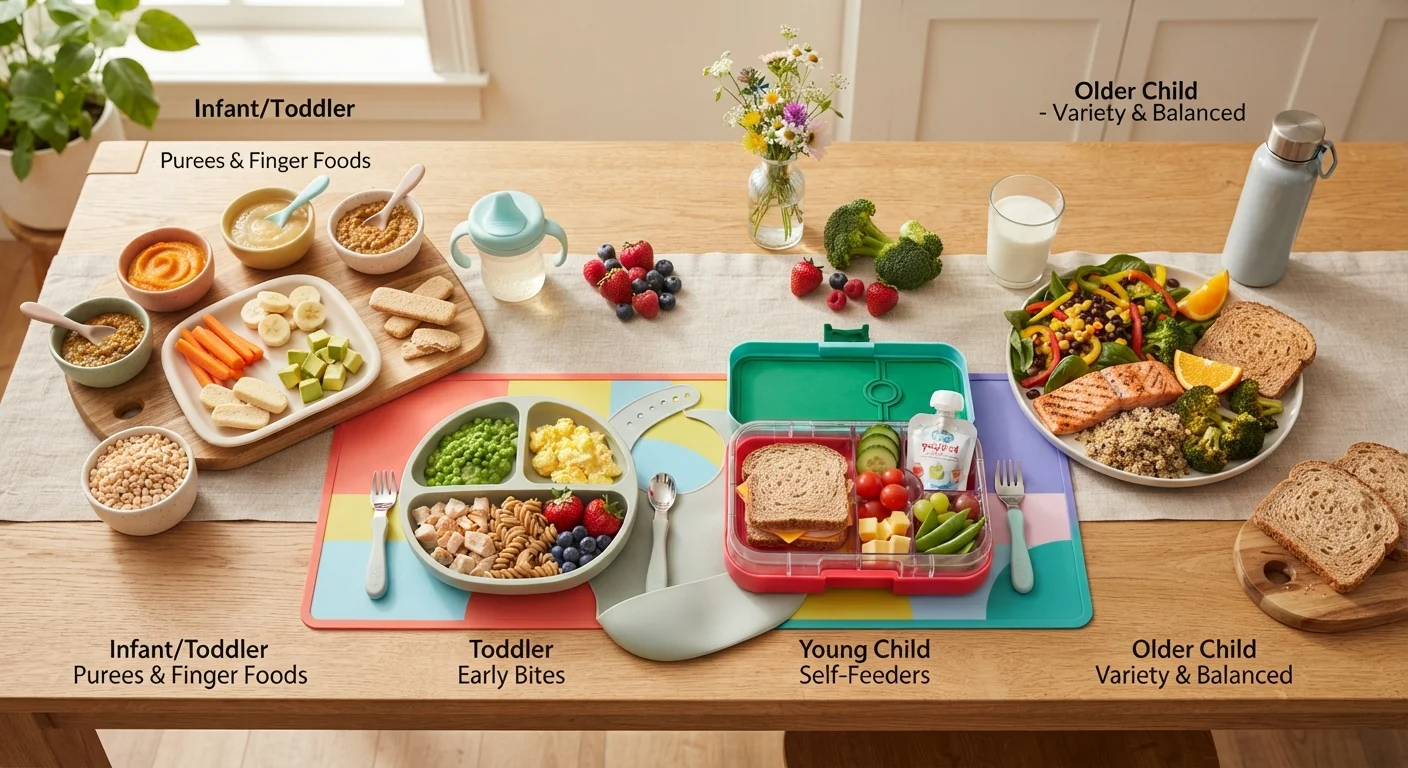
Children's dietary requirements are not simply smaller versions of adult needs — they shift significantly at each stage of growth and development. From rapid brain development in toddlers to the bone-building demands of puberty, different ages call for different nutritional priorities. Understanding these stage-specific needs helps families support healthy physical and cognitive development through food.
Dietary Reference Intakes (DRIs), established by the National Academies of Sciences, Engineering, and Medicine, provide age- and sex-specific targets for energy, macronutrients, vitamins, and minerals that inform pediatric nutrition guidance in the U.S.
Toddlers (Ages 1–3): Fueling a Rapidly Developing Brain
The first three years of life involve some of the most dramatic brain growth a human will ever experience — and diet plays a direct role. Toddlers need calorie-dense foods packed into small portions because their stomach capacity is limited but their developmental demands are high.
Key priorities include:
- Healthy fats: The brain is roughly 60% fat. Omega-3 fatty acids — found in fatty fish, walnuts, and flaxseed — support neurological development. Full-fat dairy remains appropriate for most toddlers.
- Iron: Iron-deficiency anemia is one of the most common nutritional problems in young children and can impair cognitive development. Iron-rich foods include fortified cereals, meat, beans, and lentils.
- Zinc: Supports immune function and physical growth. Found in meat, dairy, and legumes.
Texture and variety exposure at this stage matter beyond nutrition — repeated exposure to diverse foods early in life is associated with less picky eating behavior later. Toddlers may need to encounter a new food 10 or more times before accepting it, so persistence without pressure is key.
Offer New Foods Without Pressure
Research supports a 'division of responsibility' approach: parents decide what foods are offered and when, while children decide whether and how much to eat. This framework, developed by dietitian Ellyn Satter, is widely endorsed by pediatric nutrition professionals and helps children develop healthy self-regulation around food.
School-Age Children (Ages 4–11): Building the Foundation
School-age children experience steadier growth than toddlers but continue building bone density, muscle, and cognitive capacity. Consistent meal patterns — particularly breakfast — are associated with better academic performance and attention in research literature.
Nutritional priorities at this stage:
- Calcium and Vitamin D: These work together to build peak bone mass, a process that continues into early adulthood. Dairy products, fortified plant milks, leafy greens, and sunlight exposure all contribute.
- Complex carbohydrates: Whole grains, legumes, and starchy vegetables provide sustained energy for both physical activity and learning.
- Fiber: Supports gut health and helps regulate energy. Fruits, vegetables, and whole grains are the best sources.
This is also a stage where food habits and preferences solidify. Involving children in meal preparation, grocery shopping, and food choices builds a positive relationship with eating that extends far beyond childhood. For a broader picture of building wellness habits at this stage, see healthy habits across life stages.
90%
Peak adult bone mass built by age 18
According to the National Institutes of Health, approximately 90% of peak bone mass is accumulated by late adolescence, making calcium and vitamin D intake in childhood and teens especially critical.
1,300 mg
Daily calcium recommended for teenagers
The National Academies of Sciences, Engineering, and Medicine sets the Recommended Dietary Allowance for calcium at 1,300 mg/day for adolescents aged 9–18 — higher than any other age group.
~15%
U.S. children with iron deficiency
The CDC has estimated that iron deficiency affects approximately 14–15% of adolescent girls in the United States, making it the most prevalent micronutrient deficiency in this population.
Teenagers (Ages 12–18): Peak Demand Meets Peak Independence
Adolescence is arguably the most nutritionally demanding period of childhood. Puberty triggers rapid increases in bone density, muscle mass, and blood volume — all of which require specific nutrients in large amounts. At the same time, teens are gaining independence over their food choices, often eating away from home more frequently.
The standout nutrients for teenagers:
- Calcium: Teens have higher calcium requirements than adults. The recommended intake is 1,300 mg per day — more than any other age group. Approximately 90% of peak adult bone mass is built by age 18.
- Iron: Adolescent girls face significantly increased iron needs with the onset of menstruation. Iron-deficiency is the most common nutritional deficiency in teenage girls in the U.S.
- Protein: Supports rapid muscle development, particularly in boys during mid-to-late puberty. Protein quality matters — varied sources including meat, fish, eggs, dairy, and legumes provide a full amino acid profile.
For a deeper look at the biological drivers behind these shifts, see nutrition during puberty. Teen athletes have additional fuel requirements addressed in our sports nutrition for young athletes guide.
This article is for general informational purposes only and does not constitute medical or dietary advice. Always consult a qualified pediatrician or registered dietitian for guidance tailored to your child's individual needs.