
At-Home Pregnancy Tests: How They Detect hCG and What Affects Their Reliability

Key Takeaways
- At-home pregnancy tests detect hCG, a hormone that appears in urine only after a fertilized egg implants in the uterus.
- Testing too early is the most common reason for a false-negative result, since hCG levels may not yet be detectable.
- Evaporation lines, dilute urine, and expired tests are frequent sources of misread results.
- A positive result on any FDA-cleared test warrants a follow-up appointment with a healthcare provider.
- Certain medications and medical conditions can affect hCG levels, making professional confirmation especially important in those cases.
At-Home Pregnancy Test
An at-home pregnancy test is a disposable diagnostic device that detects the presence of human chorionic gonadotropin (hCG) — a hormone produced by a developing placenta — in a urine sample. These tests use a chemical reaction to produce a visible result, typically within a few minutes. They are designed for self-use without clinical training and are regulated by the U.S. Food and Drug Administration (FDA) as over-the-counter medical devices.
Most at-home pregnancy tests use lateral flow immunoassay technology, in which antibodies specific to hCG migrate along a test strip and bind to the hormone if it is present, triggering a color change at designated line positions.
How At-Home Pregnancy Tests Work
At-home pregnancy tests rely on a process called lateral flow immunoassay. When urine is applied to the absorbent tip of the test strip, it travels along a treated membrane. That membrane carries antibodies — proteins engineered to bind specifically to human chorionic gonadotropin (hCG), a hormone produced by placental tissue after a fertilized egg implants in the uterine wall.
If hCG is present in the urine, it binds to the antibodies and triggers a visible color reaction at a specific location on the strip — the result line. A control line, which appears regardless of pregnancy status, confirms the test functioned correctly. Absence of a control line means the test is invalid and should be discarded.
Digital tests follow the same biochemical principle but add an electronic reader that interprets the color change and displays a word result — such as "Pregnant" or "Not Pregnant" — to reduce the ambiguity of judging faint lines visually.
20–25 mIU/mL
Typical hCG detection threshold for most home tests
Most FDA-cleared at-home pregnancy tests are designed to detect hCG at concentrations around 20–25 milli-international units per milliliter of urine.
6–12 days
Days after fertilization when implantation typically occurs
According to reproductive medicine literature, implantation — which triggers hCG production — generally occurs within this window after fertilization.
~48–72 hours
Time for hCG levels to approximately double in early pregnancy
In a typical early pregnancy, hCG concentrations roughly double every 48 to 72 hours, which is why waiting a few days before retesting can produce a clearer result.
What hCG Levels Mean for Test Accuracy
hCG is not present in urine before implantation. After implantation — which typically occurs 6 to 12 days after fertilization — levels begin rising and roughly double every 48 to 72 hours in early pregnancy. Most FDA-cleared at-home tests are designed to detect hCG concentrations as low as 20–25 mIU/mL (milli-international units per milliliter), though sensitivity varies by device.
This timing is why testing too early is the most common cause of a false-negative result. If hCG has not yet reached the test's detection threshold, the strip will read negative even if implantation has occurred. Waiting until the first day of a missed period gives hCG sufficient time to accumulate in most pregnancies.
For a broader perspective on how home diagnostic tools manage detection thresholds and timing, see our overview: At-Home Diagnostic Tools: What Families Should Know Before They Start.
Common Factors That Affect Reliability
Even when used correctly, several variables can influence results:
- Test timing: Testing before hCG reaches detectable levels produces false negatives. Most manufacturers recommend testing no earlier than the first day of a missed period.
- Urine concentration: Heavily diluted urine — from drinking large amounts of fluid — can lower detectable hCG. First-morning urine generally provides the most concentrated sample.
- Expired or improperly stored tests: Heat, humidity, and age degrade the antibodies on the strip. Always check the expiration date and store tests as directed on the packaging.
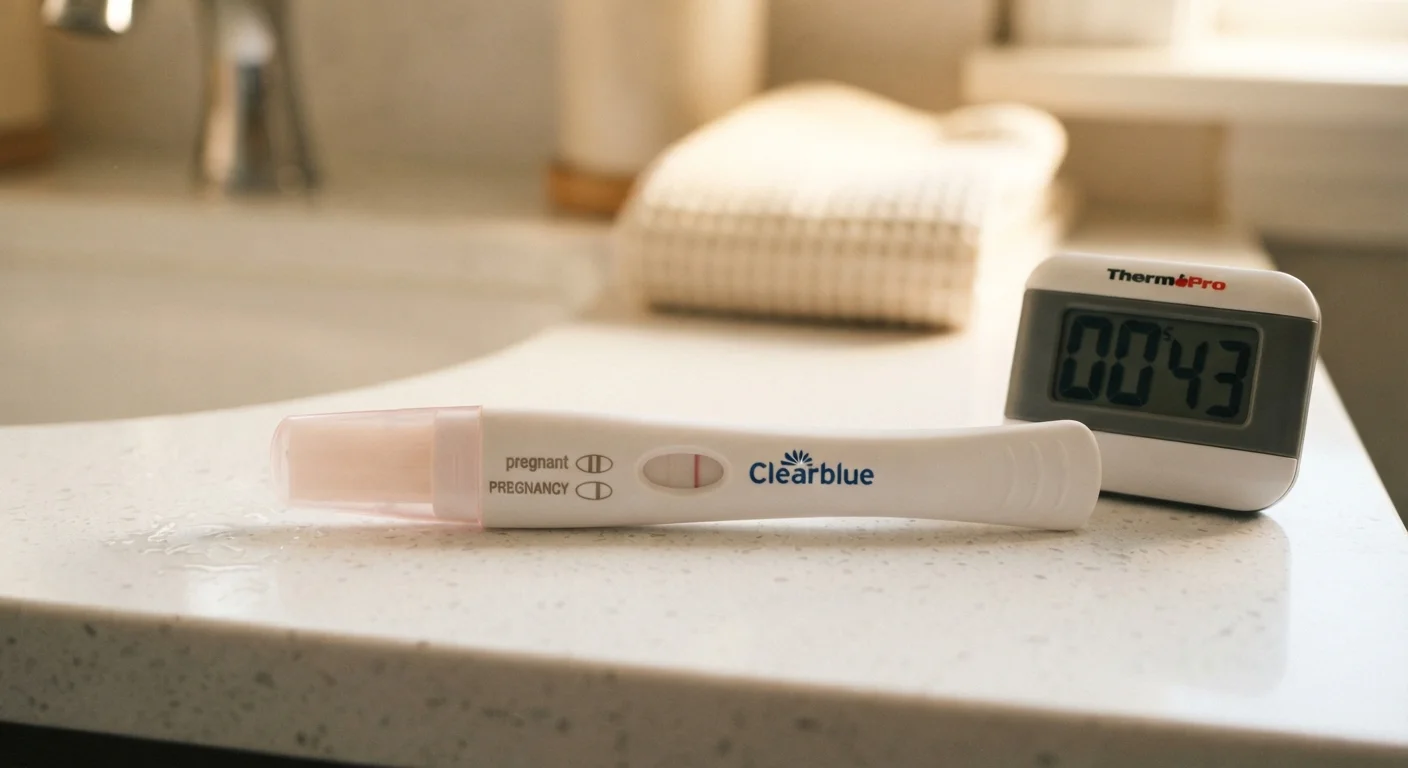
- Evaporation lines: As urine dries on the strip, a faint, colorless or gray line can appear in the result window after the reading time has passed. This evaporation line is not a positive result. Reading the test within the manufacturer's specified window — typically 3 to 5 minutes — prevents misinterpretation.
- Certain medical conditions: Rare conditions, including some tumors that secrete hCG, can produce a positive result unrelated to pregnancy. A healthcare provider can investigate any unexpected positive.
Understanding these variables helps set realistic expectations. For more on what home tests can and cannot tell you, see Common Misconceptions About At-Home Health Tests.
Use First-Morning Urine for Best Accuracy
First-morning urine is the most concentrated of the day, giving it the highest likelihood of containing detectable hCG levels early in pregnancy. If you must test at another time of day, avoid drinking large amounts of fluid in the hours before testing. Always follow the specific instructions included with your test device, as read-time windows and collection methods can vary.
Interpreting Results and Next Steps
Any positive result — including a faint line appearing within the result window — is generally considered a positive, because even low hCG levels indicate the hormone's presence. A negative result when a period is still absent after several days may warrant retesting or a visit to a clinician.
Following proper technique matters as much as the test itself. Our practical checklist for using at-home diagnostic devices safely walks through storage, timing, and handling steps that apply to pregnancy tests and other home tools alike.
A confirmed positive result should always prompt a timely appointment with a qualified healthcare provider. Early prenatal care supports healthy outcomes and allows a clinician to confirm the pregnancy through additional methods, estimate gestational age, and address any individual health considerations. Special-population considerations — including those with chronic conditions, fertility treatments, or irregular cycles — make professional guidance especially important.
This article is for general informational and educational purposes only and does not constitute medical advice. Always consult a qualified healthcare professional with questions about your health or a specific test result.