

Key Takeaways
- Rapid antigen tests detect viral proteins and return results in 15–30 minutes at home.
- PCR tests amplify genetic material and are significantly more sensitive than antigen tests.
- A negative rapid antigen result during active symptoms may warrant PCR confirmation.
- PCR tests typically require a lab and return results within 24–72 hours.
- Both test types are authorized by the FDA but serve different clinical scenarios.
- Always consult a healthcare provider to interpret results in the context of your symptoms.
Option A
Rapid Antigen Test
The fast, accessible frontline screening tool.
Best for: Quick symptom-present screening at home or in clinics when a same-day result is needed.
Option B
PCR Test
The laboratory gold standard for diagnostic accuracy.
Best for: Confirming or ruling out infection with the highest available accuracy, especially when clinical decisions depend on the result.
If you need a result quickly while symptomatic
Rapid Antigen Test
Antigen tests deliver actionable results within 30 minutes without a lab visit, making them practical for immediate isolation decisions.
If you need the most accurate confirmation of infection
PCR Test
PCR's ability to amplify trace genetic material makes it far more sensitive, reducing the risk of false-negative results even early in infection.
If a negative rapid test result doesn't match your symptoms
PCR Test
Healthcare providers often recommend PCR follow-up when clinical symptoms are present but a rapid antigen test returns negative.
If you are monitoring a household during a known exposure
Rapid Antigen Test
Serial testing with rapid antigen tests over several days can help identify developing infection as viral load increases.
How Each Test Detects Illness
Rapid antigen tests and PCR (polymerase chain reaction) tests both detect the presence of a pathogen, but they operate through entirely different biological mechanisms — and that difference has direct implications for accuracy and appropriate use. For a broader introduction to how at-home diagnostic devices work in general, see our guide to at-home diagnostic tools.
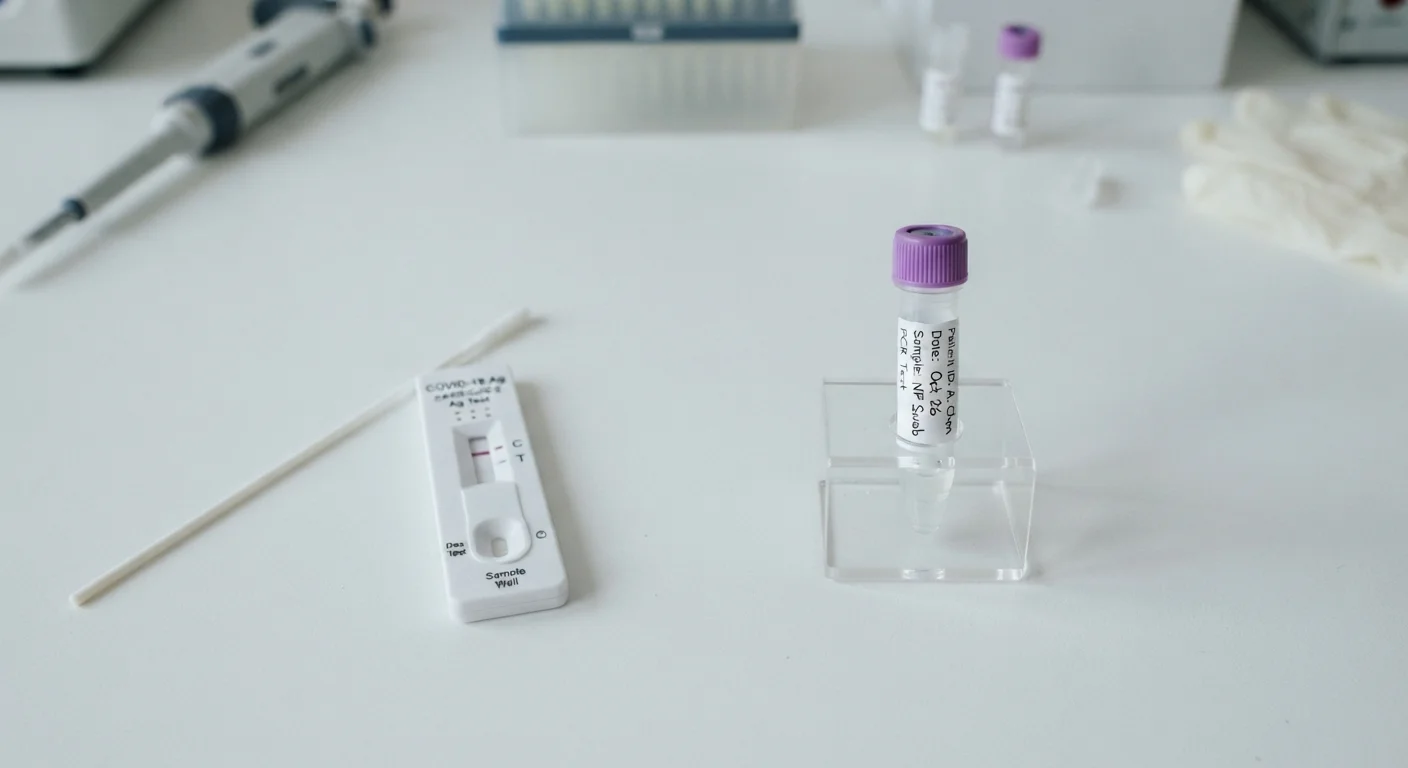
Rapid antigen tests work by identifying specific proteins — called antigens — on the surface of a virus. A nasal swab sample is applied to a test strip coated with antibodies designed to bind those antigens. If enough viral protein is present, a visible line appears in a result window, typically within 15–30 minutes. This process requires no laboratory equipment and can be performed at home.
PCR tests take a different approach. They detect the genetic material (RNA or DNA) of a pathogen and use a chemical process to amplify even tiny amounts of that material into quantities large enough to measure. Because PCR can detect genetic fragments at extremely low concentrations, it can identify infection earlier in its course and is far less likely to miss a true positive.
| Criterion | Rapid Antigen Test | PCR Test |
|---|---|---|
| What it detects | Viral surface proteins (antigens) | Viral genetic material (RNA/DNA) |
| Turnaround time | 15–30 minutes | 24–72 hours (lab required) |
| Sensitivity | ~64–90% (varies by viral load) | >95% in most studies |
| Specificity | ~97–99% | ~97–99% |
| Where it's performed | At home or point-of-care | Clinical laboratory |
| FDA authorization | Yes (EUA or cleared) | Yes (EUA or cleared) |
| Best timing for use | During peak symptom period | Early infection or symptom confirmation |
Accuracy, Sensitivity, and What Results Really Mean
The key technical difference between the two tests is sensitivity — the ability to correctly identify people who are actually infected. PCR tests have consistently demonstrated sensitivity above 95% in controlled studies, while rapid antigen tests generally range from 64–90% sensitivity depending on the pathogen, the stage of illness, and the viral load present at the time of testing.
>95%
Typical PCR test sensitivity
PCR tests consistently demonstrate high sensitivity across multiple peer-reviewed evaluations of respiratory pathogen detection.
64–90%
Rapid antigen test sensitivity range
Sensitivity varies based on viral load, timing of test relative to symptom onset, and the specific pathogen being detected.
15–30 min
Average rapid antigen result time
Most FDA-authorized rapid antigen tests provide a readable result within this window under home-use conditions.
Specificity — the ability to correctly identify people who are not infected — is high for both test types, typically above 97%. This means false positives are uncommon with either method.
A negative rapid antigen result during peak symptoms carries more uncertainty than a negative PCR result. Many clinical guidelines recommend PCR confirmation when rapid antigen tests return negative in symptomatic individuals. Families should be aware that no test eliminates all diagnostic uncertainty — results should always be interpreted alongside symptoms and exposure history by a qualified healthcare provider. To avoid common interpretation errors, review common misconceptions about at-home health tests.
Practical Considerations: When to Use Each
Choosing between a rapid antigen test and a PCR test depends on the clinical situation, available turnaround time, and what the result will be used for.
- Use a rapid antigen test when you have active symptoms and need an immediate result to inform isolation or next steps — particularly when viral load is likely high and the test is most sensitive.
- Use a PCR test when diagnostic certainty is needed: for travel documentation, before contact with vulnerable individuals, or when symptoms persist despite a negative rapid antigen result.
- Consider serial rapid testing if exposure occurred recently but symptoms haven't fully developed. Retesting over 24–48 hours increases the likelihood of catching infection as viral load rises.
It is worth noting that test performance can vary by age group and underlying health conditions. Appropriate use of diagnostic tools varies across life stages, and families with young children or older adults should discuss testing strategies with a healthcare provider.
This article is for general informational purposes only and does not constitute medical advice. Always consult a qualified healthcare professional for guidance on testing, symptoms, or any personal health decisions.