

Key Takeaways
- A normal adult resting heart rate ranges from 60 to 100 beats per minute.
- Consistently elevated RHR can signal cardiovascular risk, even without other symptoms.
- Aerobic fitness is one of the most reliable ways to lower resting heart rate over time.
- Factors like stress, sleep quality, dehydration, and medications all influence RHR.
- Tracking trends in your RHR over weeks is more meaningful than a single reading.
- Persistent readings outside the normal range warrant a conversation with your doctor.
Resting Heart Rate
Resting heart rate (RHR) is the number of times your heart beats per minute when you are completely at rest — not exercising, stressed, or recently active. It reflects how efficiently your heart pumps blood through your body. For most adults, a normal resting heart rate falls between 60 and 100 beats per minute (bpm).
RHR is regulated by the autonomic nervous system; a lower resting rate generally indicates greater cardiac efficiency and stronger parasympathetic tone, though clinical interpretation always requires individual context.
What Your Resting Heart Rate Actually Tells You
Think of resting heart rate as a background readout of your cardiovascular system's efficiency. When your heart is strong and your arteries are healthy, it doesn't need to beat as often to move the same volume of blood. Conversely, a persistently elevated RHR can indicate that the heart is working harder than it should — a potential early signal of cardiovascular stress.
Research published in cardiology literature has consistently linked higher resting heart rates with increased risk of cardiovascular disease, independent of other risk factors. A large cohort study in the European Heart Journal found that men with a resting heart rate above 80 bpm had meaningfully higher rates of cardiac events compared to those in the 60–70 bpm range. This doesn't mean a reading of 85 bpm is a diagnosis — it means the trend deserves attention.
RHR also reflects your body's recovery capacity. If your rate is trending upward over several days without explanation, it's often the first sign of overtraining, illness, or accumulated stress — before you feel noticeably unwell. See our guide to warning signs in men's physical health routines for more on how these early indicators pattern together.
60–100 bpm
Normal adult resting heart rate range
According to the American Heart Association, this is the accepted normal range for adults at rest.
~45–60 bpm
Typical RHR in trained endurance athletes
Sustained aerobic training causes cardiac adaptation that significantly lowers baseline heart rate.
+10 bpm
Approximate RHR rise per degree of fever
Clinically recognised relationship between core body temperature and heart rate elevation during illness.
What Influences Resting Heart Rate
RHR is not fixed — it shifts in response to lifestyle, environment, and health status. Understanding these variables helps you interpret your own numbers accurately rather than reacting to daily fluctuations.
- Physical fitness: Regular aerobic exercise is the most well-established way to lower resting heart rate. The heart adapts to repeated cardiovascular demand by pumping more blood per beat, reducing how often it needs to contract.
- Sleep quality: Poor or insufficient sleep is associated with elevated RHR. Deep, restorative sleep allows the parasympathetic nervous system to dominate, slowing the heart and aiding recovery.
- Hydration: Dehydration reduces blood volume, forcing the heart to beat faster to maintain circulation. Even mild dehydration can raise RHR by several beats per minute.
- Stimulants and medications: Caffeine, decongestants, and certain asthma medications can raise heart rate. Beta-blockers, by contrast, are specifically prescribed to lower it.
- Stress and mental health: Chronic stress keeps the sympathetic nervous system activated, sustaining a higher baseline rate over time.
- Body temperature and illness: Heart rate rises roughly 10 bpm for every degree Celsius of fever, making it a useful early illness indicator.
Track Your Trend, Not Just a Single Number
Daily fluctuations in heart rate are completely normal and expected. Instead of reacting to one high or low reading, record your resting heart rate each morning for two to four weeks to establish your personal baseline. Meaningful changes are those that persist across multiple days — a single reading after a poor night's sleep or a stressful morning is rarely clinically significant.
How to Measure and Track It Reliably
A single measurement tells you relatively little. What matters is the trend — particularly your morning baseline taken under consistent conditions over several weeks.
The most reliable manual method: measure first thing in the morning before standing, after at least five minutes of complete rest. Place your index and middle fingers gently on the radial artery (inside of the wrist, thumb side) and count beats for a full 60 seconds. Repeat across several mornings to establish your personal baseline.
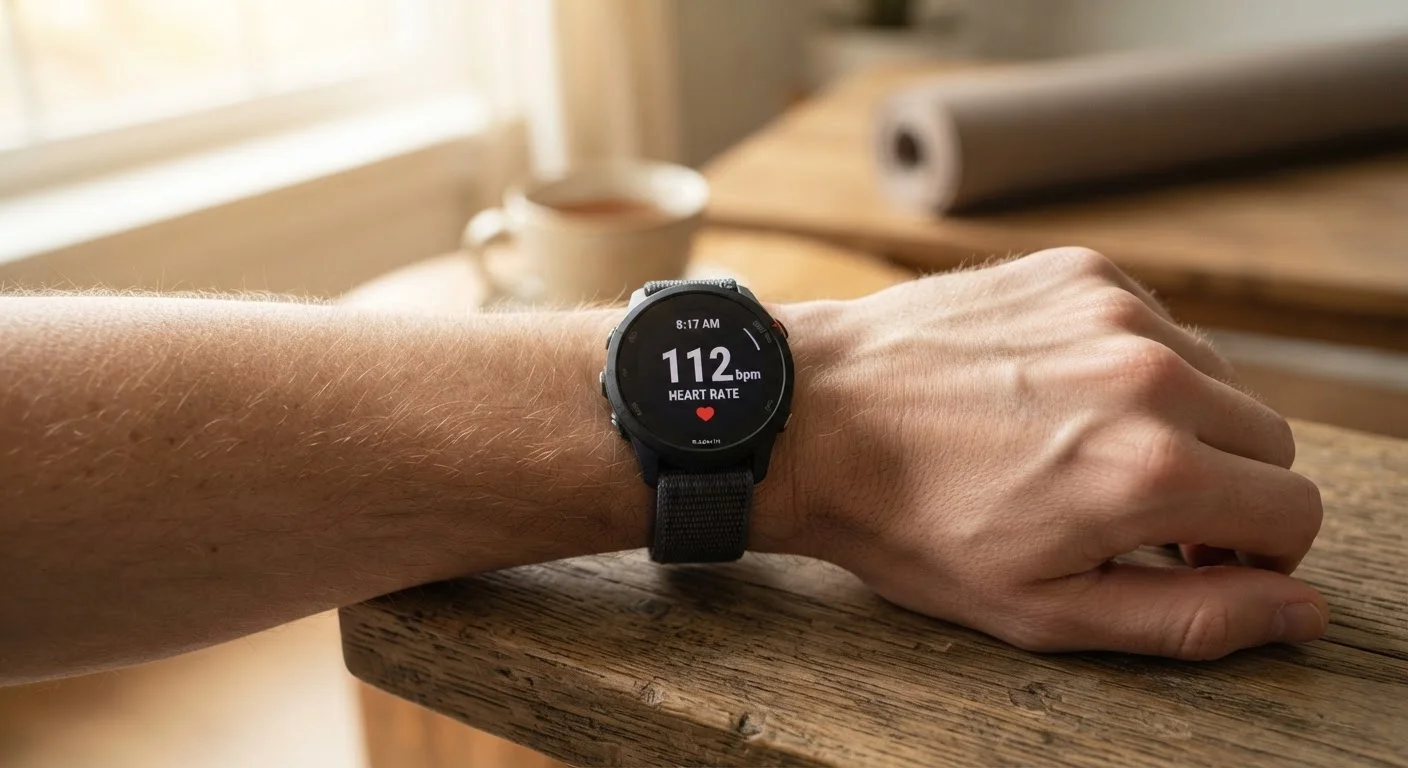
Wearable fitness trackers and smartwatches can automate nightly RHR tracking with reasonable accuracy. While consumer devices are not medical-grade instruments, they are reliable enough to detect meaningful trends. Pair this with accurate blood pressure monitoring for a more complete cardiovascular picture — our article on home blood pressure monitors and getting accurate readings covers the measurement technique in detail.
If you notice your average RHR climbing steadily over two or more weeks without a clear explanation — new medication, illness, increased training load — bring that pattern to your doctor's attention. For a broader view of the cardiovascular numbers that matter, see blood pressure, cholesterol, and blood sugar: the three numbers men should know.
This article is for general informational purposes only and does not constitute medical advice. Always consult a qualified healthcare professional regarding any concerns about your heart rate, cardiovascular health, or before making changes to your health routine.