

Key Takeaways
- A household medication record reduces the risk of dangerous drug interactions and dosing errors.
- The record should include every medication — prescriptions, OTC drugs, and supplements — for all family members.
- Bring your medication record to every healthcare appointment, including emergency visits.
- Review and update the record whenever a medication is added, changed, or stopped.
- Both digital and paper formats work; choose whichever your family will actually maintain.
What you will need
Why a Household Medication Record Is a Safety Essential
When a family member visits an urgent care clinic, sees a specialist, or is admitted to an emergency room, healthcare providers need an accurate picture of every medication that person takes. Without a reliable record, providers must rely on memory — and memory is fallible, especially during stressful medical situations.
A medication record bridges that gap. It helps pharmacists catch potential drug interactions, allows new prescribers to make informed decisions, and gives caregivers a clear reference when managing medications for children or elderly relatives. Research from patient safety organizations consistently identifies incomplete medication information as a significant contributor to preventable medication errors in both hospital and outpatient settings.
Beyond emergencies, a household medication record supports everyday safety. It helps you notice if two family members have been prescribed medications that interact with each other, track expiry dates, and coordinate refills. If your household manages multiple ongoing prescriptions, see our organizational guide to managing multiple prescriptions for additional strategies.
Bring Your Record to Every Medical Visit
A medication record is only useful if it travels with you. Healthcare providers — including emergency room staff, urgent care clinicians, and specialists — rely on accurate medication information to make safe treatment decisions. Get into the habit of bringing your updated record to every appointment, not just primary care visits. In an emergency, this information can directly affect which treatments are safe to administer.
What to Include in Your Record
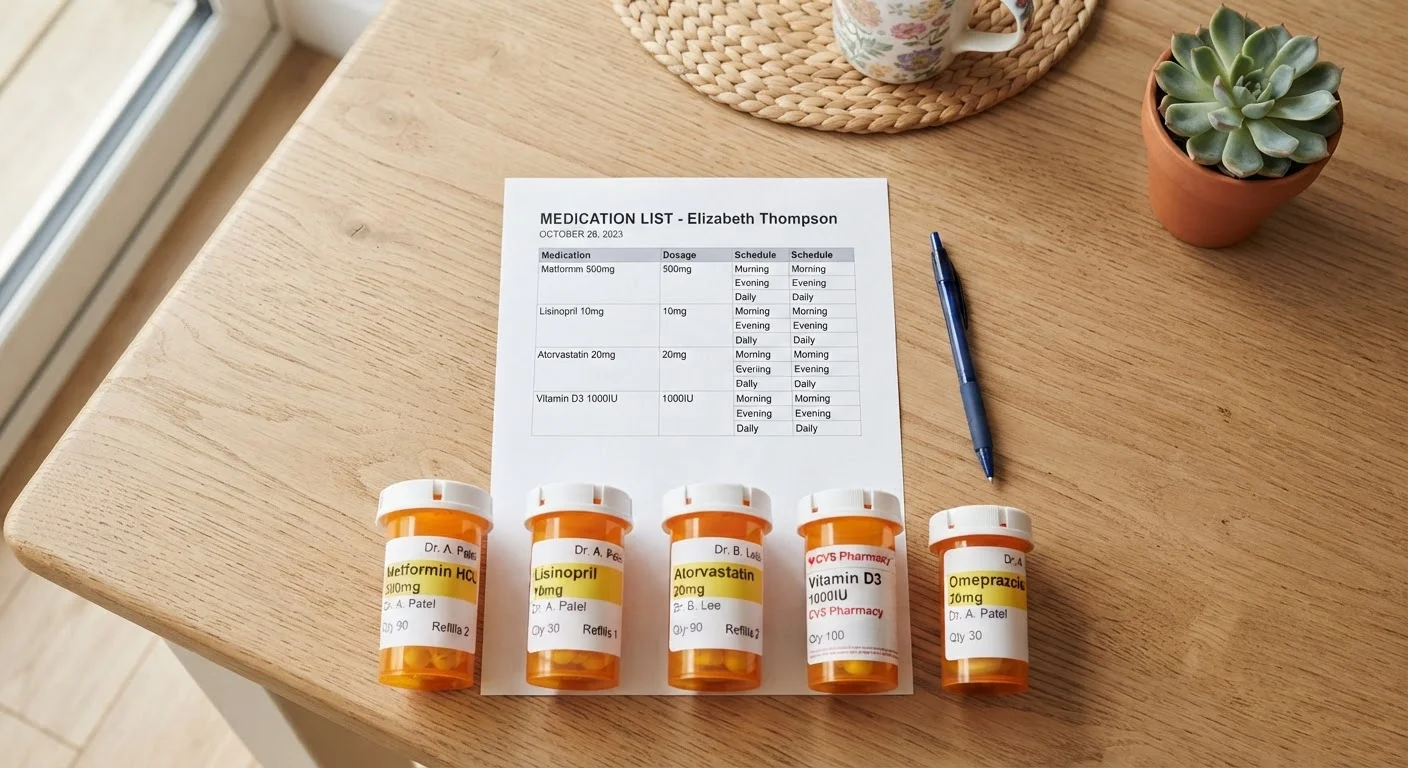
Before you start building your record, gather the following for each person in your household:
What you will need
For each medication, your record should capture:
- Medication name — both brand and generic names if applicable
- Dose and strength — e.g., 10 mg tablet
- How often it is taken — frequency and time of day
- Who prescribed it — prescriber's name and contact
- What it is used for — the condition or symptom it addresses
- Start date — and end date if it is a short-term course
- Known allergies and reactions — including the specific reaction experienced
Include prescription medications, over-the-counter (OTC) drugs such as antihistamines or pain relievers taken regularly, vitamins, and herbal supplements. All of these can interact with prescription drugs and should be disclosed to any provider.
How to Build and Maintain Your Record
Follow these steps to create a medication record that is accurate, accessible, and easy to keep current.
Gather current medication information for every household member
Collect all prescription bottles, OTC medication packages, and supplement containers in your home. For each item, note the name, strength, dose, frequency, and the person it belongs to. If bottles are missing or unreadable, contact the dispensing pharmacy — they can provide a printout of filled prescriptions.
Choose a format that your household will actually use
Select either a paper template (a simple table works well) or a digital format such as a spreadsheet or health app. Create columns for: person's name, medication name, strength, dose, frequency, prescriber, purpose, start date, and known allergies. Consistency matters more than the tool you choose.
Record known allergies and past adverse reactions
Dedicate a clearly labeled section of your record to allergies and adverse drug reactions for each family member. Note the specific medication and what reaction occurred (for example, rash, difficulty breathing, or nausea). This information is critical in emergency settings and should appear prominently — not buried in a list.
Review the record with a pharmacist or prescriber
Once your initial record is complete, bring it to a scheduled pharmacy visit or medical appointment and ask the provider to review it. Pharmacists are specifically trained in drug interactions and can flag combinations that may be problematic. This step is especially important for households managing five or more medications across family members.
Update the record every time a medication changes
Set a consistent trigger for updates: any time a medication is prescribed, stopped, or the dose is adjusted, update the record the same day. A brief note on the date of the change helps providers understand the medication timeline. Also review the full record at least every six months to remove discontinued entries and verify accuracy.
Keep a copy accessible at all times
Store one copy where it can be found quickly — on the refrigerator, in a household binder, or in a clearly labeled folder. Keep a second copy in your wallet, phone, or medical bag. Before any scheduled appointment, pull the record out and confirm it reflects every current medication. Before every refill, use it as a reference — our pre-refill safety checklist can help you build that habit.
Keep Immunization Records Alongside Medication Records
Vaccination history is a natural companion to a medication record — both belong in the same household health binder or digital folder. For guidance on tracking your family's vaccination history, see our guide to organizing immunization records. Having both in one place makes any medical appointment more productive.
Once your record is in place, pair it with good storage habits. How and where you store medications at home affects their potency and safety — see our guide on medication storage at home for the key rules every household should follow.
Common Questions and Troubleshooting
What if I don't know all the details for a medication?
Check the prescription label — it lists the drug name, dose, and prescriber. Your pharmacy can print a complete medication history for prescriptions filled there. For OTC medications, the product package lists the active ingredient and standard dose information.
Is a digital record safer than paper?
Both formats have merit. A digital file (spreadsheet, notes app, or a dedicated health records app) is easy to update and share electronically. A printed copy kept in your wallet or medical bag is accessible without a phone or internet connection. Many families use both: a digital master copy and a printed summary for appointments and travel.
Who else should have access to this record?
Consider sharing an updated copy with a trusted emergency contact, particularly if any family member has complex medical needs. If you care for an older adult, their primary care provider should also have the most current version on file. For a broader look at common household medication habits that can cause harm, see medication mistakes families often make without realising.
This article is for informational purposes only and is not a substitute for professional medical or pharmaceutical advice. Always consult a qualified healthcare provider for guidance specific to your health circumstances.