
Medication Storage at Home: Temperature, Light, and Location Matter More Than You Think

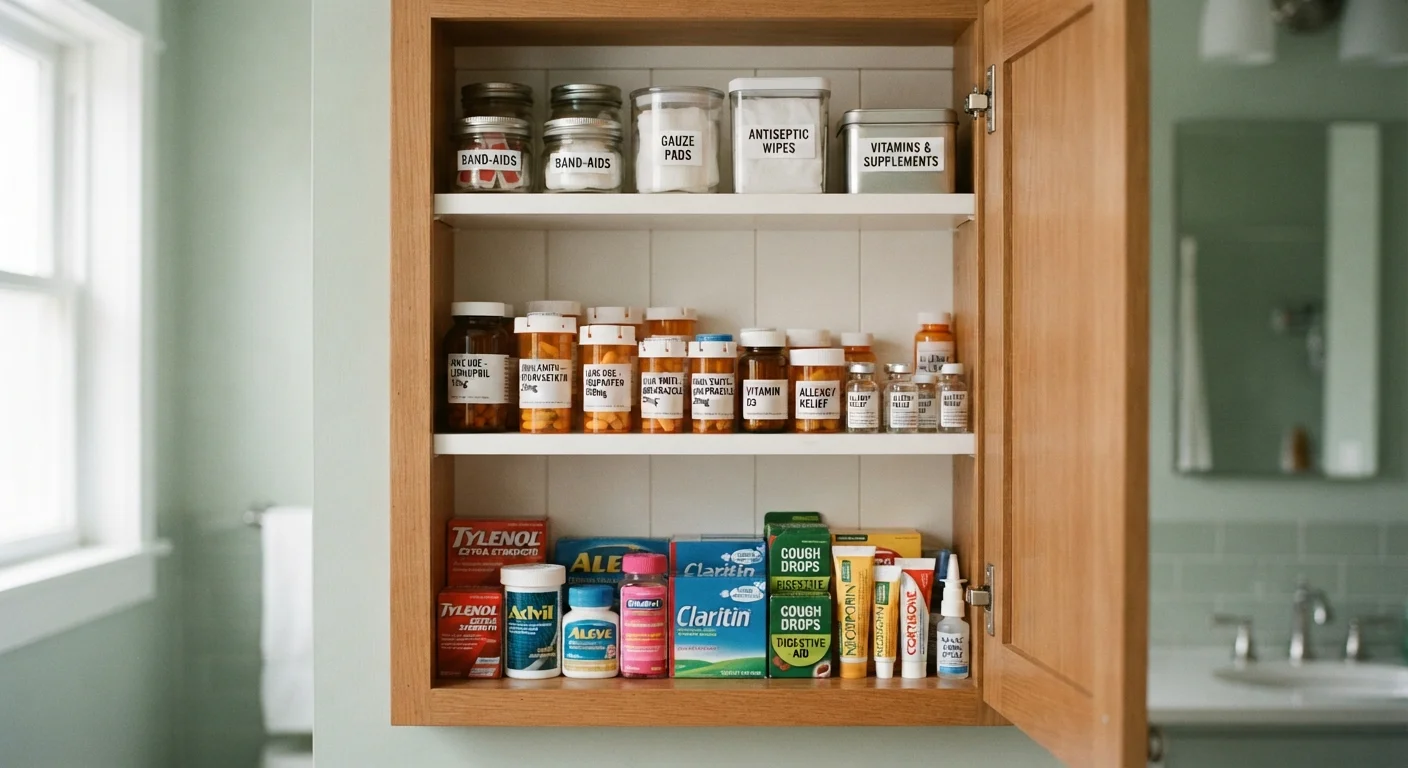
Key Takeaways
- Heat, humidity, and light can degrade medications well before their expiration date.
- Bathrooms and kitchen cabinets near the stove are among the worst storage locations.
- Most medications should be stored at room temperature between 59°F and 77°F.
- Original containers protect medications and preserve critical label information.
- Refrigerated medications require specific handling to avoid condensation damage.
- Children's access to medications is a leading cause of accidental poisoning at home.
Why Storage Conditions Directly Affect How Well Medications Work
Most families focus on taking medications correctly — the right dose, at the right time. Fewer think carefully about how those medications were stored before use. Yet improper storage can quietly reduce a drug's potency or, in some cases, alter its chemistry in ways that make it less safe.
Active pharmaceutical ingredients — the compounds in a medication that produce its intended effect — are sensitive to their environment. Exposure to elevated temperatures, excess moisture, or direct light can break down these compounds over time. A medication may look, smell, and appear unchanged, yet deliver far less therapeutic benefit than expected.
For families managing chronic conditions, pediatric prescriptions, or complex medication routines, understanding the basics of proper storage is a meaningful safety practice. See our guide to reading storage instructions on labels to understand exactly what those printed directions mean.
~50,000
Children seen in ERs annually for medication ingestion
According to the CDC, approximately 50,000 children under age 5 visit emergency rooms each year in the U.S. due to accidental medication ingestion.
59°F–77°F
Standard controlled room temperature range for medications
The U.S. Pharmacopeia defines this as the accepted range for storing most medications, ensuring active ingredient stability.
The Worst Places to Store Medications — and Why
The bathroom medicine cabinet is perhaps the most common storage spot in American homes — and one of the least suitable. Bathrooms generate repeated cycles of steam and temperature fluctuation every time a shower runs, creating conditions that accelerate medication breakdown.
Kitchen cabinets near the stove or dishwasher carry similar problems. Heat from cooking and moisture from steam make these locations unreliable even when they feel convenient. A top shelf far from appliances is generally safer if the kitchen is the only practical option.
Windowsills, car glove compartments, and countertops in direct sunlight expose medications to both UV light and temperature extremes. Vehicles are especially problematic during summer months, when interior temperatures can climb well above safe storage ranges within minutes.
A Safer Spot: Think Bedroom, Not Bathroom
A simple rule of thumb: if steam or cooking heat can reach it, it's the wrong spot. A bedroom nightstand or a hallway closet shelf offers more stable temperature and humidity than most kitchens or bathrooms. Just be sure any location is out of sight and reach of young children.
Best Practices for Storing Medications Safely at Home
The following practices reflect general guidance from pharmacy and public health authorities. Always defer to your pharmacist or prescriber for instructions specific to a medication.
Store most medications at room temperature in a cool, dry location away from light.
The U.S. Pharmacopeia defines controlled room temperature as roughly 59°F to 77°F (15°C to 25°C). Storing within this range protects the stability of the vast majority of oral medications. Exceeding this range — even briefly and repeatedly — can accelerate degradation.
Keep medications in their original containers with lids tightly closed.
Original packaging is designed specifically for the medication it holds — child-resistant closures, moisture-absorbing desiccant packets, and amber-colored bottles all play protective roles. Transferring medications to unmarked containers also removes critical label information including dosage instructions and expiration dates.
Follow refrigeration instructions precisely and never freeze medications not labeled for freezing.
Medications that require refrigeration — such as certain liquid antibiotics, insulin, and some eye drops — must be kept between 36°F and 46°F. Freezing can cause irreversible physical changes, such as separation or crystallization, that affect how a medication is absorbed by the body.
Lock or secure medications out of reach of children and adolescents.
Accidental ingestion of prescription and OTC medications is a leading cause of pediatric poisoning in the United States. Even medications that seem low-risk in adult doses can cause serious harm to a small child. Adolescents also require consideration, particularly for medications with misuse potential.
Check expiration dates during routine household reviews, not just when a dose is needed.
Expiration dates indicate the point through which a manufacturer guarantees full potency under proper storage conditions. Using an expired medication doesn't guarantee harm, but it does introduce uncertainty about effectiveness — a meaningful concern when managing a serious condition.
Quick Actions Your Household Can Take Today
Improving medication storage doesn't require a major reorganization. A few targeted steps taken now can meaningfully reduce risk for your household.
To build a fuller picture of your household's medication safety habits, consider pairing these steps with a household medication record and reviewing our pre-refill safety checklist before restocking your supply.
This article is for general informational purposes only and does not constitute medical or pharmaceutical advice. Always consult a licensed pharmacist or healthcare provider for guidance specific to your medications and health needs.