

Key Takeaways
- "Room temperature" on a label means 68–77°F — not wherever happens to feel comfortable in your home.
- Bathrooms and kitchen areas near stoves are among the worst places to store most medications.
- "Protect from light" means an opaque container or a dark drawer, not just avoiding direct sunlight.
- Refrigerated medications should never be frozen unless the label explicitly permits it.
- Improper storage can degrade a medication before its printed expiration date.
- When in doubt about storage, ask your pharmacist — it takes less than a minute.
Medication Storage Instructions
Medication storage instructions are the directions printed on a prescription or OTC label that tell you the correct temperature, light exposure, and location for keeping a medicine safe and effective. They exist because drugs are chemically sensitive — the wrong conditions can break them down before you ever take a dose. Common phrases include "store at room temperature," "keep refrigerated," or "protect from light."
Pharmacists follow USP (United States Pharmacopeia) standards when labeling storage conditions; for example, "controlled room temperature" refers specifically to 68–77°F (20–25°C), not simply wherever feels comfortable in your home.
Why Storage Instructions Are More Than Fine Print
Every prescription label carries information that goes beyond the dosage schedule — and the storage instructions section is one of the most consequential parts most families never read carefully. Medications are chemical compounds. Heat, moisture, and light all trigger reactions that can reduce potency, alter composition, or in some cases accelerate breakdown into byproducts you don't want in your body.
The problem is that these instructions are often written in shorthand that sounds simple but actually has a precise technical meaning. "Room temperature" feels self-explanatory until you realize your bathroom in July easily hits 85°F. Understanding what these phrases actually mean — and why they matter — is the first step toward keeping your household's medications working as intended.
For a broader look at how the full label fits together, see our plain-language label guide.
68–77°F
USP controlled room temperature range
The United States Pharmacopeia defines this as the standard for medications labeled 'store at room temperature' — a range many home environments exceed regularly.
36–46°F
Required refrigerator storage range
Medications labeled 'keep refrigerated' must stay within this window; the door shelf of a typical household refrigerator can fluctuate outside this range.
~50%
Adults who store meds in the bathroom
Consumer surveys consistently find that a large proportion of households keep medications in the bathroom, one of the least suitable rooms for most drugs due to heat and humidity.
Decoding the Most Common Storage Phrases
"Store at controlled room temperature" — This is the most common instruction and the most misunderstood. The USP definition is 68–77°F (20–25°C). Brief excursions up to 86°F are typically acceptable, but sustained temperatures above that threshold can degrade a medication before its printed expiration date. A kitchen counter near a stove, or a car glove compartment, can easily and repeatedly exceed this range.
"Keep refrigerated" — This means 36–46°F (2–8°C), which is standard refrigerator range. It does not mean the freezer compartment unless the label explicitly adds "may be frozen." Some liquid antibiotics, insulin products, and certain eye drops fall in this category. Accidental freezing can break emulsions or denature proteins in biologics.
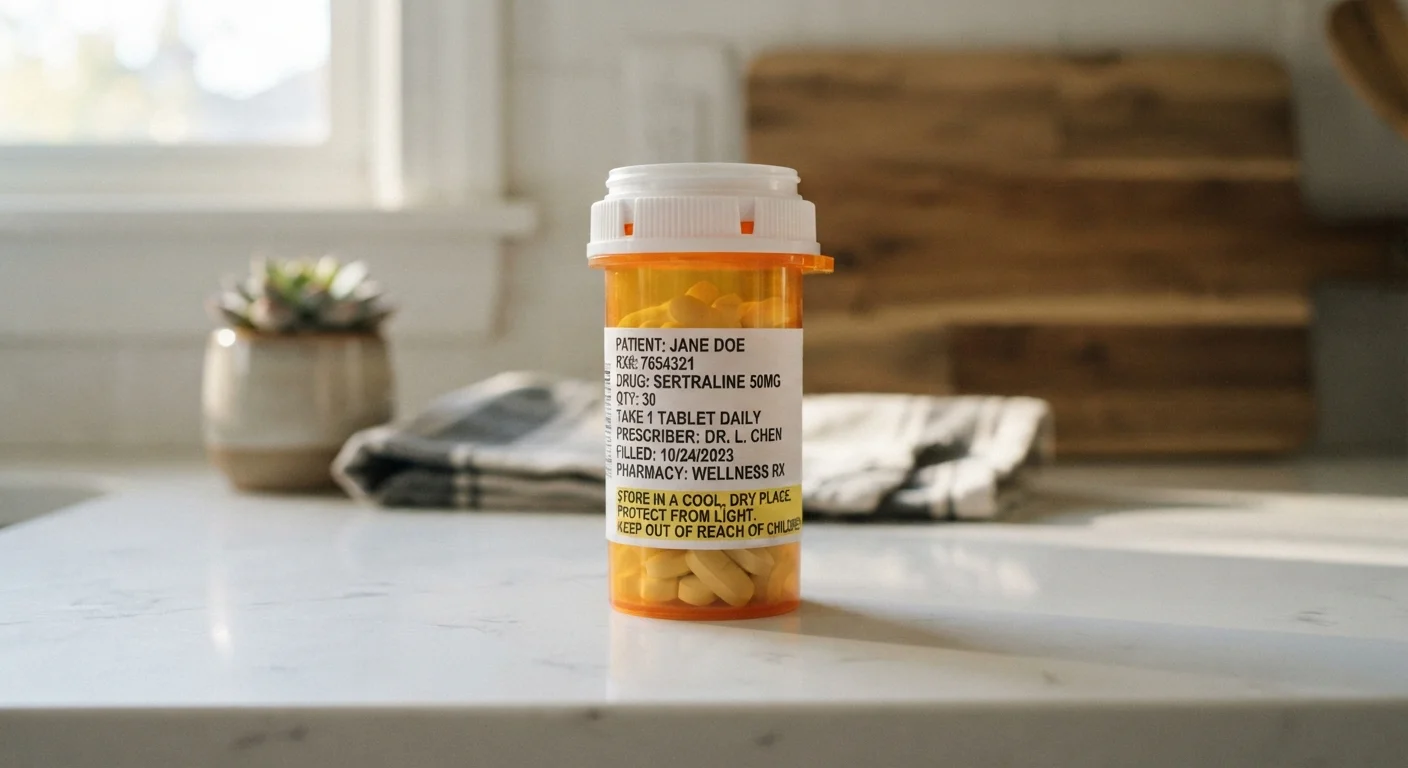
"Protect from light" — Many bottles are already amber-colored for exactly this reason. If yours is not, a drawer or cabinet serves the same function. Leaving medications on a sunny windowsill or clear countertop invites photodegradation — a real chemical process, not a precaution invented for packaging aesthetics.
"Keep dry" or "store in a dry place" — Humidity accelerates breakdown in tablet coatings and capsule shells. Bathrooms are a notorious offender here, despite the cultural habit of keeping a medicine cabinet above the sink. A deeper look at location choices explains which rooms in a typical home best meet these conditions.
Ask Your Pharmacist Before You Leave
When picking up any new prescription, take thirty seconds to ask the pharmacist where and how to store it at home. They can flag any special requirements — like avoiding the refrigerator door shelf or keeping a medication away from other drugs — that may not be obvious from the label alone. This is especially important for liquid medications, biologics, and anything prescribed for children or older adults.
Common Household Mistakes — and Simple Fixes
The most frequent storage error families make is choosing convenience over conditions. The bathroom cabinet feels logical, but heat and steam make it one of the least suitable spots for most medications. Likewise, kitchen counters near the stove or dishwasher create micro-climates of warmth and moisture that few labels would sanction.
A bedroom dresser drawer, a dedicated box on a closet shelf, or a small lockable case in a cool interior room typically satisfies the "cool, dry, away from light" combination that most medications require. The added benefit of a lockbox is childproofing — a safety concern entirely separate from chemical stability.
For medications that require refrigeration, store them in the main body of the fridge rather than the door shelf, where temperatures fluctuate more with each opening. Keep them away from the freezer wall as well. And never leave refrigerated medications in a car during a pharmacy trip that includes other errands — ambient car temperatures can spike dramatically even on mild days.
Before your next refill, it's worth doing a quick review of how your current medications are stored. Our pre-refill safety checklist walks through this and other household medication management steps in a structured way.
This article provides general health information for educational purposes only and is not a substitute for professional medical or pharmaceutical advice. Always consult your pharmacist or healthcare provider with questions about specific medications or storage requirements.