

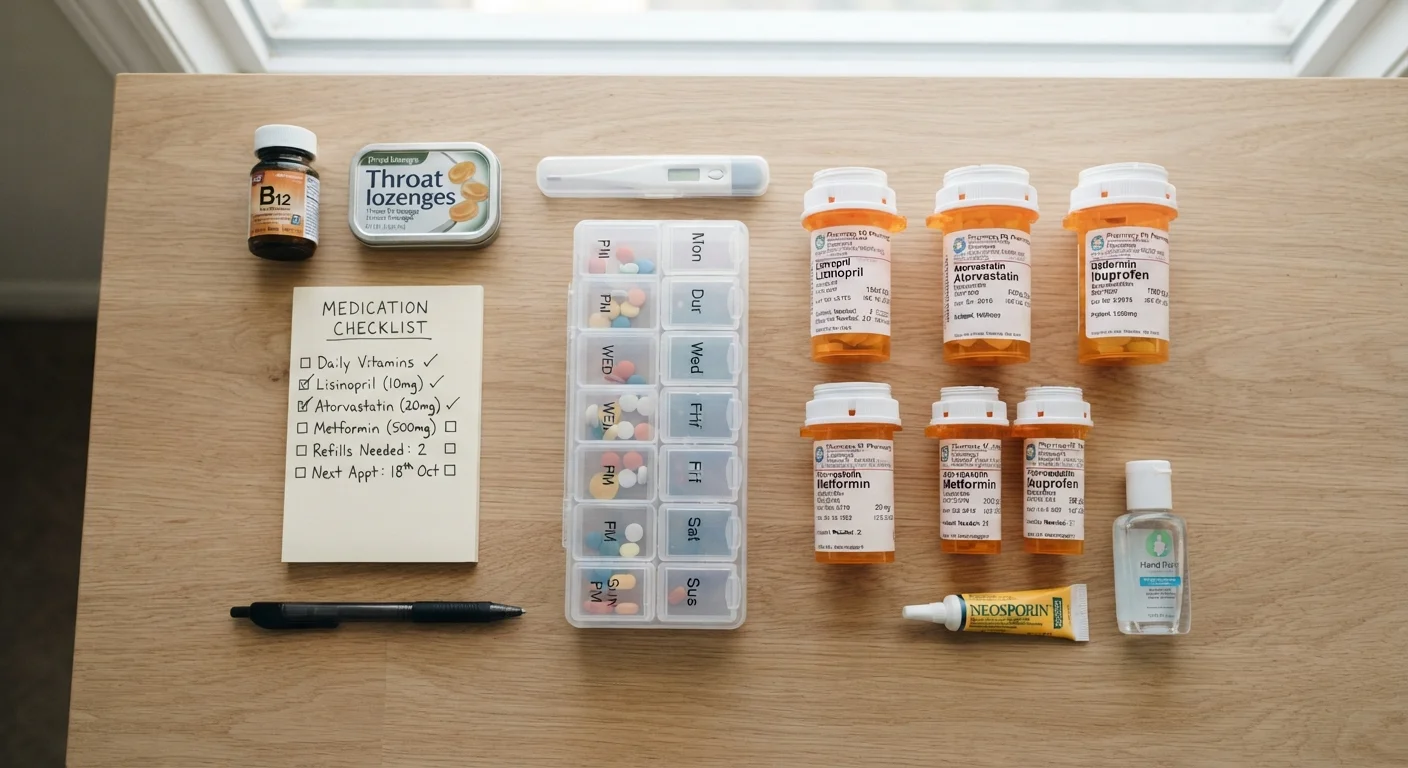
Key Takeaways
- Check expiry dates on every medication before placing a refill order.
- Verify that storage conditions — temperature, light, and humidity — haven't compromised your medicines.
- Confirm current dosage instructions with your pharmacist if anything has changed since the last refill.
- Review your full medication list for potential interactions before adding a new prescription or OTC product.
- Safely dispose of any expired or unneeded medications before restocking your cabinet.
- Keep an up-to-date written medication list accessible to all caregivers in the household.
Summary
22 items · 15–30 minutes
Why a Pre-Refill Review Matters
For many households, picking up a prescription refill feels routine — almost automatic. But each refill is actually an opportunity to catch problems before they cause harm: an expired bottle quietly sitting next to an active one, a dosage that changed after a recent appointment, or a storage spot that turns out to be too warm. Small oversights in medication management are among the most common — and preventable — sources of medication errors at home.
This checklist is designed to take 15–30 minutes and can be worked through by any adult caregiver before requesting or collecting a refill. It covers your current supply, storage conditions, dosage accuracy, your household medication list, and safe disposal. For a broader view of how medications should be managed across a family, see the complete family medication safety guide.
Never Stop a Medication Without Guidance
If this review raises concerns about a medication — an interaction, a storage problem, or a dosage question — do not stop taking it without first speaking to your pharmacist or prescribing provider. Abruptly discontinuing some medications can be medically dangerous. Always seek professional guidance before making any changes to an ongoing treatment.
What You'll Need
Gather the following before you start. Having everything in front of you prevents back-and-forth and makes the review faster and more accurate.
Current prescription bottles and OTC packaging
Needed to verify expiry dates, label instructions, dosage, and storage requirements.
Household medication list
A written or digital record of all prescriptions, OTC medicines, vitamins, and supplements for every family member.
Pen and paper or notes app
Used to record items to discuss with your pharmacist, flag discrepancies, or update your medication list.
Calibrated oral syringe or dosing cup
Required if any household member takes liquid medications — needed to confirm accurate dose measurement.
Medication disposal bag or take-back programme information
Needed to safely dispose of expired or discontinued medications identified during the review.
The Checklist
Work through each group in order. Mark items as complete as you go — a simple pen and paper, a notes app, or a printed copy all work equally well.
Current Supply Review
Storage Conditions Check
Dosage and Instructions Accuracy
Medication List and Interactions
Disposal and Cabinet Organisation
Expired Medications Are Not Always Harmless
While some medications simply lose potency after their expiry date, others can change chemically in ways that may cause harm. Do not assume an expired medication is safe to use until its replacement arrives. If you are running low before a refill is ready, contact your pharmacy — many can provide an emergency supply or expedite your refill in medically necessary circumstances.
After the Review: Next Steps
Once you've completed the checklist, take the following actions before your next refill pickup:
- Dispose of expired or unneeded medicines responsibly. Do not flush medications or put them in the household trash without checking disposal guidance. The safe disposal of unused medications article explains recommended methods, including FDA-authorised take-back programmes.
- Contact your pharmacist with any concerns. If you found a potential interaction, a labelling discrepancy, or you're unsure whether a medication stored in non-ideal conditions is still effective, call your pharmacy before taking or administering the medication. Pharmacists are a readily accessible clinical resource — use them.
- Update your household medication list. If any prescriptions changed, were discontinued, or new OTC products were added, revise your written list before filing it away. If your household manages several ongoing prescriptions, the organisational approach to multiple prescriptions article offers practical tracking strategies.
- Schedule your refill on time. Review how prescription refill timing works to make sure you never face a dangerous gap in a critical medication.
This article is for general informational purposes only and does not constitute medical advice. Always consult a licensed pharmacist or qualified healthcare professional before making decisions about your medications.