

Key Takeaways
- Drug take-back programs are the safest and most recommended disposal method for unused medications.
- Flushing medications can contaminate water supplies; only a small FDA-approved list should ever be flushed.
- Mixing medications with coffee grounds or dirt before trash disposal reduces accidental misuse risks.
- Controlled substances like opioids require extra care and should be prioritized for take-back programs.
- Keeping fewer unused medications at home reduces the risk of accidental ingestion by children.
- Your pharmacist is a reliable resource for disposal guidance specific to each medication.
What you will need
Why Medication Disposal Matters for Every Household
Leftover and expired medications accumulate in most family homes without much thought — tucked into cabinets or left on countertops. But unused medicines present two distinct risks: accidental ingestion and environmental contamination. Children are particularly vulnerable; medications that seem harmless to adults can cause serious harm if accessed by a curious child. If your household includes young children, also review our guidance on accidental medication ingestion for additional prevention strategies.
Improper disposal — particularly flushing or routine trash dumping without precautions — contributes to pharmaceutical compounds entering waterways and soil. Research has detected trace levels of medications in water systems, and while the full public health implications are still being studied, reducing unnecessary pharmaceutical waste is broadly agreed to be a sound practice.
Responsible disposal is also the final step in a broader medication safety chain. How you store medications at home and how consistently you review your supply directly affect how much unused medication accumulates. The habits you build around safe storage and regular audits make disposal simpler and less frequent.
Schedule Regular Medicine Cabinet Reviews
Set a reminder every six months — for example, when clocks change — to review your household's medications for expiry dates and accumulation of unused stock. Regular reviews keep disposal manageable and reduce clutter that can lead to accidental ingestion. See our medication safety checklist for a structured approach.
What You Need Before You Start
Before working through the disposal steps, gather your medications and confirm you have the basic supplies on hand. Take-back programs handle most of the process for you, but trash disposal requires a few household items.
What you will need
DEA Take-Back Locator (DEA.gov or 1-800-882-9539)
Find the nearest authorized medication collection site or scheduled take-back event in your area.
FDA-Approved Drug Disposal Pouches
Activated-carbon pouches that neutralize medications, making them safe for household trash when take-back is unavailable.
Sealable Plastic Bag or Container
Used to contain medications mixed with an undesirable substance (coffee grounds, dirt) before placing in household trash.
Permanent Marker
Used to obscure personal and prescription information on medication labels before disposal to protect your privacy.
Households managing multiple ongoing prescriptions may find it helpful to read our guide on medication safety from prescription to last dose for a broader framework of safe medication practices at home.
Controlled Substances Need Immediate Attention
Unused opioids, sedatives, and other controlled substances pose serious risks of misuse and accidental ingestion — especially in homes with children or teenagers. Do not leave them in a medicine cabinet indefinitely. Take them to a DEA-authorized take-back site or use an FDA-approved disposal pouch as soon as possible. If you are unsure whether a medication is controlled, check the label or ask your pharmacist.
Step-by-Step: How to Dispose of Unused Medications
Follow the steps below in order. Take-back programs are always the preferred first choice; trash disposal and flushing are secondary options with specific conditions. Work through each step based on what is available in your area and the type of medication you are disposing of.
Sort and identify your unused medications
Gather all medications you no longer need — expired bottles, leftover courses of antibiotics, or prescriptions no longer in use. Separate them into groups: controlled substances (opioids, benzodiazepines, stimulants), and all other medications. This helps you prioritize disposal urgency and choose the right method for each type. Check the label or ask your pharmacist if you are unsure whether a medication is controlled.
Find your nearest take-back option
The FDA and DEA consider drug take-back programs the preferred disposal method. Use the DEA's online locator at DEA.gov or call 1-800-882-9539 to find an authorized collection site near you. Many pharmacies and hospitals participate year-round. The DEA also coordinates periodic National Prescription Drug Take Back Day events. Prioritize this step for controlled substances, which carry the highest risk of misuse if left unsecured.
Use the take-back site or mail-back program
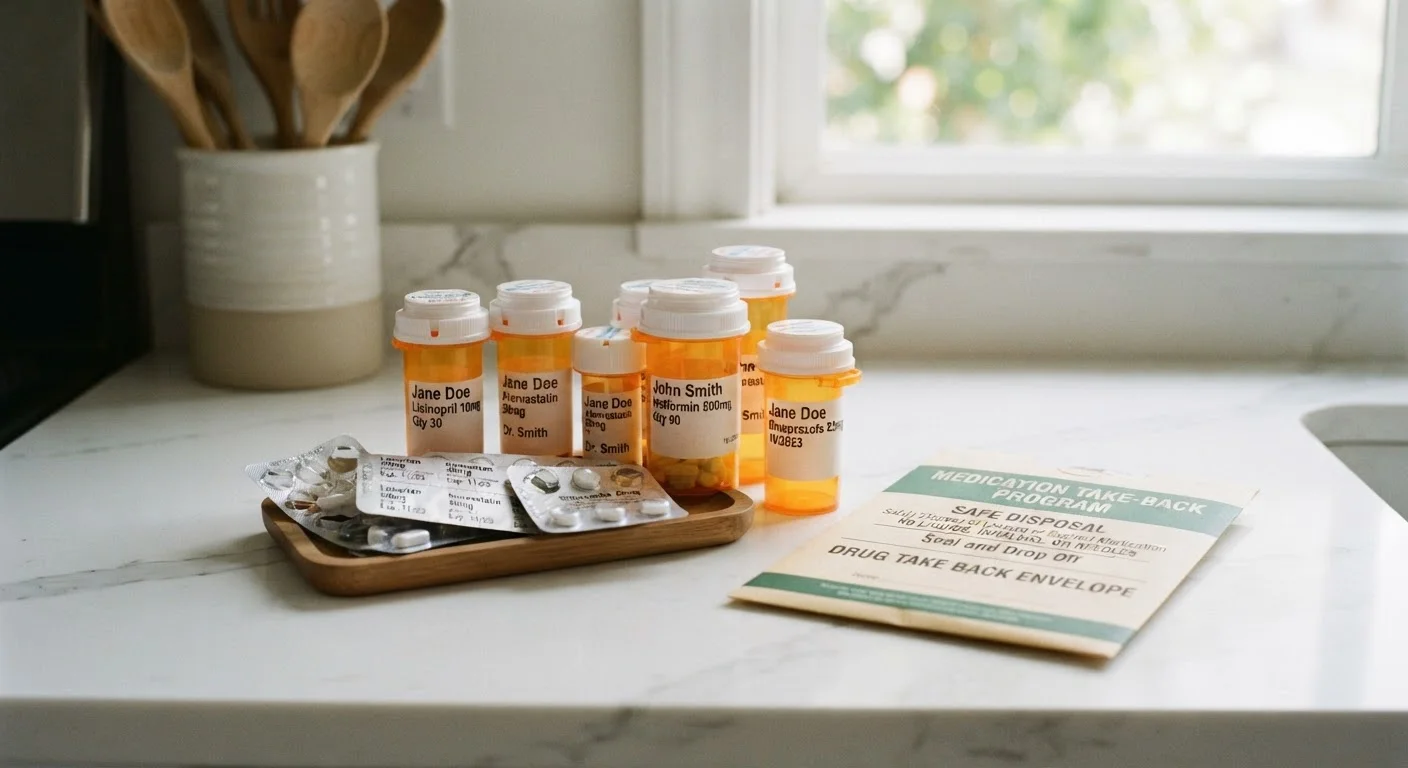
Bring your sorted medications to the collection site in their original containers if possible, or in a sealed bag. Most collection points accept all dosage forms — pills, patches, liquids, and inhalers — though policies can vary. If you cannot travel to a site, look for FDA-approved mail-back envelopes, which some pharmacies and programs supply at no charge. Drop the sealed envelope in any US mail collection box.
If take-back is unavailable, dispose safely in household trash
When no take-back option is accessible, most medications can be disposed of in household trash using these steps: remove the medication from its original container, mix it with an unappealing substance such as used coffee grounds, dirt, or kitty litter, seal the mixture in a sealable plastic bag or lidded container, and place it in your trash. This deters accidental ingestion and misuse without releasing medication into water. FDA-approved disposal pouches containing activated charcoal are a convenient alternative to this mixing method and are available at some pharmacies.
Check the FDA flush list for specific medications only
A limited number of medications — primarily potent opioids and certain other high-risk drugs — appear on the FDA's flush list. These are designated for flushing specifically because the risk of accidental exposure or misuse outweighs the environmental concern when no take-back option is available. Visit the FDA's website to view the current flush list. Do not flush a medication simply because it is a controlled substance — only those explicitly listed should be flushed.
Protect your personal information before final disposal
Before placing any medication container in recycling or trash, use a permanent marker to black out your name, address, prescription number, and prescriber's name on the label. This simple step protects your privacy and prevents the misuse of your prescription information. Do this for all containers, including blister packs with printed patient information.
Do Not Flush Unless Explicitly Directed
The FDA maintains a limited flush list — only specific high-risk medications are approved for flushing when no take-back option is immediately available. Flushing medications not on this list can introduce pharmaceutical compounds into water systems, where they are difficult to filter out. Always verify a medication is on the FDA flush list before choosing this method.
Once your household's unused medications are cleared, consider reviewing your overall medication management practices. Our guide to common medication mistakes covers habits that can quietly create safety risks over time, including how accumulation of expired stock happens in the first place.
This article is for general informational purposes only and does not constitute medical or pharmaceutical advice. Always consult a qualified healthcare professional or licensed pharmacist for guidance specific to your medications and circumstances.