

Key Takeaways
- Always read the full prescription label before taking or giving any medication.
- Most medications should be stored in a cool, dry place — not in the bathroom.
- Pharmacists are a frontline resource for catching dangerous drug interactions.
- Children and older adults require special dose considerations and safer storage protocols.
- Never flush medications unless the label specifically directs it; use approved disposal methods.
- Keeping an up-to-date medication list for every family member reduces preventable errors.
Reading Prescription Labels and Drug Information
Every prescription label carries essential information that directly affects safety. Understanding what each field means is the first line of defense against medication errors. The label includes the patient's name, the drug name and strength, dosing instructions, the prescribing provider, the dispensing pharmacy's contact information, the fill date, and the number of refills remaining.
Pay close attention to auxiliary labels — the smaller colored stickers attached to the bottle. Phrases like "Take with food", "Avoid alcohol", or "Do not drive" are not optional reminders; they reflect clinically significant guidance. The package insert or medication guide included with some drugs contains even deeper detail on side effects, contraindications, and what to do if a dose is missed.
For a deeper look at how prescriptions are written and filled, see our Complete Family Guide to Understanding Prescriptions.
When picking up a new prescription, ask the pharmacist to walk through it with you before you leave the counter — not after you get home. A two-minute conversation at the pharmacy prevents far more errors than reading alone.
Pharmacists are trained to identify gaps in patient understanding at the point of dispensing, and verbal confirmation of dosing instructions significantly reduces first-fill errors.
Take a photo of every medication label as soon as it is filled. Storing these in a dedicated phone album gives you an accurate reference if the original label becomes damaged or unreadable.
Label degradation and partial tears are a common source of dosing confusion in households managing multiple medications, particularly over multi-month treatment courses.
Proper Medication Storage at Home
Heat, humidity, and light degrade many medications faster than most people realize. Despite the term "medicine cabinet," bathrooms are poor storage locations because steam from showers raises both temperature and humidity. Instead, store most medications in a cool, dry place such as a bedroom dresser drawer or a dedicated shelf in a hall closet.
Refrigerated medications — including certain liquid antibiotics and some injectable drugs — must be kept at the specific temperature noted on the label. Never freeze a medication unless instructed. Keep all medications in their original containers with child-resistant caps intact, even if they are inconvenient to open.
Keep High-Risk Medications Locked Away
Opioids, benzodiazepines, and stimulants pose serious risks if accessed by children or individuals for whom they were not prescribed. Even a single dose of an adult opioid can be fatal to a small child. Store these medications in a locked box or drawer, separate from general household medications.
Controlled substances such as opioids deserve particular attention. The FDA and DEA both recommend keeping them in a locked location to prevent misuse or theft. For more on how regulations shape storage requirements, see our article on Controlled Substances vs. Standard Prescriptions.
Avoiding Drug Interactions and Duplications
Drug interactions occur when one substance alters how another is absorbed, processed, or eliminated by the body. They can happen between two prescription drugs, between a prescription and an over-the-counter (OTC) product, or between a medication and a food or supplement. Grapefruit juice, for instance, is documented to interfere with a range of commonly prescribed drugs.
Duplication — taking two products containing the same active ingredient — is a common household hazard. Many cold, flu, and pain relief products contain acetaminophen; combining them without checking can push a person past a safe daily limit without any obvious warning sign.
125,000
Annual US deaths linked to medication non-adherence
The American College of Preventive Medicine cites medication non-adherence as a contributing factor in an estimated 125,000 deaths annually in the United States.
1 in 3
Adults who take 5 or more prescription drugs
According to CDC data, roughly one in three US adults aged 45–64 uses five or more prescription medications, raising polypharmacy concerns.
50%
OTC overdose cases involving combination products
The FDA notes that acetaminophen overuse, often from unknowingly combining multiple OTC products, accounts for approximately half of all acute liver failure cases in the US.
Maintaining a current medication list for every family member and sharing it with all healthcare providers, including the pharmacist, is one of the most effective safeguards available. Your pharmacist can screen your full medication profile for potential interactions at no charge. The Prescription Guide hub covers how to communicate effectively with your pharmacy team. For guidance on reading OTC labels and active ingredients, see The Complete Guide to OTC Medications for Families.
Managing Medications for Children and Older Adults
Children are not simply small adults. Their bodies metabolize medications differently, and doses are often calculated by weight or age. Always use the dosing device that comes with a pediatric medication — a standard kitchen spoon is not an accurate measure. Never assume an adult formulation can simply be split or reduced for a child without explicit guidance from a healthcare provider or pharmacist.
Older adults face a different set of challenges. The aging body processes drugs more slowly, which can cause medications to accumulate to higher-than-intended levels. Kidney and liver function decline with age, and many older adults manage multiple chronic conditions with multiple prescriptions — a situation sometimes called polypharmacy. A medication review with a pharmacist or physician is strongly recommended for any adult managing five or more regular medications.
If you are managing medications for a child, a pregnant person, or an older adult with complex health needs, always consult a qualified healthcare professional before making any changes to their regimen.
Disposing of Medications Safely
Unused medications left in the home increase the risk of accidental ingestion by children, misuse by teenagers, and theft. Proper disposal is a matter of both household safety and environmental responsibility.
The FDA recommends using authorized drug take-back programs as the preferred disposal method. Many pharmacies and local law enforcement agencies host periodic take-back events, and some pharmacies maintain permanent drop-boxes year-round. The DEA's website maintains a locator for authorized collection sites.
When take-back options are not available, the FDA provides a specific list of medications that may be flushed because their risks if accidentally consumed outweigh environmental concerns. All other medications should be mixed with an undesirable substance such as coffee grounds or dirt, sealed in a bag, and placed in household trash. Remove or obscure personal information from labels before discarding empty bottles.
Concerns about medication security at home intersect with broader family safety topics. Our resource on recognizing suicide risk in family members addresses why securing medications is part of means restriction — a recognized protective strategy.
Building a Household Medication Safety Routine
Consistent habits reduce the chance of errors more reliably than any single action. Consider these practical steps for establishing a family medication safety routine:
- Maintain a master medication list that includes every prescription, OTC drug, vitamin, and supplement taken by each family member, updated whenever something changes.
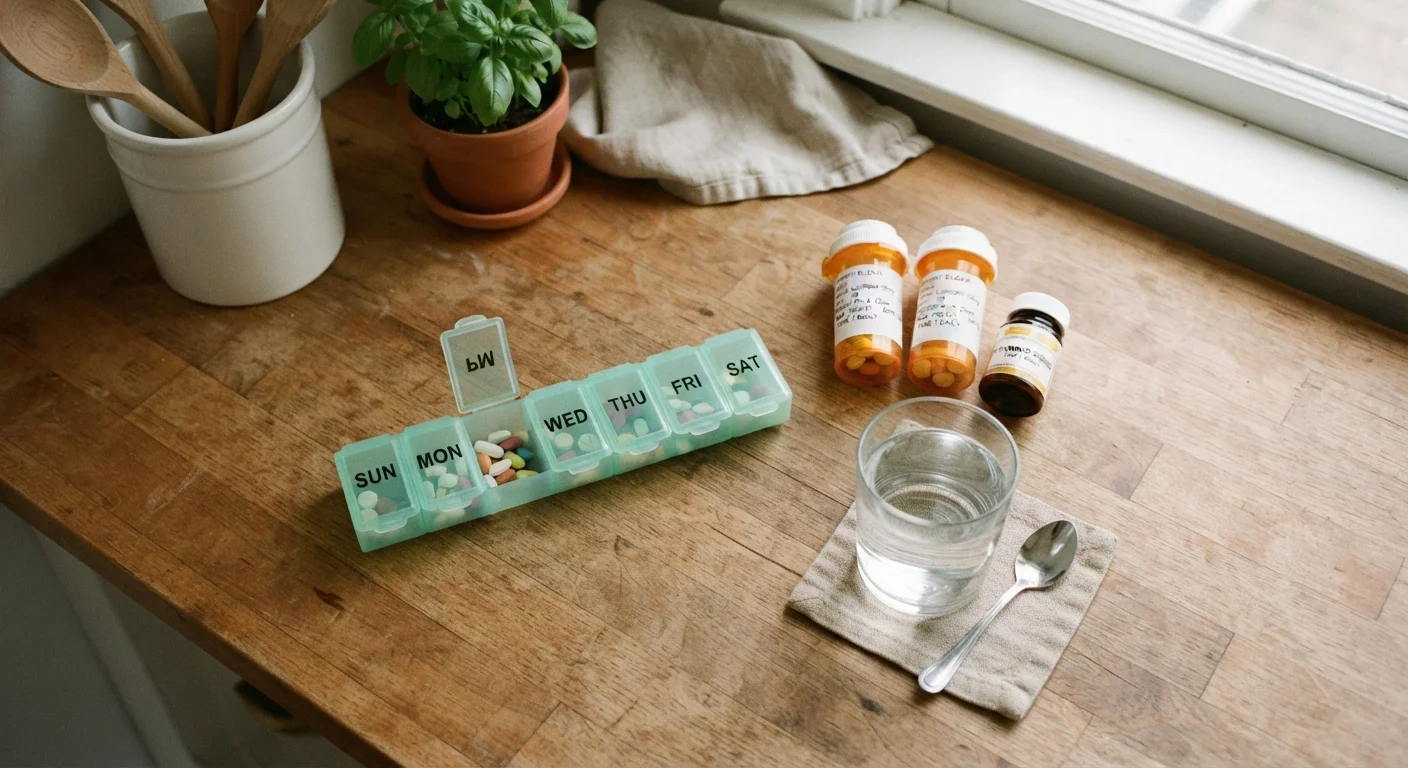
- Use a pill organizer for anyone taking multiple daily medications to reduce missed or doubled doses.
- Designate one person in the household as the primary medication manager to reduce confusion when multiple caregivers are involved.
- Schedule periodic reviews — at least annually — with a pharmacist or physician to reassess whether every medication is still necessary and appropriate.
- Know what to do in an error situation: keep the Poison Control number (1-800-222-1222 in the US) posted visibly and saved in every family member's phone.
Healthy daily habits support medication effectiveness. Resources in our Healthy Habits hub can help families build the lifestyle foundation that complements good medical care.
This article is for general informational and educational purposes only and does not constitute medical advice. Always consult a licensed healthcare professional or pharmacist for guidance specific to your or your family's health needs.