

Key Takeaways
- Every prescription label contains critical information about dose, frequency, and prescriber instructions.
- Generic medications contain the same active ingredient as brand-name versions and are FDA-approved.
- Proper storage — away from heat, moisture, and light — preserves medication effectiveness.
- Keeping a household medication list reduces the risk of interactions and errors.
- Your pharmacist is a free, accessible resource for medication questions at any stage.
What a Prescription Actually Is
A prescription is a written or electronic authorization from a licensed healthcare provider — a physician, nurse practitioner, or physician assistant — that instructs a pharmacist to dispense a specific medication to a named patient. It is not simply a recommendation; it carries legal weight and defines exactly what can be dispensed and under what conditions.
Prescriptions exist because certain medications require professional oversight. They carry risks of dependence, serious side effects, or interactions that make unsupervised use unsafe. This is the key distinction between prescription and over-the-counter drugs — for a useful comparison, see our complete guide to OTC medications.
A standard prescription includes the patient's name and date of birth, the prescriber's name and contact information, the drug name (brand or generic), strength, dosage form (tablet, liquid, patch), quantity to dispense, directions for use, and the number of refills authorized. Electronic prescriptions — now the norm in most U.S. states — are transmitted directly to the pharmacy, reducing transcription errors.
When picking up any new prescription, ask the pharmacist to walk you through the directions out loud before you leave the counter — verbal confirmation catches misunderstandings that reading alone can miss.
Research consistently shows that patients who receive verbal counseling at the point of dispensing are more likely to take medications correctly and report side effects promptly.
Photograph your prescription label with your phone before you open the bottle — having a clear, dated reference image helps if the label is damaged or the medication is lost.
Label legibility degrades with moisture, handling, and time; a backup image ensures you always have accurate dosing instructions available.
How to Read a Prescription Label
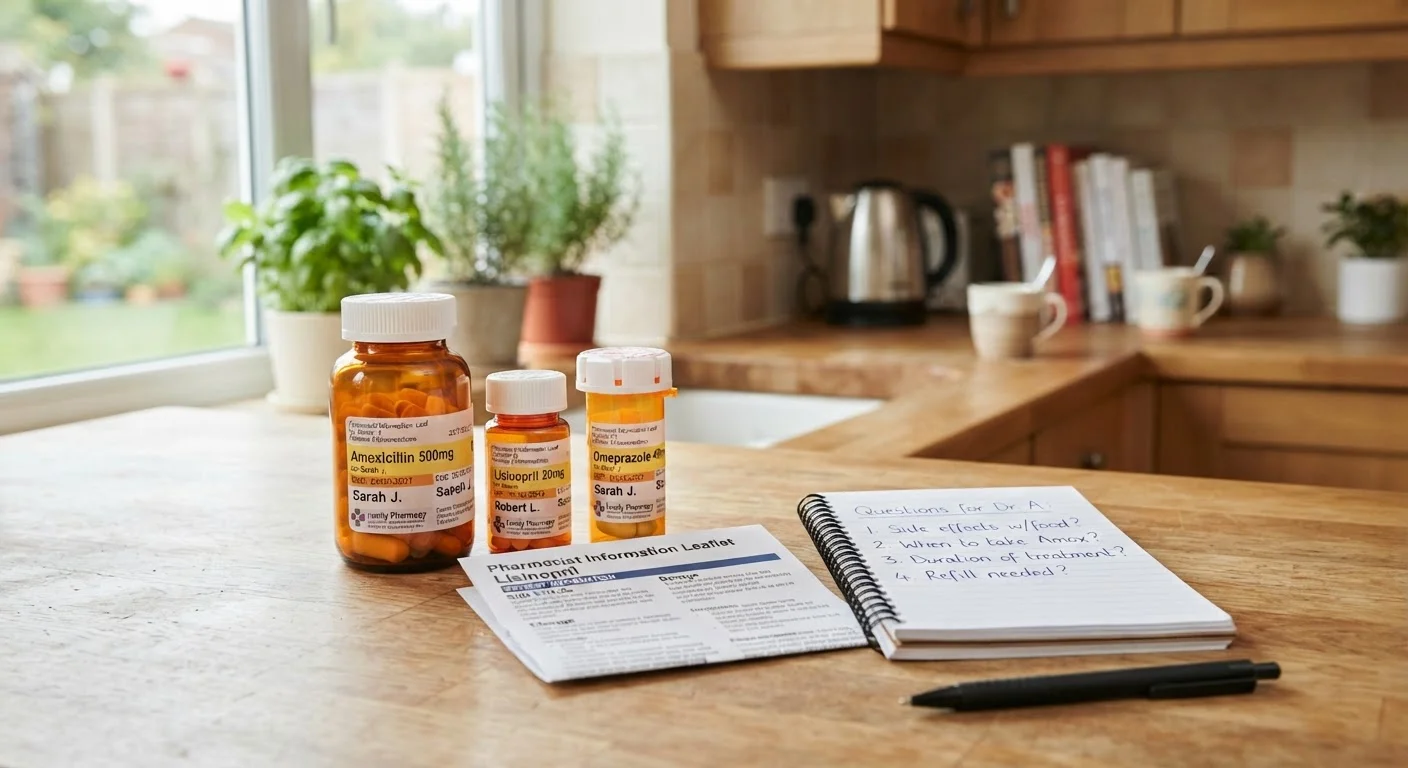
Once your prescription is filled, the pharmacy affixes a label to the container. Learning to read this label fluently is one of the most practical skills a family can develop.
- Patient name: Confirm the medication is yours or your family member's — never share prescriptions.
- Drug name and strength: The label shows both the brand name (if applicable) and the generic name, along with the dose per unit (e.g., 500 mg).
- Directions: Written in plain language — "Take one tablet by mouth twice daily with food." Follow these exactly, not the verbal instructions you may remember from the office visit.
- Quantity and refills: The total number of doses dispensed and how many refills remain before a new prescription is needed.
- Expiration date: The date after which the pharmacy guarantees full potency. Do not assume expired medication is safe or effective.
- Warnings and auxiliary labels: Bright stickers such as "May cause drowsiness" or "Avoid alcohol" are not decorative — they flag real risks.
For a deeper look at avoiding label-related mistakes, our article on prescription errors and how to prevent them covers the most common family pitfalls.
Filling and Refilling Prescriptions
When you drop off or transmit a prescription, the pharmacist verifies it is complete and legitimate, checks your medication profile for potential interactions, selects the correct drug and dose, and counsels you before you leave. Each of these steps is a safety checkpoint — not a delay.
Generic vs. brand-name: A generic drug contains the same active ingredient, in the same strength and dosage form, as its brand-name equivalent. The FDA requires generics to meet the same quality and efficacy standards. In most cases, your pharmacist can dispense a generic unless the prescriber specifies otherwise (typically written as "dispense as written" or "DAW").
Refills: Most maintenance medications (taken long-term for chronic conditions) carry multiple refills. Controlled substances — medications with potential for dependence, such as certain pain relievers or stimulants — have strict legal limits on refills and may require a new prescription each time. Plan ahead: pharmacies often need 24–48 hours to process a refill, and some controlled substances cannot be refilled early by law.
Set a Refill Reminder Before You Run Out
Most pharmacies and pharmacy apps allow you to set automatic refill reminders or enroll in auto-refill programs. Aim to request a refill when you have about a seven-day supply remaining. Running out of a maintenance medication — especially for conditions like blood pressure or diabetes — can have real health consequences, so building in buffer time is a practical safeguard.
Storing Medications Safely at Home
Improper storage is one of the most overlooked sources of medication problems. Heat, moisture, and light degrade active ingredients — sometimes long before the printed expiration date.
- Avoid the bathroom medicine cabinet: Steam and humidity accelerate breakdown. A bedroom drawer or kitchen cabinet away from the stove is preferable.
- Keep medications in original containers: Labels carry critical information; pill organizers are convenient but remove accountability for what is inside.
- Lock away controlled substances and high-risk medications: This protects children and reduces household diversion risk.
- Dispose of unused medications properly: The FDA recommends using authorized drug take-back programs. A limited list of medications may be flushed if no take-back option is available — the FDA publishes this flush list publicly.
For a comprehensive household medication safety framework, see our guide on medication safety from prescription to last dose.
50%
Medications taken incorrectly by patients
The World Health Organization estimates that roughly half of all medications for chronic conditions are not taken as prescribed, contributing to preventable health complications.
1 in 3
Americans who take 5 or more medications
According to CDC data, polypharmacy — using multiple prescription drugs simultaneously — is common among adults, underscoring the importance of household medication tracking.
125,000
Deaths annually linked to medication non-adherence (U.S.)
This widely cited estimate from health policy research highlights that not taking medications as prescribed carries serious public health consequences.
Managing Prescriptions for the Whole Family
Families often manage prescriptions for multiple members — children, adults, and elderly relatives — each with different needs. A few organizational habits reduce risk considerably.
Maintain a household medication list: Record each person's medications, doses, prescribers, and pharmacy. Update it after every visit or prescription change. Bring this list to every appointment and the emergency room.
Understand special-population considerations: Dosing for children is almost always weight-based and age-specific — never extrapolate an adult dose. Elderly family members may metabolize drugs more slowly, increasing side-effect risk. People who are pregnant or nursing require extra caution; always consult a provider before taking any medication during pregnancy. If your family includes someone managing hormonal medications, our plain-language reference on hormonal contraception may be a helpful companion resource.
Synchronize refills: Many pharmacies offer medication synchronization programs, aligning all your refill dates to one pickup per month. This simplifies adherence and reduces missed doses.
When to Talk to a Pharmacist or Prescriber
Your pharmacist is among the most accessible healthcare professionals available — no appointment required, and consultations are typically free. Reach out when:
- You are unsure how or when to take a new medication.
- You experience unexpected side effects after starting a prescription.
- You are starting a new medication and take other drugs, supplements, or herbal products.
- You want to understand whether a generic substitution is appropriate for your situation.
- You have missed doses and are unsure how to resume safely.
Contact your prescriber — not just the pharmacist — if symptoms worsen, if you believe the diagnosis has changed, or if you want to discuss stopping or switching a medication. Never stop a prescription medication abruptly without guidance; some drugs require a gradual taper to avoid withdrawal or rebound effects.
Routine health checkups are also the right moment to review all your prescriptions together. Our screenings and checkups hub offers guidance on building that relationship with your care team. Being an informed participant in the prescription process — asking questions, catching errors early, and storing medications responsibly — is one of the most meaningful contributions a family can make to its own health.
This article provides general health information for educational purposes only and is not a substitute for professional medical advice, diagnosis, or treatment. Always consult a qualified healthcare provider or pharmacist with questions about any medication or health condition.