

Key Takeaways
- Always read the Drug Facts label — it's the most reliable guide to safe OTC use.
- Active ingredients, not brand names, determine what a medication actually does.
- Double-dosing risk rises when combining multiple products containing the same ingredient.
- Children, pregnant individuals, and older adults require extra caution with any OTC product.
- Persistent or worsening symptoms are a signal to consult a healthcare professional.
- A pharmacist is an accessible, no-appointment resource for OTC guidance.
What OTC Medications Are — and Why It Matters
Over-the-counter (OTC) medications are drugs approved for sale without a prescription because their safety and effectiveness profile is well established enough for self-directed use. That doesn't mean they are risk-free — it means the FDA has determined that a typical consumer can follow the label directions and use them appropriately.
Understanding what qualifies a drug as OTC helps families make smarter choices. Learn how OTC drugs are regulated and what that means for your family before assuming that "no prescription needed" equals "no precautions needed." For a broader introduction to navigating the pharmacy aisle, this plain-language OTC pharmacy primer is a helpful starting point.
300,000+
OTC drug products on the U.S. market
The FDA oversees more than 300,000 marketed OTC drug products across approximately 80 therapeutic categories.
~50%
Americans who self-treat with OTC medications annually
Consumer Healthcare Products Association data indicate roughly half of U.S. adults use OTC medicines to manage health conditions each year.
#1
Cause of acute liver failure in the U.S.
Acetaminophen overdose — often from unintentional double-dosing — is a leading cause of acute liver failure, according to published medical literature.
Reading the Drug Facts Label
The Drug Facts label is the standardized FDA-required panel on every OTC package. Reading it completely — not just the front of the box — is the single most important habit a family can develop.
- Active ingredient(s): The chemical doing the therapeutic work. This is what you need to track across multiple products.
- Uses: The specific conditions or symptoms the product is approved to address.
- Warnings: Who should not use the product, dangerous combinations, and when to stop use.
- Directions: Age-specific dosing and frequency. Never exceed these without a provider's guidance.
- Inactive ingredients: Relevant for allergy sufferers — dyes, preservatives, and sweeteners are listed here.
For guidance on broader medication management, our complete family medication safety guide covers labeling, storage, and interactions across both OTC and prescription drugs.
When checking a multi-symptom product, go straight to the active ingredients list — ignore the marketing claims on the front. The active ingredients tell you exactly what the drug will and won't do.
Front-of-package language is designed to attract attention, not to communicate clinical detail. The active ingredient list is the definitive source of therapeutic information.
Keep a running household medication list — including OTC products and supplements — and bring it to every pharmacy or provider visit. This single habit prevents the majority of accidental double-dosing errors.
Pharmacists and providers rely on complete medication histories to identify interaction risks; incomplete lists are one of the most common sources of preventable medication errors.
Common OTC Categories Every Family Should Know
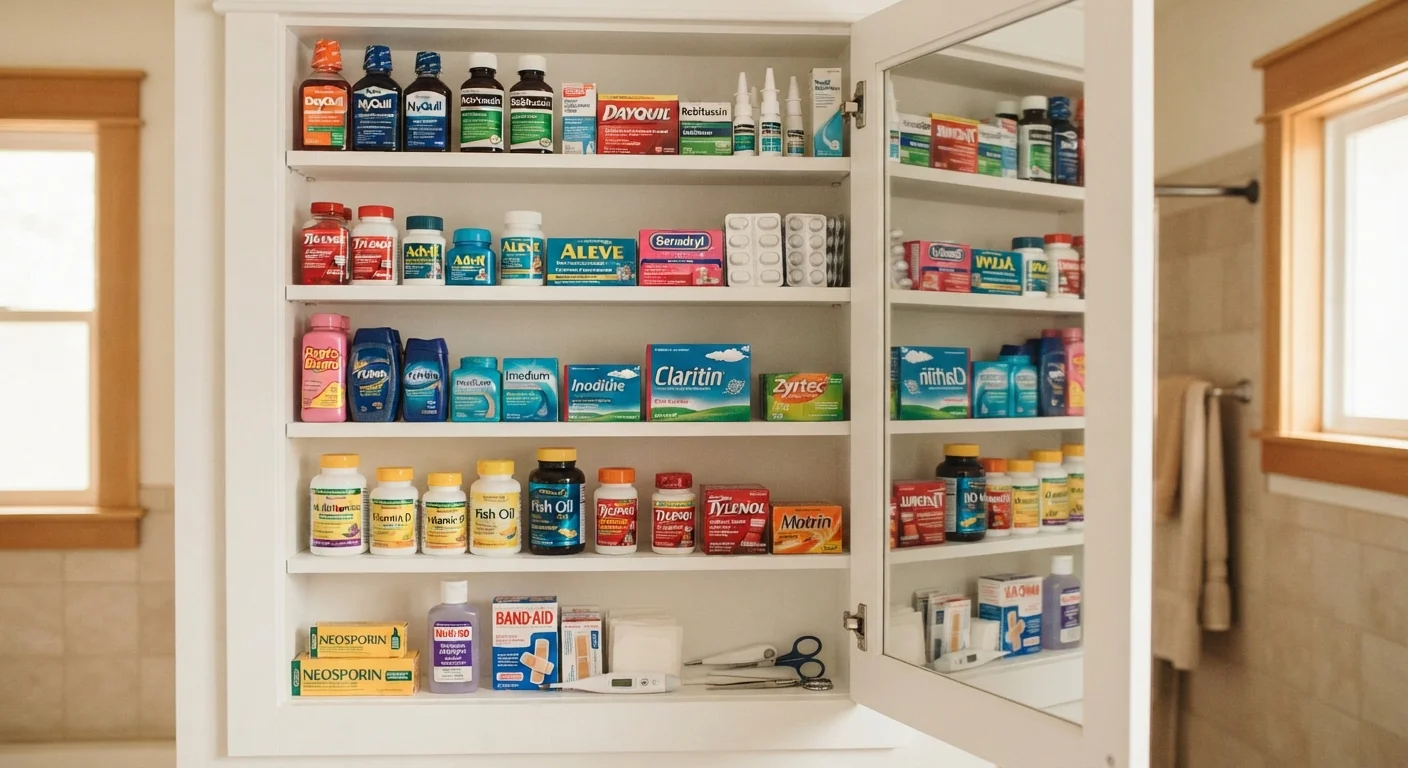
Stocking a home medicine cabinet thoughtfully means understanding what each category addresses:
- Pain relievers and fever reducers
- Two main types exist: acetaminophen and nonsteroidal anti-inflammatory drugs (NSAIDs) such as ibuprofen and naproxen. Each has distinct use considerations and contraindications.
- Antihistamines
- Used for allergy symptoms and some cold symptoms. First-generation antihistamines cause drowsiness; second-generation options are generally non-drowsy.
- Decongestants
- Relieve nasal congestion. Oral decongestants are not appropriate for certain individuals with cardiovascular conditions — check the warnings carefully.
- Cough suppressants and expectorants
- Suppressants reduce the cough reflex; expectorants thin mucus. These are often combined in multi-symptom products.
- Antacids and acid reducers
- Antacids neutralize stomach acid quickly; H2 blockers and proton pump inhibitors (PPIs) reduce acid production for longer-duration relief.
- Topical antiseptics and wound care
- For minor cuts and abrasions. Proper cleaning and coverage remain more important than the specific antiseptic used.
Avoiding Double-Dosing and Drug Interactions
One of the most common — and preventable — OTC medication errors is double-dosing. This happens when two different products contain the same active ingredient. Acetaminophen, for example, appears in standalone pain relievers, multi-symptom cold and flu products, and some sleep aids. Taking two such products simultaneously can push intake beyond safe limits.
Practical steps to prevent this:
- List every OTC and prescription product currently in use, including vitamins and herbal supplements.
- Compare active ingredients across all products before combining them.
- Ask your pharmacist to review the list — this is a free service at most pharmacies and requires no appointment.
Drug interactions are not exclusive to prescriptions. Some OTC medications interact with common prescription drugs or with each other. NSAIDs, for instance, can affect blood pressure medications. If your family members take any chronic medications, a pharmacist review is especially worthwhile. See also our guide to understanding prescriptions for context on how OTC and Rx drugs may overlap.
Special Populations: Children, Pregnant Individuals, and Older Adults
Standard adult OTC guidance does not automatically apply to every family member. Three groups deserve particular attention:
Children
Many OTC products are not approved for use in children under certain ages — often two, four, or six years old depending on the product category. Dosing for children is based on weight and age. Never estimate or scale down an adult dose without explicit label guidance or a pharmacist's direction.
Pregnant and breastfeeding individuals
Even commonly used OTC drugs can carry risks during pregnancy or lactation. Individuals who are pregnant or breastfeeding should consult a healthcare provider before using any OTC medication, including pain relievers and antacids.
Older adults
Kidney and liver function often decline with age, affecting how medications are processed. Older adults are also more likely to be on multiple prescription medications, increasing interaction risk. First-generation antihistamines and some sleep aids are flagged in geriatric care guidelines as potentially inappropriate for older adults.
If you are managing medications for a child, someone who is pregnant, or an older family member, consult a qualified healthcare professional before selecting or combining OTC products.
When OTC Treatment Isn't Enough
OTC medications address symptoms — they are not substitutes for diagnosis or treatment of underlying conditions. Knowing when to step beyond self-care is as important as knowing how to use these products well.
Contact a healthcare provider when:
- Symptoms persist beyond the timeframe noted on the product label (commonly three to seven days).
- Symptoms worsen despite appropriate OTC use.
- A fever is high, prolonged, or accompanied by stiff neck, rash, or difficulty breathing.
- A child under three months has any fever — this is always a reason to call a provider promptly.
- Symptoms could indicate something requiring a prescription or diagnostic test.
Routine checkups and screenings also play a role in catching conditions early, before they become urgent. Explore essential health screenings and checkups for every family member as part of a proactive health strategy.
This article is for general informational purposes only and does not constitute medical advice. Always consult a qualified healthcare professional for personal health questions, medication concerns, or before making changes to any treatment plan.