

Key Takeaways
- Many multi-symptom OTC products share active ingredients, making accidental doubling up surprisingly easy.
- Acetaminophen is one of the most commonly duplicated ingredients — it appears in hundreds of products.
- Always read the 'Drug Facts' label and compare active ingredients before combining any two OTC products.
- Children and older adults face higher risks from ingredient duplication and require extra care.
- A pharmacist can review your household's OTC and prescription medicines for hidden overlaps.
How Ingredient Duplication Happens in Everyday Households
Over-the-counter (OTC) medicines are designed for convenience — you can pick them up without a prescription and use them to manage common symptoms at home. But that accessibility comes with a responsibility that many families overlook: reading labels carefully enough to avoid taking the same active ingredient twice.
The problem is structural. Pharmaceutical manufacturers package the same core ingredients — acetaminophen, ibuprofen, diphenhydramine, dextromethorphan — into dozens of products across different categories. A multi-symptom cold and flu tablet, a nighttime pain reliever, and a children's fever reducer can all carry acetaminophen in meaningful amounts. Take two of those products within the same dosing window and you may unknowingly exceed the recommended daily limit.
This isn't a rare scenario. The FDA has long flagged acetaminophen duplication as a significant public health concern precisely because the ingredient is so prevalent and so easy to miss. Self-treating with OTC medicines offers genuine benefits, but ingredient overlap is one of its most underappreciated risks.
600+
OTC and Rx products containing acetaminophen
The FDA estimates acetaminophen appears in more than 600 prescription and over-the-counter medicines, making it one of the most easily duplicated active ingredients.
#1
Cause of acute liver failure in the US
According to the FDA, acetaminophen overdose — often from unintentional duplication — is the leading cause of acute liver failure in the United States.
~50%
Of acetaminophen overdoses are unintentional
The CDC has noted that roughly half of acetaminophen-related hospitalizations involve unintentional overdose, frequently from combining multiple products.
Common Mistakes — and How to Prevent Them
The errors below are among the most frequently seen when families use multiple OTC products at once. Understanding why they happen is the first step to preventing them.
Taking a multi-symptom cold medicine alongside a separate pain reliever that contains the same active ingredient.
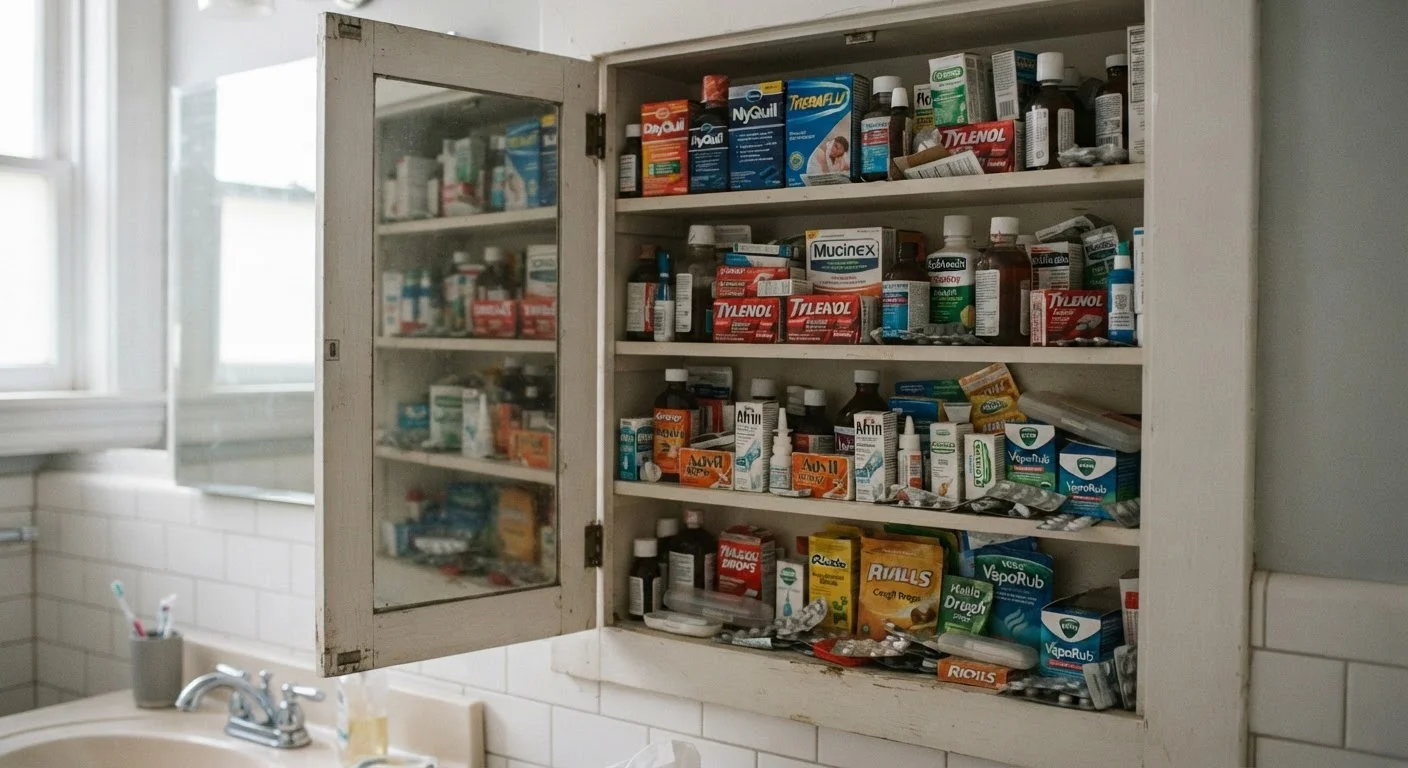
Why it happens: Multi-symptom products list many ingredients in small print, and shoppers focus on the conditions treated rather than the specific chemicals inside. A person grabbing DayQuil for congestion may not notice it already contains acetaminophen before adding a standalone pain tablet.
Using an adult cough-and-cold product and a children's version simultaneously for different family members, then accidentally mixing up doses.
Why it happens: Households managing illness in both adults and children often have multiple similar products open at once, increasing the chance of confusion about who has taken what — and when.
Combining an OTC sleep aid with a nighttime cold formula, not realizing both contain a sedating antihistamine.
Why it happens: Products are marketed by their purpose — 'sleep support' or 'nighttime relief' — rather than their chemistry. Consumers rarely connect the ingredient diphenhydramine across different product categories.
Giving a child both a fever reducer and a combination cold product without checking whether both contain the same fever-reducing ingredient.
Why it happens: Parents understandably want to address multiple symptoms quickly. In the urgency of caring for a sick child, closely reading ingredient lists can be overlooked.
Assuming that because two products treat different symptoms, they cannot share any ingredients.
Why it happens: Most people think of medications by their primary purpose. It feels logical that a pain reliever and a cold medicine are chemically distinct — but formulations frequently overlap.
For a broader look at how medications can interact — including OTC products used alongside prescriptions — see our guide on how drug interactions work.
Making Label Reading a Family Habit
The Drug Facts label is required on every OTC product sold in the United States. The 'Active Ingredients' section at the top lists each medicinal ingredient and its purpose. Comparing these sections across two products takes less than a minute and can prevent a serious dosing error.
Acetaminophen Overdose Is a Serious Risk
Acetaminophen is the leading cause of acute liver failure in the United States, according to the FDA. Because it is an ingredient in more than 600 OTC and prescription products — from cold medicines to sleep aids — duplication can happen quickly and without obvious warning signs. If you suspect someone has taken too much acetaminophen, contact Poison Control (1-800-222-1222) or seek emergency care immediately.
A few practical habits can help your whole household stay safer:
- Before combining any two OTC products, lay both boxes side by side and read the active ingredients aloud.
- Ask your pharmacist to review your current OTC and prescription medicines together — this is a free service at most pharmacy counters and can surface overlaps you might not spot yourself. Families managing chronic conditions should especially consider this, given that many prescription drugs also contain ingredients found in OTC products.
- Keep a medication log during illness — a simple note on your phone recording product name, dose, and time prevents accidental re-dosing.
Children and older adults deserve particular attention. Age-related differences in how the body processes medications can make ingredient duplication riskier for these groups. Always consult a healthcare professional when managing medication use for young children or elderly family members. You can also explore common medication mistakes families make to spot other habits worth revisiting.
OTC doesn't mean without risk. The label is there to protect you — use it every time.
This article is for general informational purposes only and is not a substitute for professional medical advice. Always consult a qualified healthcare provider or licensed pharmacist before making decisions about medications for yourself or your family.