

Key Takeaways
- Habit-tracking apps can reinforce consistency by making progress visible and rewarding small wins.
- Overreliance on streaks or scores can create anxiety and undermine intrinsic motivation.
- Apps work best as short-term scaffolding, not permanent substitutes for deeper behavior change.
- Privacy practices vary widely — review data-sharing policies before family members sign up.
- Pairing an app with professional guidance improves outcomes for health-related habit goals.
Makes progress visible and builds momentum
Seeing a streak of completed days creates a concrete record of effort, which behavioral research links to increased motivation and self-efficacy in early habit formation.
Reduces reliance on memory and willpower
Timely reminders and daily prompts offload the cognitive burden of remembering to act, which is particularly useful when establishing routines around hydration, sleep, or medication timing.
Supports accountability without social pressure
Unlike public fitness challenges, private tracking lets individuals hold themselves accountable on their own terms, which may suit people who find external scrutiny counterproductive.
Helps identify patterns over time
Weekly summaries and trend data can reveal connections between habits — such as how sleep quality affects activity levels — that are hard to notice without a written record.
Low barrier to entry for families
Many apps are free or low-cost and simple enough for older children and adults alike, making them accessible tools for building shared family wellness routines.
Streak anxiety can become counterproductive
When missing a single day feels like failure, the motivational effect can reverse entirely. Some users report increased stress and avoidance behaviors centered on protecting their streak rather than the underlying habit.
Gamification may replace intrinsic motivation
Research on self-determination theory suggests that external rewards — like points and badges — can crowd out internal reasons for healthy behavior, making the habit fragile once the app is removed.
Data privacy practices vary and may be opaque
Health and wellness apps are not uniformly regulated under HIPAA. Many share behavioral and biometric data with third parties; families should carefully read each app's privacy policy before using it.
Encourages quantity over quality
Logging a habit as 'done' is binary — an app can't capture whether a workout was high-quality or a meal was genuinely nutritious, which can create a false sense of accomplishment.
Not suitable as a standalone mental health tool
For individuals managing anxiety, depression, or disordered eating, self-monitoring tools without professional guidance may reinforce harmful patterns rather than address root causes. Always consult a qualified provider.
Our Verdict
Habit-tracking apps are genuinely useful tools for building awareness and early momentum around wellness routines. Their benefits are real but time-limited — the evidence suggests they work best as a structured starting point rather than a long-term solution. Used thoughtfully, with realistic expectations, they can complement a broader family wellness strategy.
Families or individuals who are just starting a new health routine and want a low-barrier, visual way to build early consistency — provided they monitor how the app affects motivation and stress.
What Habit-Tracking Apps Actually Do
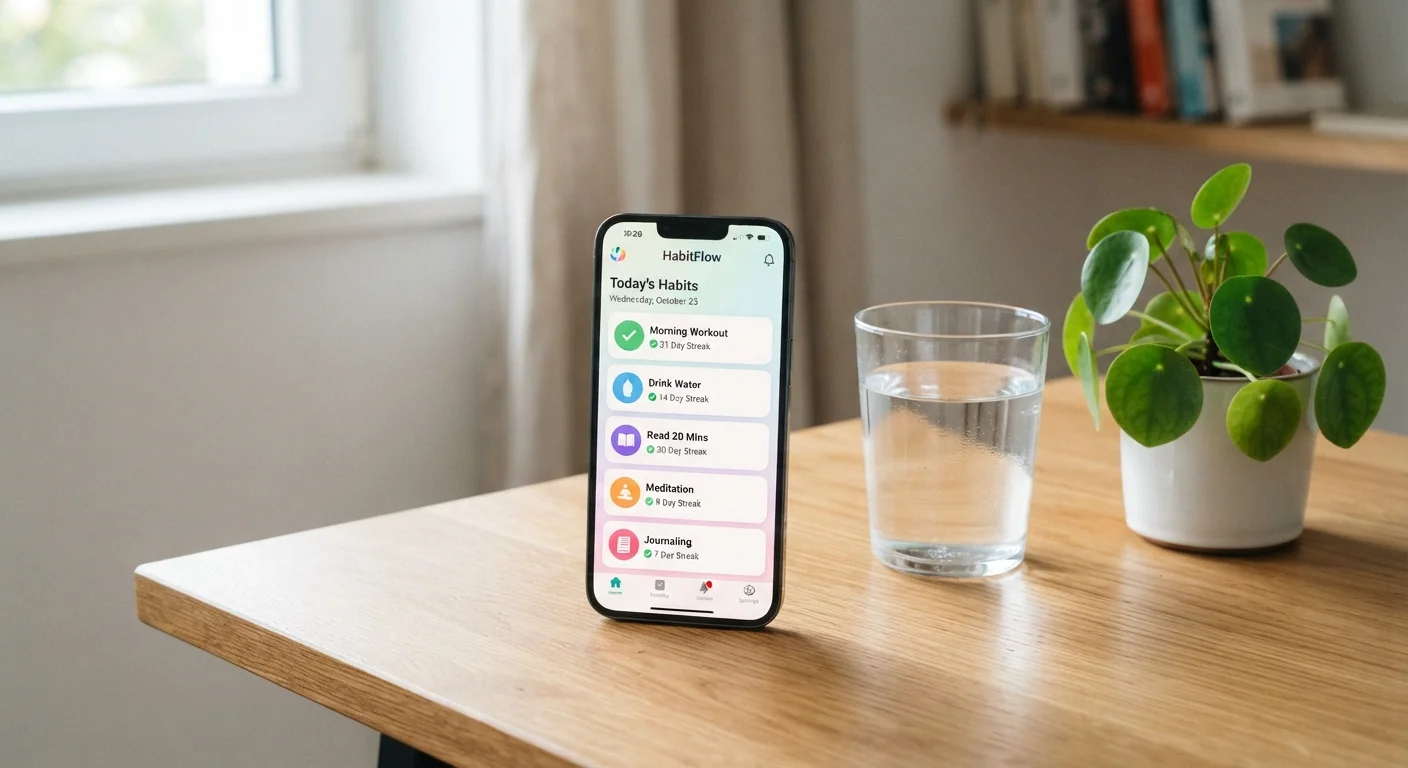
Habit-tracking apps are digital tools designed to help users log, monitor, and reinforce daily behaviors. At their core, they use three mechanics: reminders that prompt action at a set time, completion logging that records whether a behavior occurred, and visual feedback — usually streaks, progress bars, or scores — that communicates consistency over time.
These mechanics map loosely onto what behavioral scientists call the habit loop: cue, routine, reward. The app supplies the cue (a notification), supports the routine (a check-in), and delivers the reward (a visual streak). Understanding this structure helps families evaluate whether an app's design actually supports the habits they want to build. To learn more about how these loops form in the brain, see the science behind habit formation.
The Real Advantages: When Tracking Helps
Habit-tracking apps offer genuine, evidence-supported benefits — particularly in the early weeks of a new wellness routine, when friction is highest and the behavior has not yet become automatic.
Makes progress visible and builds momentum
Seeing a streak of completed days creates a concrete record of effort, which behavioral research links to increased motivation and self-efficacy in early habit formation.
Reduces reliance on memory and willpower
Timely reminders and daily prompts offload the cognitive burden of remembering to act, which is particularly useful when establishing routines around hydration, sleep, or medication timing.
Supports accountability without social pressure
Unlike public fitness challenges, private tracking lets individuals hold themselves accountable on their own terms, which may suit people who find external scrutiny counterproductive.
Helps identify patterns over time
Weekly summaries and trend data can reveal connections between habits — such as how sleep quality affects activity levels — that are hard to notice without a written record.
Low barrier to entry for families
Many apps are free or low-cost and simple enough for older children and adults alike, making them accessible tools for building shared family wellness routines.
For families, a shared habit tracker can also make wellness goals more tangible and provide a neutral, low-stakes way to discuss health behaviors — whether that's consistent bedtimes for children or hydration goals for adults. Pairing app data with a broader health review, like a structured family wellness audit, can amplify these benefits.
The Real Limitations: When Tracking Backfires
Despite their appeal, habit-tracking apps carry meaningful limitations that families should weigh before committing to one — especially for health-sensitive goals.
Streak anxiety can become counterproductive
When missing a single day feels like failure, the motivational effect can reverse entirely. Some users report increased stress and avoidance behaviors centered on protecting their streak rather than the underlying habit.
Gamification may replace intrinsic motivation
Research on self-determination theory suggests that external rewards — like points and badges — can crowd out internal reasons for healthy behavior, making the habit fragile once the app is removed.
Data privacy practices vary and may be opaque
Health and wellness apps are not uniformly regulated under HIPAA. Many share behavioral and biometric data with third parties; families should carefully read each app's privacy policy before using it.
Encourages quantity over quality
Logging a habit as 'done' is binary — an app can't capture whether a workout was high-quality or a meal was genuinely nutritious, which can create a false sense of accomplishment.
Not suitable as a standalone mental health tool
For individuals managing anxiety, depression, or disordered eating, self-monitoring tools without professional guidance may reinforce harmful patterns rather than address root causes. Always consult a qualified provider.
Apps Are Not Medical Devices
Most consumer habit-tracking apps are wellness tools, not regulated medical devices. They are not designed to diagnose, treat, or monitor clinical conditions. If you are managing a chronic health condition or supporting a child's developmental health, discuss any tracking tools with your healthcare provider before relying on them as part of a care plan.
If your family has previously struggled to sustain healthy routines past the initial enthusiasm, the issue may be deeper than a tracking gap. Our article on why healthy habits fall apart after two weeks explores the behavioral patterns behind this common experience.
How to Use Habit Apps More Effectively
Getting the most from a habit-tracking app means treating it as a scaffold, not a solution. Consider these practical principles:
- Start with one or two habits, not a full lifestyle overhaul. Tracking too many behaviors at once dilutes focus and increases drop-off risk.
- Set a defined review period — four to six weeks — after which you evaluate whether the app is genuinely supporting behavior change or just generating logging activity.
- Detach your identity from the streak. Missing a day is normal; what matters is resuming. Apps that allow flexible "skip" options tend to support longer-term engagement.
- Pair tracking with reflection. A brief weekly review of what the data actually means — not just whether boxes were checked — converts logs into learning. This approach aligns well with broader health monitoring; see our guide on building a useful home health monitoring routine.
~40%
Adults who abandon wellness apps within 30 days
Industry retention analyses consistently find that roughly 40% of health and wellness app users disengage within the first month of download.
66 days
Average time for a behavior to become automatic
A study published in the European Journal of Social Psychology found that habit automaticity took an average of 66 days to develop, with a range from 18 to 254 days depending on the behavior.
The 66-day average for habit automaticity is a useful benchmark: if an app helps you get there, it has served its purpose — even if you eventually stop using it. For habit ideas worth building toward, small daily habits with outsized long-term benefits offers a grounded starting point.
This article is for general informational and educational purposes only and does not constitute medical advice. Consult a qualified healthcare provider before making decisions related to your health or the health of your family members.