

Key Takeaways
- Consistent timing and technique matter more than the frequency of readings when monitoring at home.
- A simple log — paper or digital — transforms isolated readings into meaningful trends for your doctor.
- Sharing organized data with your healthcare provider helps them make more informed clinical decisions.
- Different devices require different routines; match your schedule to what each monitor actually measures.
- Home monitoring supports professional care — it does not replace clinical assessment or diagnosis.
Why Routine Is the Real Difference-Maker
Buying a home health monitor is straightforward. Using it in a way that produces reliable, clinically useful data is the harder part. A single blood pressure reading taken after rushing upstairs tells your doctor almost nothing. Thirty readings captured at the same time of day, in the same posture, over four weeks tells them quite a lot.
The value of home monitoring comes from consistency — consistent conditions, consistent technique, and consistent recording. Without a routine, readings become noise. With one, they become signal. If your family is new to home devices, our beginner's guide to home monitoring devices covers the basics of what each device measures before you build a schedule around it.
Recording Results: Simple Systems That Actually Get Used
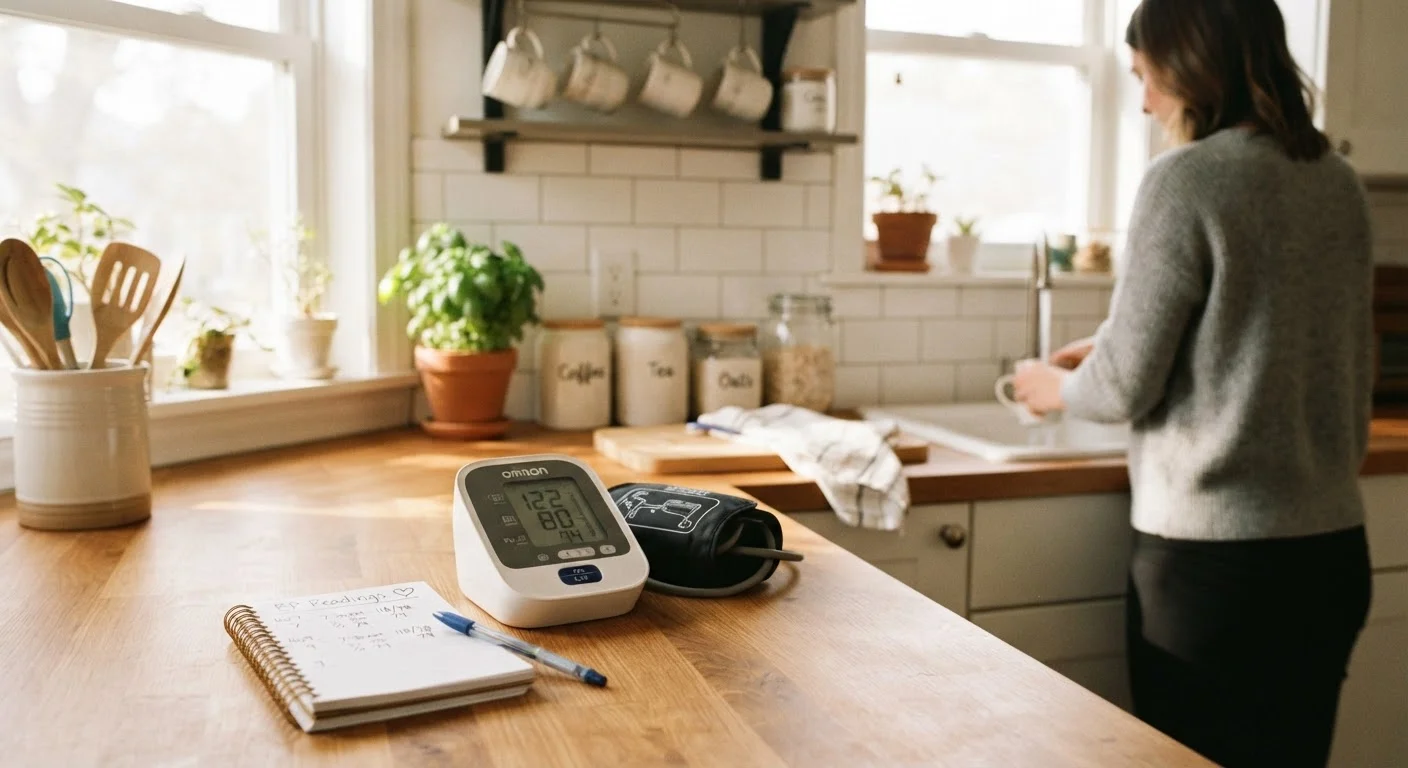
No recording system will work if it's complicated. The goal is a log that captures four things for each reading: the date, the time, the result, and any notable context (such as just waking up, or feeling anxious). Everything else is optional.
Paper logs work well for many families — a small notebook kept with the device is always accessible and requires no battery. Digital options, including smartphone health apps and spreadsheets, make it easier to share data and spot trends visually. Habit-tracking apps have real trade-offs, so choose a format your household will actually maintain rather than the most technically impressive one.
Sharing Data With Your Doctor or Specialist
A log full of readings has limited value if it never leaves your kitchen drawer. Sharing organized monitoring data before or during an appointment gives your GP or specialist the context they need to interpret results accurately.
Before an appointment, review your log and note any readings that fell outside your usual range, alongside what was happening at the time. Print a summary or export a simple chart if your app allows it. Some practices now accept digital records shared via patient portals — ask your surgery or clinic what format they prefer.
Home Readings and Clinical Measurements May Differ
It is normal for home readings to differ slightly from those taken in a clinic — this phenomenon is well recognized in blood pressure monitoring, where 'white-coat effect' can elevate in-clinic readings. Your doctor is aware of this and will interpret your home log accordingly. Do not adjust any medication or treatment based on home readings alone; always discuss changes with your healthcare provider first.
For conditions that involve regular specialist review — such as managed hypertension or asthma — ask your clinician how often they want to see your monitoring data and whether any single reading should prompt you to contact them sooner. For asthma management specifically, understanding how peak flow meters work and what zone readings mean is essential context before building your log.
Routine checkups are also the right moment to cross-reference home data with in-clinic measurements. Scheduled screenings and checkups remain the clinical standard — home monitoring is a supplement, not a substitute.
Sustaining the Habit Long-Term
Most families start strong and trail off within weeks. The monitoring routine that lasts is the one that fits naturally into an existing daily habit — measuring blood pressure while the morning coffee brews, or logging a glucose reading before a set meal. Attaching monitoring to an anchor habit reduces the mental effort required.
It also helps to revisit why you're monitoring. If readings have been consistently stable and your healthcare team is satisfied, ask whether the frequency is still appropriate — over-monitoring can generate unnecessary anxiety without adding clinical value. Conversely, if your device's accuracy is in question, maintaining your monitor's reliability over time covers calibration, storage, and when to replace consumables like test strips.
Weaving monitoring into a broader family wellness review — such as the weekly healthy habits audit — can also help everyone stay engaged without treating readings as a source of stress.
This article provides general health information and is not a substitute for professional medical advice. Always consult a qualified healthcare provider about monitoring schedules, interpreting results, or any changes to your health management plan.