

Key Takeaways
- A peak flow meter measures the maximum speed of air you can exhale, indicating airway narrowing.
- Establishing your personal best reading is essential before interpreting green, yellow, or red zones.
- Consistent daily logging at the same times reveals patterns that help clinicians adjust asthma management.
- A single low reading warrants attention; a reading in the red zone requires prompt medical contact.
- Technique matters — incorrect posture or effort produces unreliable results.
What you will need
How a Peak Flow Meter Works
A peak flow meter is a small, handheld device that measures peak expiratory flow rate (PEFR) — the fastest speed, in litres per minute, at which you can force air out of your lungs in a single sharp breath. Because asthma causes the airways to narrow and become inflamed, PEFR drops before many people notice worsening symptoms. This makes the device a practical early-warning tool.
The mechanics are straightforward: a weighted cursor inside a calibrated tube moves along a numbered scale when you exhale forcefully. The number where the cursor stops is your reading. Most meters follow a standardised scale so readings can be compared across devices, though your clinician may advise you to use the same meter consistently for trend tracking.
Peak flow monitoring sits within a broader category of at-home lung and health surveillance. If your family is new to home monitoring generally, the beginner's guide to home health monitoring devices provides helpful context on what these tools can and cannot tell you.
What you will need
Understanding Your Personal Best and the Zone System
Interpreting peak flow readings requires a reference point: your personal best. This is the highest reading you achieve over a two-to-four-week period when your asthma is well controlled and you feel well. Your clinician will help you establish this number at the start of your monitoring plan.
Once your personal best is set, readings are typically categorised into three action zones:
- Green zone (80–100% of personal best): Airflow is good. Continue your usual management plan.
- Yellow zone (50–79% of personal best): Airflow is reduced. This is a caution signal — review your action plan and contact your clinician if the reading persists or symptoms worsen.
- Red zone (below 50% of personal best): Significant airflow obstruction. Follow your emergency action plan and seek medical attention promptly.
These thresholds are general guidelines established by respiratory health organisations; your clinician may set slightly different boundaries based on your individual history. Never adjust medication or treatment based on a reading without following your personalised written asthma action plan.
Red-Zone Readings Require Immediate Action
A peak flow reading below 50% of your personal best is a medical alert, not a wait-and-see signal. Follow your written asthma action plan's emergency instructions right away. If you do not have an action plan or your symptoms are severe — including difficulty speaking in full sentences, rapid breathing, or blue-tinged lips — call emergency services immediately.
Logging Readings and Building a Useful Routine
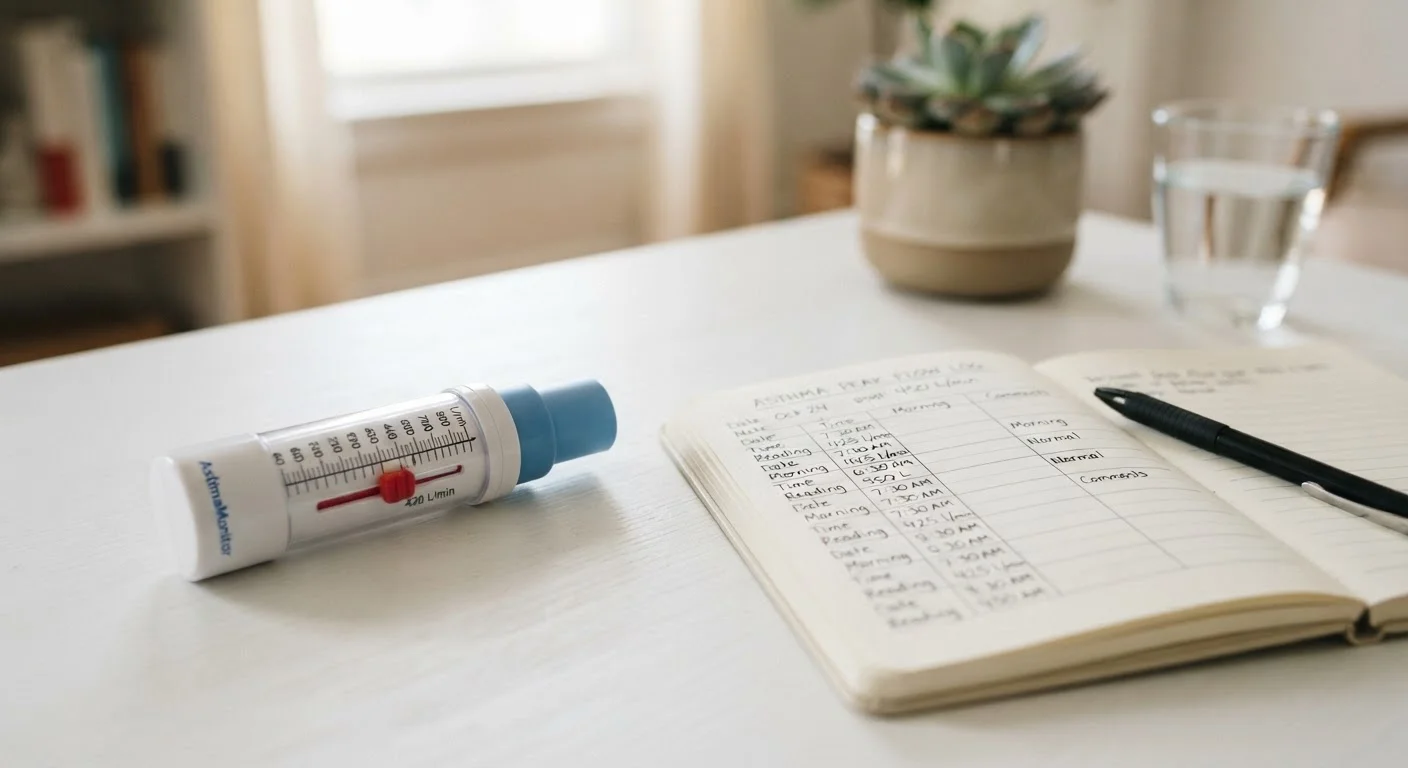
A single reading has limited value. Consistent logging at the same times each day — typically morning and evening — reveals patterns such as overnight dips, post-exercise drops, or gradual deterioration before an exacerbation. Record the date, time, reading, any symptoms, and any exposures (pollen, smoke, exercise) that may be relevant.
Many clinicians recommend taking three successive readings and logging the highest of the three, rather than an average. This approach captures your best effort rather than being skewed by fatigue or suboptimal technique on a single blow.
For practical guidance on timing readings and sharing logs effectively with your GP or specialist, see building a home monitoring routine that supports your healthcare.
As with all home diagnostic tools, technique and device condition directly affect reliability. The principles outlined in the home monitor accuracy checklist — checking for device wear, confirming correct posture, and controlling environmental variables — apply equally to peak flow meters.
This article provides general health information about medical devices and is not a substitute for personalised medical advice. Always follow your clinician's written asthma action plan and consult a qualified healthcare professional before making any changes to your asthma management.