

Key Takeaways
- Storing monitors in cool, dry locations away from direct sunlight preserves sensor accuracy.
- Expired or improperly stored test strips are a leading cause of inaccurate glucose readings.
- Battery health directly affects the reliability of blood pressure and glucose monitors.
- Periodic calibration checks against a clinical device confirm your monitor is performing correctly.
- Always consult a healthcare professional before making medical decisions based on home readings.
Why Monitor Maintenance Matters
Home health monitors — blood pressure cuffs, glucose meters, pulse oximeters (devices that measure blood oxygen saturation) — give families useful data between clinical visits. But a monitor that has drifted out of accuracy can produce readings that are misleading rather than helpful. Small errors compound over time: a blood pressure monitor reading consistently 8–10 mmHg high could prompt unnecessary anxiety or, conversely, mask a genuine rise that warrants medical attention.
Reliability doesn't require complicated upkeep. It comes down to four areas: storage conditions, battery care, consumable expiry, and periodic calibration checks. Building simple habits around each one keeps your devices working the way they were designed to. For a broader look at factors that affect individual readings, see the home monitor accuracy checklist.
Storage Conditions That Protect Your Devices
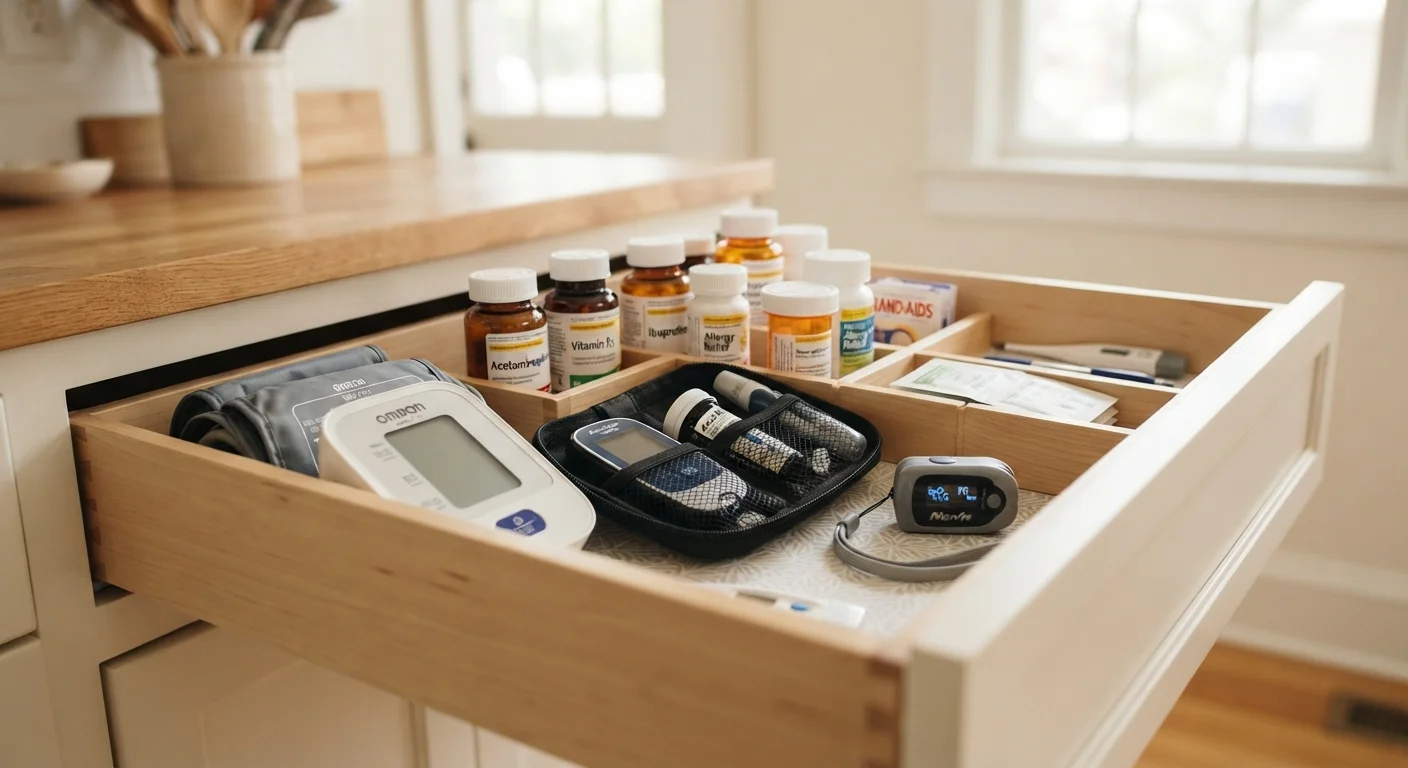
Most home monitors are rated for storage in a temperature range of roughly 50–95°F (10–35°C) and relative humidity under 85% — check your device manual for the exact figures. Bathrooms, despite being a common storage spot, expose electronics to humidity spikes that degrade sensor components and corrode battery contacts over time. A bedroom drawer or a dedicated shelf in a living area is generally a better choice.
Keep monitors away from direct sunlight and heating vents. Repeated thermal cycling — warming and cooling sharply — stresses the seals on optical sensors in pulse oximeters and can loosen the internal components of blood pressure cuffs. Dust is also worth controlling: particulate buildup on a glucometer's test strip port can interfere with the electrical contact needed for an accurate reading.
How to Store Blood Pressure Cuffs Correctly
Loosely coil the cuff tubing and lay the cuff flat or hang it — never fold it sharply or bundle the tubing with a tight rubber band. Kinks and creases in the bladder material cause slow pressure leaks that make readings inconsistently high. Most manufacturers include a storage case; using it consistently adds meaningful protection.
Cuffs and tubing on blood pressure monitors should be stored loosely coiled, not tightly wrapped. Tight bending creases the bladder material inside the cuff, which can cause pressure leaks that skew readings upward.
Batteries, Consumables, and Expiry Dates
Low battery voltage is one of the most overlooked sources of monitor error. Many devices display a low-battery indicator only when voltage drops below a threshold — but accuracy can degrade before that warning appears. Replace batteries when the indicator first appears rather than waiting for the device to shut off. For infrequently used devices, alkaline batteries left in place for extended periods can leak and corrode contacts; removing batteries during long storage periods is a sensible precaution.
Test strips — used in glucose meters and urine dipstick tests — are chemically active and degrade once exposed to air, moisture, or heat. Always check the expiry date printed on the container, and close the vial immediately after removing a strip. Do not use strips that have expired or that have been stored outside the recommended temperature range, even if they look intact. For detailed strip-handling guidance, the glucometer setup guide covers coding and safe strip use step by step.
Store monitors and consumables in a cool, dry location away from bathrooms and direct heat sources.
Humidity and temperature fluctuations degrade both electronic sensors and chemically active test strips. Consistent ambient conditions preserve the device's designed accuracy over its full lifespan.
Replace batteries at the first low-battery indicator rather than waiting for device shutdown.
Voltage below the manufacturer's operating threshold can cause readings to drift before a shutdown warning appears. Early replacement ensures the device is always running within its calibrated electrical parameters.
Check test strip expiry dates before each use and discard any strips stored outside recommended conditions.
Enzymatic reactions in glucose and dipstick strips are time-sensitive; expired or compromised strips produce systematically incorrect results that may not trigger any error message on the meter.
Perform a comparative accuracy check against a clinical device at least once a year.
Consumer monitors can drift gradually without obvious signs of malfunction. Comparing your device against a clinically validated measurement provides an objective benchmark and catches drift before it influences health decisions.
Run manufacturer-supplied control solution tests on glucose meters periodically and after opening a new strip vial.
Control solution tests verify that both the meter and a new batch of strips are producing readings within the acceptable range, catching calibration errors before they affect real health data.
Calibration Checks and Knowing When to Replace a Device
Home monitors are not laboratory instruments, and small measurement drift is normal over years of use. The practical way to check a blood pressure monitor's ongoing accuracy is to bring it to a clinical appointment and compare its reading against the clinician's measurement taken at the same sitting. A difference of more than 5 mmHg consistently suggests the device may need recalibration or replacement.
Pulse oximeters can be cross-checked if a clinician measures oxygen saturation with a medical-grade device during a visit. Glucose meters can be tested using control solution — a liquid with a known glucose concentration supplied by the manufacturer — to verify the meter and strips are producing readings within the acceptable range printed on the strip packaging.
No consumer monitor lasts indefinitely. If a device has been dropped, exposed to liquid, or is producing erratic readings that don't correspond to your physical condition, discontinue use and discuss replacement with your healthcare provider. Once you have reliable devices in good working order, the next step is building a consistent monitoring routine — see how to build a home monitoring routine for practical guidance on timing, recording, and sharing results with your care team.
This article is for general informational purposes only and does not constitute medical advice. Always consult a qualified healthcare professional before making decisions about your health or the use of any medical device.