

Key Takeaways
- Vaccines work by training the immune system before a real infection occurs.
- The immune response involves both antibodies and long-lived memory cells.
- Mild side effects like soreness or low-grade fever are signs of a normal immune response.
- Full protection often requires multiple doses spaced over time.
- Healthy lifestyle habits can support, but not replace, the protection vaccines provide.
Vaccine Immune Response
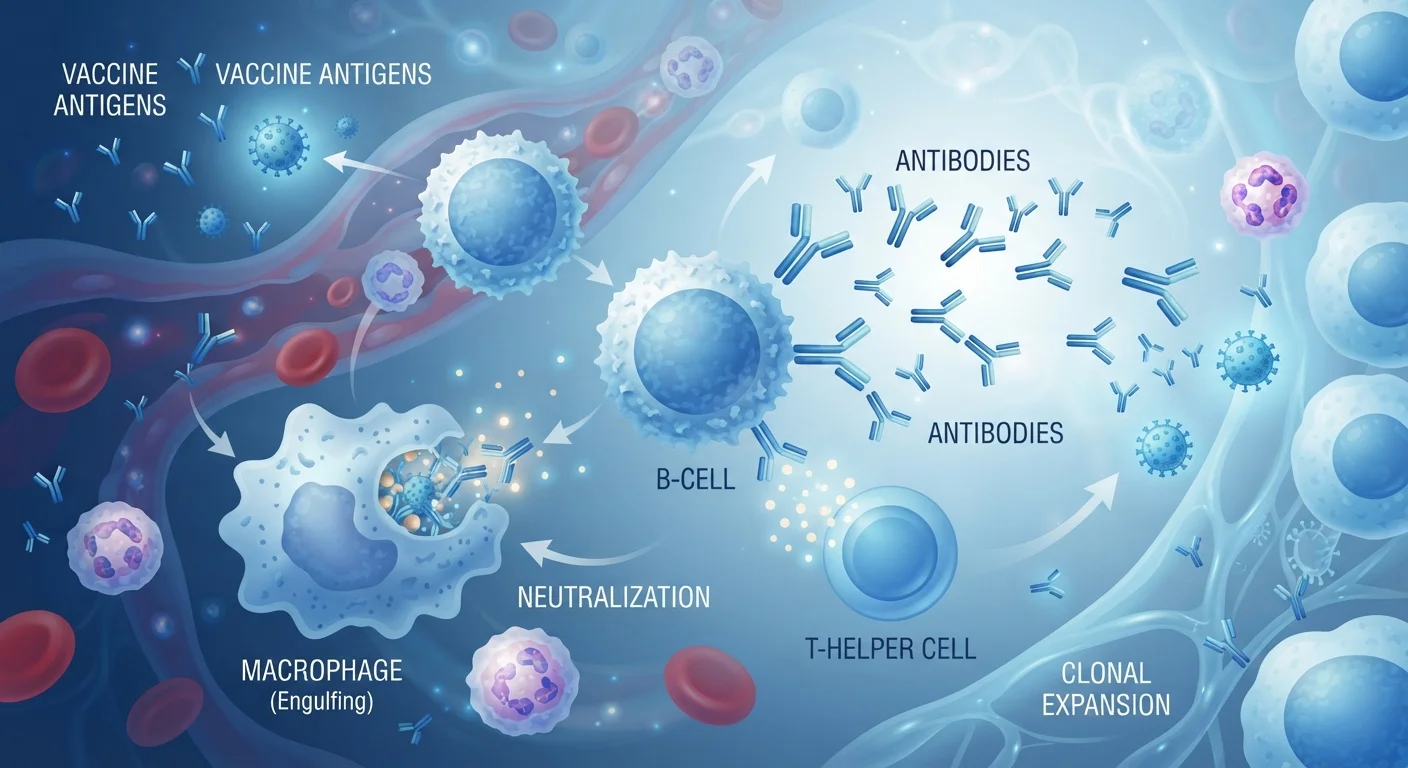
When a vaccine is given, it introduces an antigen — a harmless piece or weakened form of a pathogen — that prompts the immune system to build a defense. The body produces antibodies and memory cells specifically designed to recognize that threat. If the actual pathogen is encountered later, the immune system can respond quickly and effectively.
The degree and durability of protection varies by vaccine type (live-attenuated, inactivated, mRNA, subunit) and the individual's immune status.
From Injection to Immune Alert
The moment a vaccine is administered, the immune system begins its work. The vaccine introduces an antigen — this might be a protein fragment from a virus, a weakened pathogen, or genetic instructions telling cells to produce a recognizable protein, as with mRNA vaccines. None of these can cause the disease itself, but they do carry enough biological identity to trigger an immune response.
Specialized cells called antigen-presenting cells (including dendritic cells and macrophages) detect the foreign material and engulf it. They then display fragments of it on their surface and migrate to the nearest lymph node, essentially sounding an alarm to other immune cells waiting there.
This initial recognition phase typically unfolds within the first 24 to 96 hours after vaccination — which is also the window when injection-site redness, swelling, or mild fever may appear. These local and systemic reactions reflect immune activation, not illness.
Mild Side Effects Are Generally Expected
Soreness at the injection site, mild fever, or brief fatigue after vaccination are common and usually resolve within one to two days. These reactions are not signs that something went wrong — they reflect the immune system engaging with the vaccine. Severe reactions are rare; review what to watch for in our guide to vaccine side effects vs. allergic reactions.
Antibody Production and the Role of Memory Cells
Inside the lymph nodes, a cascade of coordinated activity begins. B cells (white blood cells responsible for antibody production) recognize the antigen and, with help from T helper cells, begin multiplying and maturing into antibody-secreting plasma cells. The antibodies they produce are proteins shaped to bind specifically to the antigen — like a lock and key — marking any future pathogen carrying that antigen for destruction.
Simultaneously, a subset of B cells and T cells become memory cells. These cells are the true long-term payoff of vaccination. They persist in the body for years — sometimes decades — and remain alert. If the real pathogen enters the body later, memory cells recognize it within hours and launch a faster, stronger immune response than the first exposure produced. The pathogen is often cleared before symptoms even develop.
This is the mechanism behind herd immunity as well: when a high proportion of a community has vaccine-generated memory cells, even unvaccinated individuals benefit because the pathogen has fewer opportunities to spread.
2–3 weeks
Typical time to peak antibody levels post-vaccination
According to general immunology principles supported by CDC educational materials, most vaccines reach peak antibody production within two to three weeks of the final recommended dose.
10–20× faster
Memory cell response speed vs. first exposure
Immunological research consistently demonstrates that memory B and T cells can mount a secondary immune response orders of magnitude faster than the primary response to a novel antigen.
95%+
Efficacy of measles vaccine after two doses
The CDC reports that two doses of the MMR (measles, mumps, rubella) vaccine are approximately 97% effective against measles, illustrating how a prime-boost series strengthens protection significantly over a single dose.
Why Multiple Doses Matter
A single dose of some vaccines generates sufficient immunity, but many require a series. Each successive dose restimulates the immune system, prompting it to produce more antibodies and expand the pool of memory cells. This stepwise escalation — sometimes called a prime-boost strategy — results in a more durable and robust response than a single exposure can achieve.
The spacing between doses is deliberate: it allows B cells and T cells time to mature properly and allows memory cell populations to stabilize before the next stimulation. Straying significantly from the recommended schedule can affect how well protection develops. For families navigating a missed dose, catch-up schedule guidance explains how to get back on track without restarting the entire series.
For a broader overview of the vaccine landscape — including schedules and safety context — the family introduction to vaccines and immune health is a useful companion resource.
Supporting the Immune Response Before and After Vaccination
While the immune system's response to a vaccine is largely automatic, certain baseline factors influence how robustly it performs. Adequate sleep in the days surrounding vaccination, adequate hydration, and avoiding significant alcohol intake are consistently associated with better immune function in research literature — though none of these replace the vaccine itself.
Parents preparing children for a vaccination visit can find practical guidance — including strategies for managing soreness and anxiety — in the article preparing your child for a vaccination appointment.
For families interested in the broader picture of everyday immune resilience, nutrition, sleep, and everyday habits that support immune resilience covers what the evidence says beyond vaccination.
It's also worth distinguishing between expected post-vaccination reactions and more serious responses. Understanding vaccine side effects vs. allergic reactions outlines when to monitor at home and when to contact a healthcare provider.
This article is for general informational purposes only and is not medical advice. Always consult a qualified healthcare provider about your family's vaccination needs and any health concerns.