

Key Takeaways
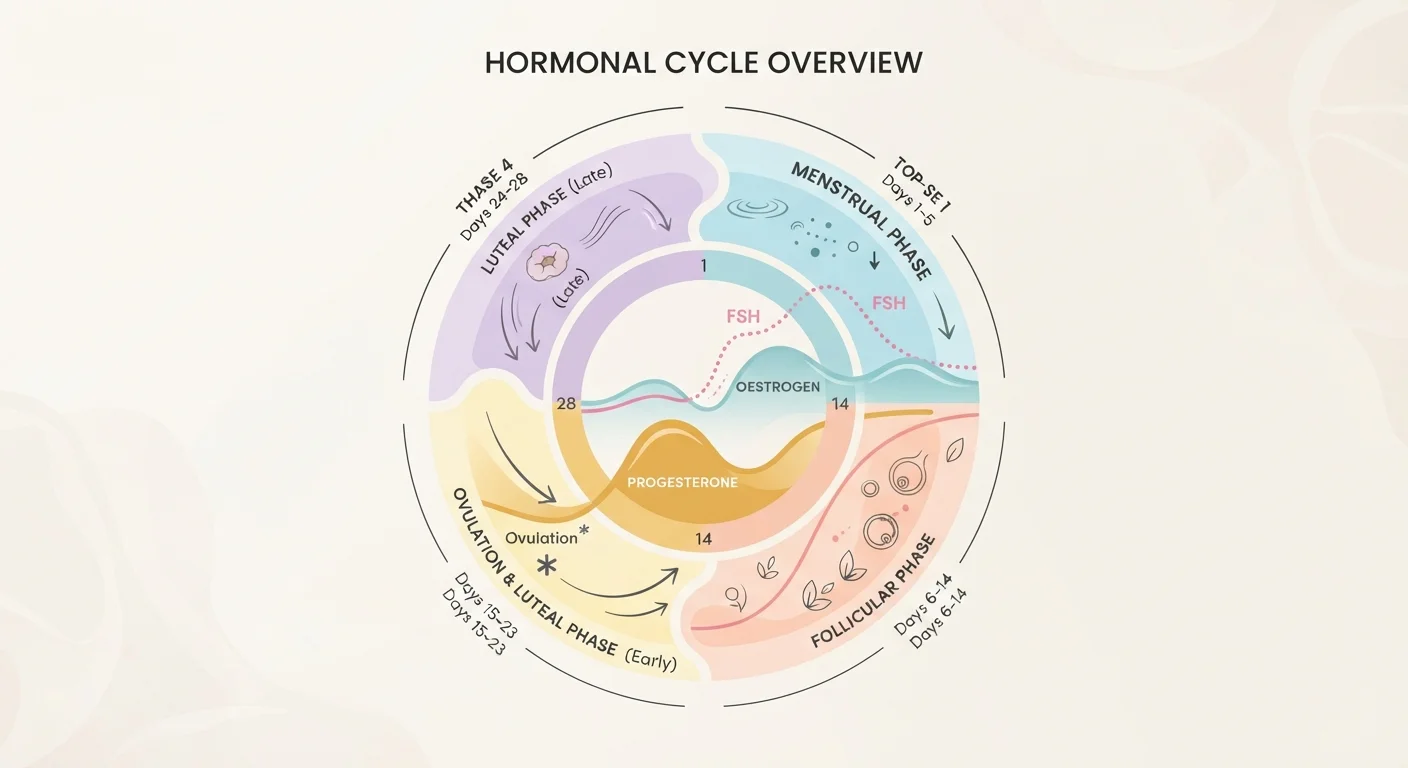
- The menstrual cycle is divided into four phases, each driven by distinct hormonal changes.
- Estrogen, progesterone, FSH, and LH are the four primary hormones that govern the cycle.
- Ovulation — the release of an egg — occurs around the midpoint of an average cycle.
- Hormonal fluctuations during the cycle can affect mood, energy, skin, and sleep patterns.
- Cycle length naturally varies from person to person and can change across a lifetime.
The Female Hormonal Cycle
The female hormonal cycle — commonly called the menstrual cycle — is a recurring series of hormonal changes that prepares the body for a possible pregnancy each month. Driven by four main hormones, it unfolds in distinct phases typically lasting 21 to 35 days. These hormonal shifts affect far more than reproduction, influencing mood, energy, sleep, and metabolism throughout the cycle.
The cycle is regulated by the hypothalamic-pituitary-ovarian (HPO) axis, a feedback loop in which the brain and ovaries continuously signal one another to coordinate hormone release.
The Four Hormones at the Centre of the Cycle
The menstrual cycle is orchestrated by four hormones working in a carefully timed sequence. Understanding their individual roles is the foundation for making sense of everything that follows.
- Follicle-stimulating hormone (FSH) — released by the pituitary gland, FSH signals the ovaries to develop egg-containing follicles at the start of each cycle.
- Estrogen — produced by maturing follicles, estrogen builds the uterine lining (endometrium) and triggers the LH surge that leads to ovulation.
- Luteinizing hormone (LH) — a sharp spike in LH, also from the pituitary, triggers the release of the egg at ovulation.
- Progesterone — secreted after ovulation by the collapsed follicle (now called the corpus luteum), progesterone stabilises the uterine lining in preparation for a fertilised egg.
These hormones do not operate in isolation. They form a continuous feedback loop between the brain and the ovaries — a system known as the hypothalamic-pituitary-ovarian axis — adjusting in real time based on signals from the body.
21–35 days
Normal menstrual cycle length range
According to the American College of Obstetricians and Gynecologists (ACOG), cycle length varies naturally across this range in healthy individuals.
~12–24 hours
Window a released egg remains viable
The NIH notes that the egg survives only briefly after ovulation, though sperm viability extends the fertile window to several days.
90%
Women who experience at least one PMS symptom
Research published in clinical gynecology literature suggests the majority of women experience some premenstrual symptoms, though severity varies widely.
Phase by Phase: What Actually Happens
Phase 1 — Menstruation (Days 1–5, approximately)
The cycle begins on the first day of menstrual bleeding. When a fertilised egg has not implanted, estrogen and progesterone levels drop, signalling the uterus to shed its lining. FSH begins rising again to start the next round of follicle development.
Phase 2 — Follicular Phase (Days 1–13, approximately)
Overlapping with menstruation, the follicular phase begins as FSH stimulates several ovarian follicles to grow. One follicle becomes dominant and produces increasing amounts of estrogen. This rising estrogen thickens the uterine lining and, as it peaks, triggers the pituitary to release a surge of LH.
Phase 3 — Ovulation (Around Day 14)
The LH surge causes the dominant follicle to rupture and release a mature egg into the fallopian tube. The egg is viable for fertilisation for approximately 12 to 24 hours. Sperm, however, can survive in the reproductive tract for several days, widening the fertile window around ovulation.
Phase 4 — Luteal Phase (Days 15–28, approximately)
After ovulation, the ruptured follicle transforms into the corpus luteum, which secretes progesterone — and some estrogen. Progesterone maintains the thickened uterine lining in case of implantation. If fertilisation does not occur, the corpus luteum breaks down, hormone levels fall sharply, and menstruation begins again.
For a detailed breakdown of what each phase means for reproductive health, see The Menstrual Cycle Explained: What Each Phase Actually Does.
Cycle Length Is Not One-Size-Fits-All
While a 28-day cycle is often cited as the norm, it is simply an average. Research shows that cycle length varies widely between individuals and can change throughout a person's reproductive life due to age, stress, health status, and other factors. What matters most is understanding your own typical pattern — not matching a textbook figure.
How Hormones Shape How You Feel
The hormonal shifts of the menstrual cycle extend well beyond the reproductive system. Estrogen interacts with serotonin — a neurotransmitter linked to mood regulation — which is why many women notice changes in energy, focus, or emotional resilience at different points in their cycle.
During the follicular phase, rising estrogen is commonly associated with increased energy, sharpened concentration, and improved mood. Around ovulation, many women report feeling most physically and mentally energised. In the luteal phase, as progesterone rises and estrogen temporarily dips, symptoms such as bloating, breast tenderness, fatigue, and mood changes become more common — patterns that, when pronounced, are associated with premenstrual syndrome (PMS).
Skin condition, sleep quality, and pain sensitivity can also fluctuate with the cycle. These changes are real, physiological, and worth tracking — especially when they become disruptive. If cyclical symptoms significantly affect daily life, speaking with a healthcare provider is a reasonable and encouraged step.
For a broader look at how these hormonal rhythms evolve with age, Hormonal Health Across a Woman's Lifetime offers essential context. And if you recognise patterns that feel out of balance, Signs Your Hormones May Be Out of Balance explains which symptoms are worth discussing with a clinician.
Track Your Cycle for Better Health Insight
Keeping a simple record of cycle length, flow, and how you feel across the month can reveal meaningful patterns over time. This information is also highly useful for any healthcare appointment related to hormonal health, fertility, or menstrual symptoms. A journal, calendar, or dedicated app all work well — consistency matters more than method.
This article is for general informational purposes only and does not constitute medical advice. Always consult a qualified healthcare professional for guidance specific to your health needs.