

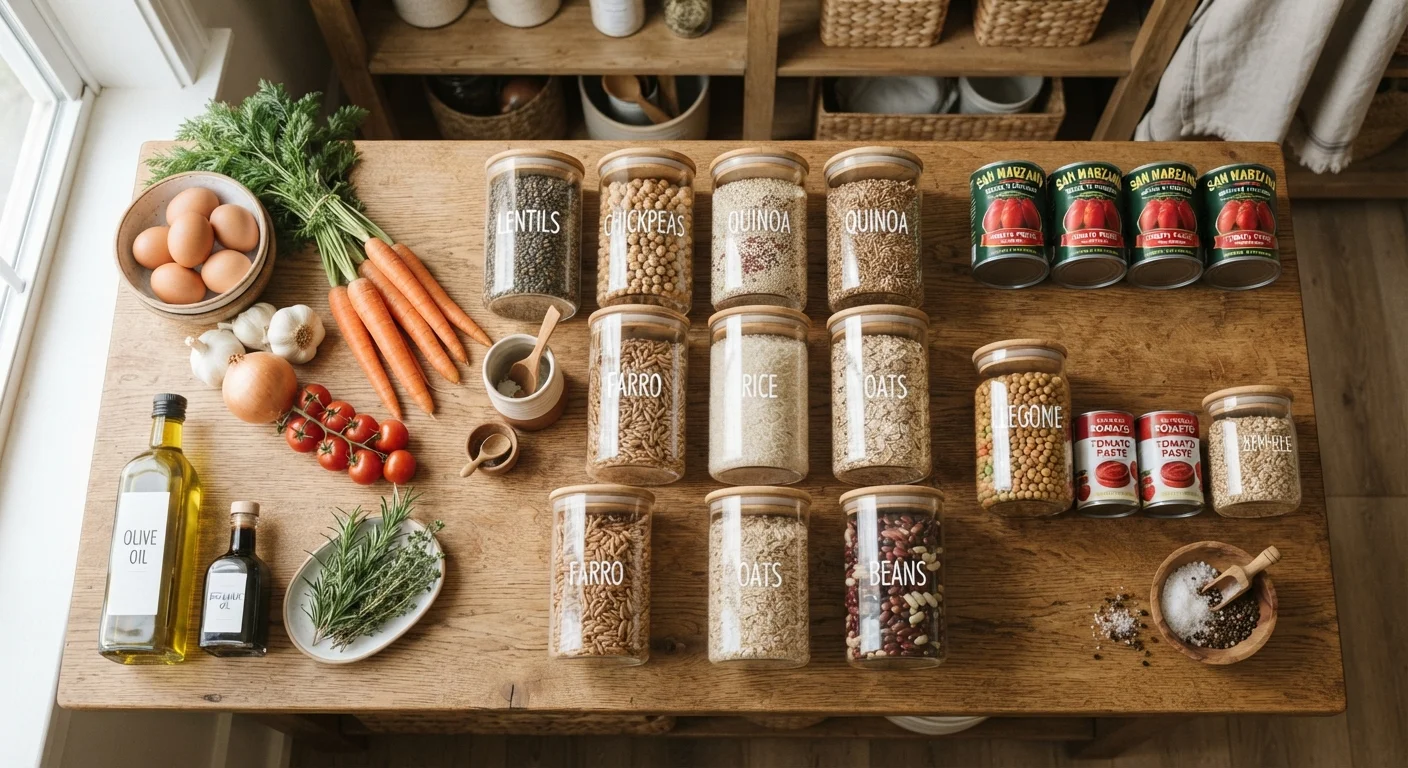
Key Takeaways
- A small set of versatile staples can anchor dozens of different balanced family meals throughout the week.
- Pantry and fridge staples with long shelf lives reduce food waste and help stretch a grocery budget further.
- Combining lean proteins, whole grains, and produce-friendly acids creates nutritionally complete meals quickly.
- Many affordable staples — like canned legumes and frozen vegetables — deliver strong nutritional value per dollar.
- Building a consistent core pantry reduces weeknight decision fatigue and supports more consistent healthy eating.
Why Your Pantry Is the Foundation of Family Nutrition
Weeknight meals don't fall apart because families lack recipes — they fall apart because the right ingredients aren't on hand when time is short. A thoughtfully stocked kitchen is one of the most practical tools families have for eating well consistently without overspending.
This isn't about loading up on specialty items. It's about a focused core of ingredients that are nutritionally dense, shelf-stable or long-lasting, versatile across many dishes, and affordable at most grocery stores. When these staples are always within reach, cooking a balanced meal becomes a matter of combining what you already have rather than starting from scratch.
If you're just beginning to build a meal-planning routine, our beginner's guide to family meal planning covers the essential first steps. Once you have a planning framework in place, the list below gives you the ingredient foundation to support it.
Start with What You Already Use
Building a stocked pantry doesn't require buying everything at once. Identify two or three items from this list that already appear in your regular meals and make sure they're always replenished. Add one or two new staples per shopping trip until the core list is in place. This gradual approach avoids waste and keeps the upfront cost manageable.
10 Ingredients Worth Stocking in Every Family Kitchen
Canned or Dried Legumes
Lentils, black beans, chickpeas, and kidney beans are among the most cost-effective sources of plant-based protein and dietary fiber available. They support satiety, help stabilize blood sugar response after meals, and add substance to soups, stews, salads, and grain bowls. Canned varieties require no soaking and are ready in minutes. Rinsing canned legumes before use reduces their sodium content significantly.
Legumes deliver plant-based protein and fiber at one of the lowest costs per serving in any grocery store.
Whole Grains (Brown Rice, Oats, Quinoa)
Whole grains retain their bran and germ layers, which means they provide more fiber, B vitamins, and minerals than refined alternatives. Brown rice, rolled oats, and quinoa are particularly practical because they store well, cook without special equipment, and work across breakfast, lunch, and dinner. Quinoa also provides all nine essential amino acids, making it a complete protein source — useful for plant-forward family meals.
Whole grains offer more fiber and micronutrients than refined grains and adapt easily across every meal of the day.
Eggs
Eggs are one of the most nutritionally complete single ingredients available. They contain high-quality protein, choline (important for brain health), and fat-soluble vitamins including A, D, and B12. They cook in under ten minutes in multiple ways and integrate into nearly every cuisine. For families managing food budgets, eggs offer strong nutritional density relative to their cost.
Eggs provide high-quality protein plus choline and fat-soluble vitamins in one fast-cooking, affordable package.
Canned Tomatoes
Crushed, diced, or whole canned tomatoes form the base of countless sauces, soups, braises, and curries. They're shelf-stable for months and nutritionally notable: the heat processing involved in canning actually increases the bioavailability of lycopene, a carotenoid antioxidant associated with cardiovascular health in observational research. Look for options with no added salt or sugar if sodium management is a household priority.
Canned tomatoes offer higher bioavailable lycopene than fresh and anchor hundreds of different family recipes.
Frozen Vegetables
Frozen vegetables are harvested and flash-frozen at peak ripeness, which locks in nutrients effectively. Research comparing frozen and fresh produce generally finds comparable — and sometimes superior — vitamin retention in frozen options, particularly for vegetables that spend time in transit or storage. Keeping a variety of frozen vegetables on hand (spinach, peas, broccoli, mixed stir-fry blends) makes it easy to add a vegetable component to any meal without worrying about spoilage. Our article on frozen, canned, and fresh vegetables explores this in more depth.
Flash-frozen at peak ripeness, frozen vegetables can match or exceed fresh options in vitamin retention.
Olive Oil
Extra-virgin olive oil is a practical everyday cooking fat rich in monounsaturated fatty acids and polyphenol compounds. It tolerates moderate cooking temperatures well and adds flavor to roasted vegetables, grain dishes, and dressings. Its Mediterranean diet association is among the most studied dietary patterns in nutritional epidemiology, with consistent signals toward cardiovascular benefit — though dietary patterns as a whole, not individual ingredients, drive those outcomes.
Olive oil is a versatile everyday fat linked to cardiovascular benefit within broader healthy dietary patterns.
Garlic and Onions
Fresh garlic and onions are aromatic foundations for an enormous range of global cuisines. Beyond flavor, both belong to the allium family, which contains organosulfur compounds that have been investigated for anti-inflammatory and immune-modulating properties, though research is ongoing. They're inexpensive, store well at room temperature for weeks, and make nearly any savory dish more satisfying — lowering the need for added salt or sugar to achieve flavor depth.
Garlic and onions build deep flavor affordably, reducing reliance on added salt while adding potential nutritional benefit.
Plain Greek Yogurt
Greek yogurt is strained to remove excess whey, resulting in a higher protein density than regular yogurt with a thicker texture. It also provides calcium, phosphorus, and live active cultures that support gut microbiome diversity. In the kitchen, it serves as a base for dips, dressings, marinades, and sauces — and functions as a reliable substitute for sour cream. Choose plain, unsweetened varieties to avoid added sugars, especially for children.
Plain Greek yogurt offers concentrated protein and probiotic cultures while working as a versatile cooking ingredient.
Nut Butters (Peanut or Almond)
Natural nut butters — those containing only nuts and perhaps salt — are calorie-dense but nutrient-rich, providing healthy fats, protein, vitamin E, and magnesium. They're useful in quick snacks, smoothies, sauces (peanut-based noodle dishes, for instance), and baking. For households with nut allergies, sunflower seed butter offers a comparable nutritional profile. Store opened jars in the refrigerator to extend freshness and prevent oil separation.
Natural nut butters pack healthy fats, protein, and vitamin E into a long-lasting, multi-use pantry staple.
Low-Sodium Broth or Stock
A good-quality low-sodium chicken, vegetable, or beef broth adds depth to grains, soups, braises, and sauces without relying on excess salt for flavor. Choosing low-sodium versions gives cooks control over the final seasoning level — an important consideration for families monitoring blood pressure or managing intake for children. Broth also rescues meals when a dish needs more liquid or body, making it one of the most flexible items in the pantry.
Low-sodium broth adds instant depth to grains and soups while keeping sodium levels manageable for the whole family.
A Note on Allergies and Dietary Needs
Every family has different dietary requirements, allergies, and preferences. The ingredients listed here represent broadly useful, nutritionally sound staples for general family cooking — not prescriptions for any individual or household. If a family member has a known food allergy, intolerance, or a condition requiring dietary management, consult a registered dietitian to tailor your pantry accordingly. The weekly meal planning checklist can also help you review nutrition variety before your weekly shop.
Putting It All Together
The ingredients listed above aren't a complete grocery list — they're a reliable backbone. When combined thoughtfully, they can produce soups, grain bowls, stir-fries, pasta dishes, omelets, and dozens of other meals without requiring an elaborate shop each week.
For guidance on building these staples into a structured weekly routine, see our five-dinner weekly meal planning walkthrough. And if keeping costs manageable is a priority, our article on stretching a grocery budget without cutting nutrition pairs well with the staples approach outlined here.
This article is for general informational and educational purposes only and is not a substitute for professional medical or dietary advice. Consult a qualified healthcare provider or registered dietitian for personalized nutrition guidance, especially for children, individuals with chronic conditions, or other special populations.