

Key Takeaways
- Staple foods like legumes, whole grains, and eggs deliver strong nutrition at low cost per serving.
- Planning meals before shopping consistently reduces food waste and impulse spending.
- Frozen and canned vegetables are nutritionally comparable to fresh and often more affordable.
- Seasonal produce typically costs less and offers peak nutritional value.
- Batch cooking stretches ingredients further and saves time on weeknights.
Why Budget Eating Doesn't Mean Nutrition Has to Suffer
Many families assume that eating healthfully requires a generous grocery budget. In practice, some of the most nutrient-dense foods available — dried lentils, canned beans, oats, eggs, and in-season vegetables — are also among the least expensive. The challenge is less about money and more about strategy: knowing which foods punch above their nutritional weight and how to structure meals around them.
This matters across every life stage. Whether you're feeding growing children, managing an adult household, or thinking about nutrition on a fixed income, the core principles of budget-conscious nutrition remain consistent. For a comprehensive look at building a sustainable family eating routine, see this complete family nutrition resource.
This article is for general informational purposes only and is not a substitute for personalised nutrition advice from a qualified healthcare professional or registered dietitian.
Best Practices for Nutritious, Budget-Friendly Grocery Shopping
The following practices are grounded in nutritional science and practical meal-planning evidence. Applied consistently, they help families maintain dietary quality without increasing spending.
Build meals around plant-based protein staples like legumes, lentils, and tofu.
Dried or canned legumes provide protein, fibre, iron, and folate at a fraction of the cost of most animal proteins. Replacing even two or three meat-centred meals per week with legume-based alternatives can meaningfully reduce the weekly grocery bill while maintaining dietary adequacy.
Shop seasonally and match your vegetable purchases to what's currently in season.
Seasonal produce is typically harvested closer to peak ripeness, which correlates with higher concentrations of certain vitamins and antioxidants. It also tends to be priced lower because supply is higher. Adjusting your vegetable rotation with the seasons captures both nutritional and financial benefits.
Keep a stocked freezer as a nutritional safety net.
Frozen vegetables and fruits are harvested at peak ripeness and flash-frozen, which preserves most of their nutritional content. Stocking the freezer with items like spinach, mixed berries, edamame, and peas ensures nutrient-rich options are always available even when fresh produce runs low or becomes expensive.
Cook in batches and repurpose leftovers deliberately.
Batch cooking reduces per-serving cost by maximising the use of bulk ingredients and minimising waste. Intentionally repurposing leftovers — turning roasted vegetables into grain bowls, or cooked chicken into soup — extracts full value from every ingredient purchased.
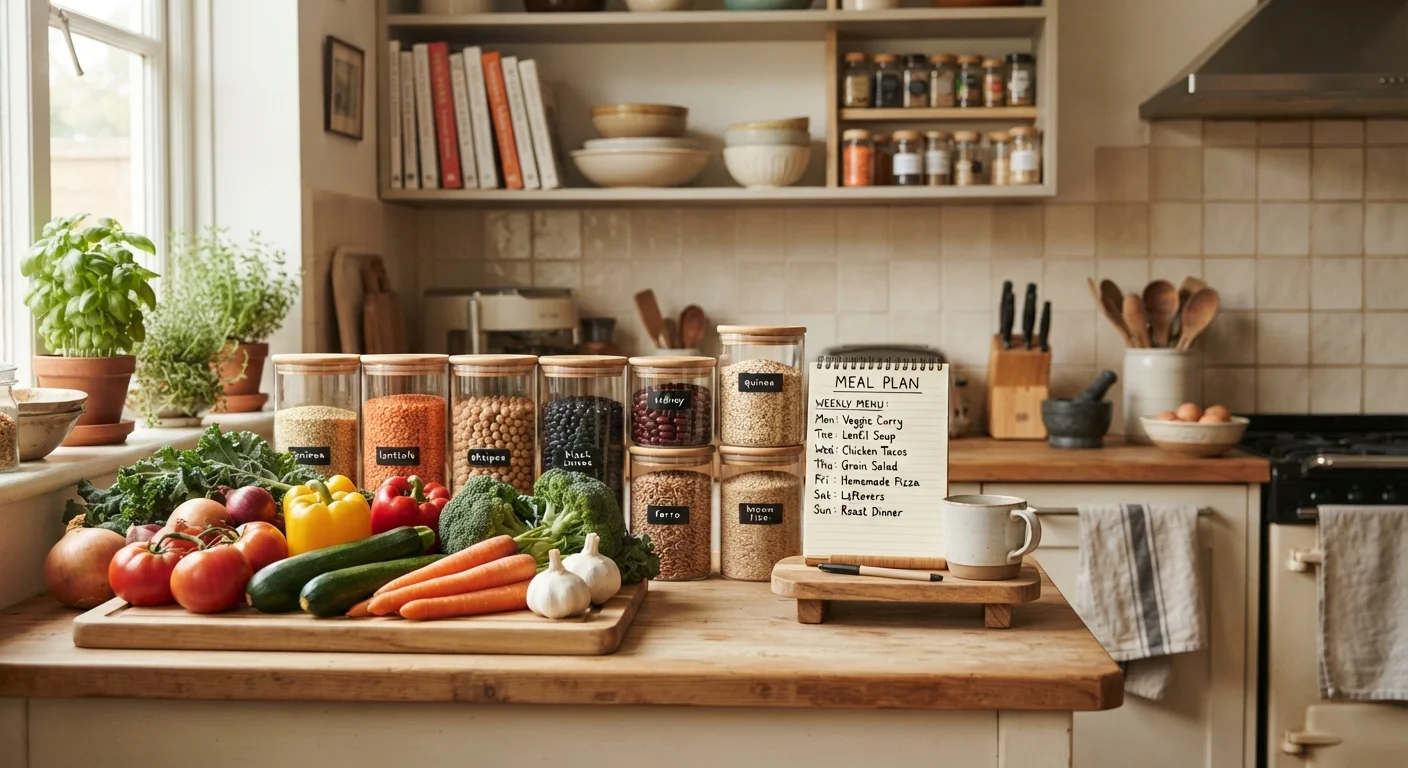
Write a meal plan before every grocery run and shop with a list.
Pre-planned shopping trips reduce impulse purchases and ensure ingredients are bought in usable quantities. Families who plan meals in advance consistently report less food waste and better alignment between what they buy and what they actually eat.
Choose whole grains over refined grain products as your primary carbohydrate source.
Whole grains such as oats, brown rice, and barley provide dietary fibre, B vitamins, and minerals that refined versions lack. They are also typically less expensive per serving than many packaged grain products and have greater satiety value, which can reduce overall food consumption.
Planning Ahead: The Multiplier Effect on Both Budget and Nutrition
A written meal plan — even a rough one — is the single highest-leverage tool available to budget-conscious families. It converts a grocery run from reactive to intentional, reducing the likelihood of purchasing items that go unused or defaulting to expensive convenience options mid-week.
If meal planning is new to your household, the weekly meal planning checklist provides a structured walkthrough covering nutrition variety, portion balance, and budget alignment before each shop.
Making the Most of Every Ingredient
Food waste is a direct drain on grocery budgets. The USDA has estimated that American households discard a significant portion of the food they purchase, much of it produce. Reducing waste doesn't require elaborate systems — it requires intentional purchasing and a commitment to using what's already on hand before buying more.
30–40%
Share of US food supply wasted annually
The USDA Economic Research Service has estimated that 30 to 40 percent of the US food supply is lost or wasted, representing hundreds of billions of dollars.
$1,500+
Estimated annual food waste cost per US household
Research from various food waste organisations suggests the average American household discards over $1,500 worth of food each year, much of it fresh produce.
Versatile pantry staples are central to this approach. Foods that work across multiple meals — dried beans, canned tomatoes, whole grains, eggs — allow families to cook flexibly without over-purchasing. For a curated list, see ingredients worth keeping in every family kitchen.
When it comes to vegetables specifically, the format matters less than the frequency. Frozen, canned, and fresh vegetables each have nutritional merit; choosing whichever form fits your budget and schedule makes it easier to hit daily vegetable targets consistently.