

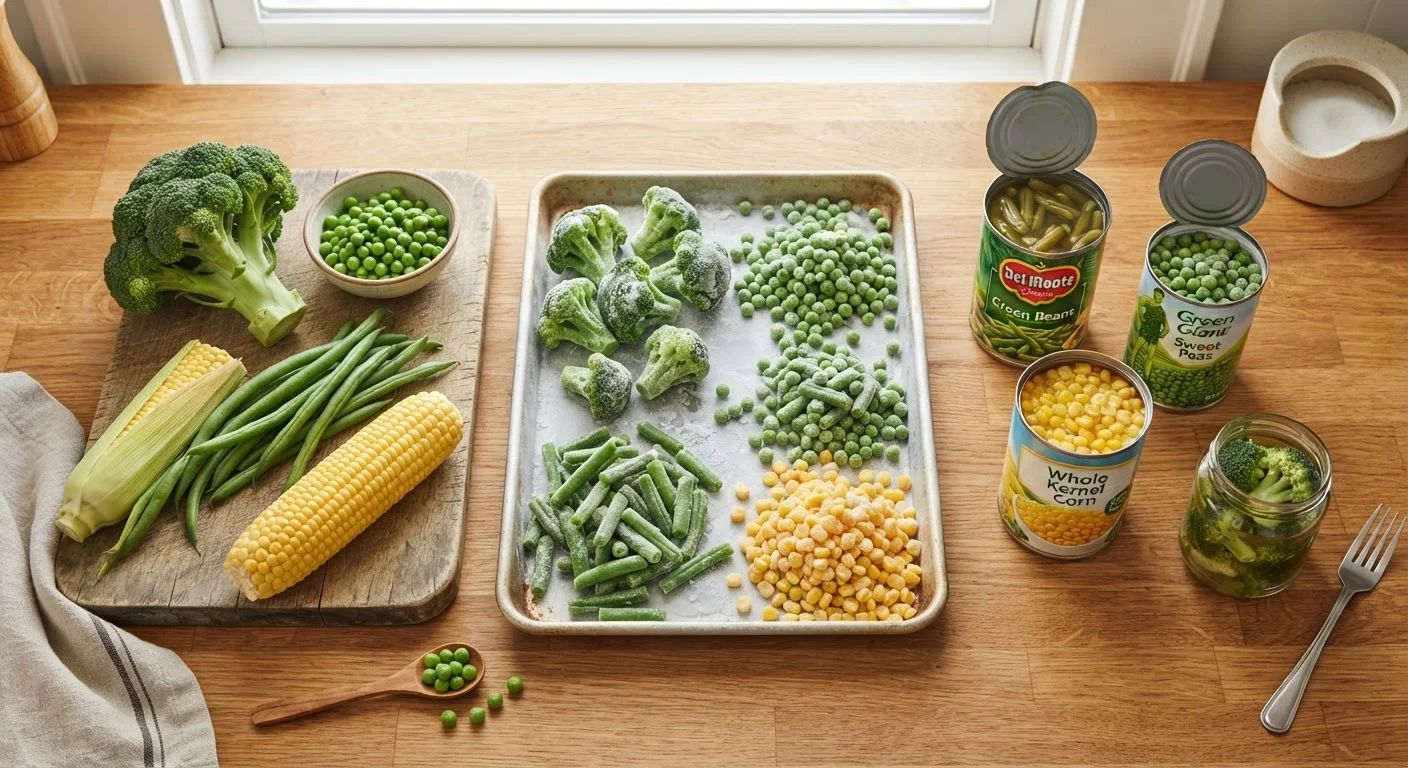
Key Takeaways
- Frozen vegetables are often nutritionally comparable to fresh, since they're processed at peak ripeness.
- Canned vegetables are shelf-stable and affordable but may contain added sodium — rinsing reduces it significantly.
- Fresh produce is ideal when in season locally, but nutrient content can decline during transport and storage.
- Combining all three forms is a practical strategy for maximizing nutrition and reducing grocery costs.
- No single form is universally superior — the best choice depends on your family's budget, schedule, and preferences.
Our Verdict
All three forms of vegetables can contribute meaningfully to a healthy family diet. Frozen vegetables offer the best balance of nutrition and convenience for most households, while canned options are a reliable budget-friendly staple. Fresh produce shines when it is locally grown and in season. Mixing and matching all three is both practical and nutritionally sound.
| Best for | Recommended |
|---|---|
| Busy families seeking convenience without sacrificing nutrition | Frozen vegetables |
| Households managing a tight grocery budget | Canned vegetables (low-sodium or rinsed) |
| Those prioritizing flavor and eating seasonally | Fresh vegetables in season |
| Families wanting the most flexible, waste-reducing pantry strategy | A mix of all three forms |
What Happens to Nutrients Before Vegetables Reach Your Table
A common misconception is that fresh vegetables are always the most nutritious option. In reality, nutrient content in any vegetable begins to change the moment it is harvested. Water-soluble vitamins — especially vitamin C and certain B vitamins — are particularly sensitive to heat, light, and time.
Fresh vegetables sold in supermarkets may have traveled days from farm to store shelf, and additional days may pass before they're cooked and eaten. Research has documented measurable nutrient losses in fresh produce during extended storage and transport. Frozen vegetables, by contrast, are typically blanched and frozen within hours of harvest, locking in much of their nutritional value at peak ripeness. Canned vegetables undergo heat sterilization, which can reduce some heat-sensitive vitamins but preserves minerals and fiber effectively.
Understanding these pathways helps families make smarter choices — not by declaring one form superior, but by recognizing that all three can be valuable. For a broader look at building a well-stocked kitchen, see ingredients worth keeping in every family kitchen.
Frozen, Canned, and Fresh: A Side-by-Side Comparison
Each form of vegetable has distinct strengths and trade-offs. The table below summarizes the key differences across the criteria most relevant to family meal planning.
| Fresh | Frozen | Canned | |
|---|---|---|---|
| Nutrient retention | High when locally sourced and eaten quickly | High — frozen at peak ripeness | Moderate — heat process reduces some vitamins |
| Shelf life | Short — days to one week | Long — up to 12 months | Very long — 1–5 years |
| Cost | Variable — higher when out of season | Generally affordable year-round | Typically the lowest cost option |
| Convenience | Requires washing, peeling, chopping | Ready to cook, minimal prep | Ready to use, no preparation needed |
| Sodium content | None added | Usually none added | Often high — rinsing reduces it |
| Flavor and texture | Best when in season and local | Good — slight softening after cooking | Softer texture; flavor varies by brand |
| Food waste risk | Higher — spoils quickly | Low — use only what you need | Very low — long shelf stability |
As the comparison shows, no single format wins across every category. Frozen vegetables score highly on nutrition retention and convenience. Canned options are unbeatable for shelf life and cost, making them a cornerstone of budget-conscious meal planning — a topic explored further in our guide to stretching a grocery budget without cutting nutrition. Fresh vegetables deliver the best texture and flavor when sourced locally and in season.
Practical Tips for Using Each Form Wisely
Getting the most out of vegetables in each form comes down to simple preparation habits.
- Frozen: Cook from frozen or thaw only as needed to minimize further nutrient loss. Steaming or microwaving preserves more water-soluble vitamins than boiling.
- Canned: Drain and rinse canned vegetables under cold water to reduce sodium content by roughly 40%, according to general guidance from nutrition researchers. Choose cans labeled "no salt added" when available. Liquid from canned legumes and some vegetables can also be repurposed in soups and stews.
- Fresh: Store properly — leafy greens in damp paper towels, root vegetables in cool dark spaces — and use within a few days of purchase for peak nutrition. Buy in-season produce from local sources when possible for the best nutrient profile and flavor.
Reduce Sodium in Canned Vegetables Easily
Simply draining and rinsing canned vegetables under running water for 30 seconds can remove a substantial portion of added sodium. This makes canned options a more heart-friendly choice without sacrificing convenience. Look for "no salt added" or "low sodium" varieties when your store carries them.
Mixing forms throughout the week is not a compromise — it is a strategy. A stir-fry with frozen peas and fresh bell peppers, or a soup built on canned tomatoes and fresh carrots, draws on the strengths of each. Families with children can benefit from this variety in texture and flavor as well; for more on feeding kids well, see the truth about kid-friendly foods.
This article is for general informational purposes only and does not constitute medical or dietary advice. Consult a qualified healthcare professional or registered dietitian for personalized guidance.