

Key Takeaways
- A nutritionally complete school lunch includes a protein source, whole-grain carbohydrate, healthy fat, fruit or vegetable, and a dairy or calcium-rich alternative.
- Children are more likely to eat foods they find familiar and visually appealing — presentation and variety both matter.
- Preparing components in advance dramatically reduces morning packing time without sacrificing nutritional quality.
- Portion size should reflect the child's age, activity level, and individual appetite rather than a fixed amount.
- Limiting foods with high added sugar and sodium at lunch helps maintain steady energy and concentration through the school day.
What you will need
Why Lunch Nutrition Matters More Than You Might Think
School lunch represents roughly one-third of a child's daily caloric and nutrient intake on school days. Research in pediatric nutrition consistently links adequate midday nutrition to improved attention, better classroom behavior, and stronger academic performance. A lunch that relies heavily on refined carbohydrates or added sugars can cause a rapid spike and subsequent drop in blood glucose — contributing to the mid-afternoon fatigue many parents recognize in their children.
Building a nutritionally sound lunch doesn't require elaborate preparation or significant expense. As explored in our guide to balanced family meals, the same principles that apply at the dinner table — combining lean protein, quality carbohydrates, healthy fats, and a variety of produce — scale down effectively to a lunch box format.
The goal isn't nutritional perfection at every meal. It's consistency over time: a lunch that reliably includes the major food groups gives children a strong nutritional foundation that supports growth, immunity, and learning.
Allergies and Special Dietary Needs
Always check your child's school policy on allergens — many schools are nut-free environments. If your child has a diagnosed food allergy, intolerance, or a condition such as celiac disease or Type 1 diabetes, work with a registered dietitian to tailor lunch plans appropriately. General guidance here is not a substitute for individualized medical or nutritional advice.
What Goes Into a Nutritionally Complete School Lunch
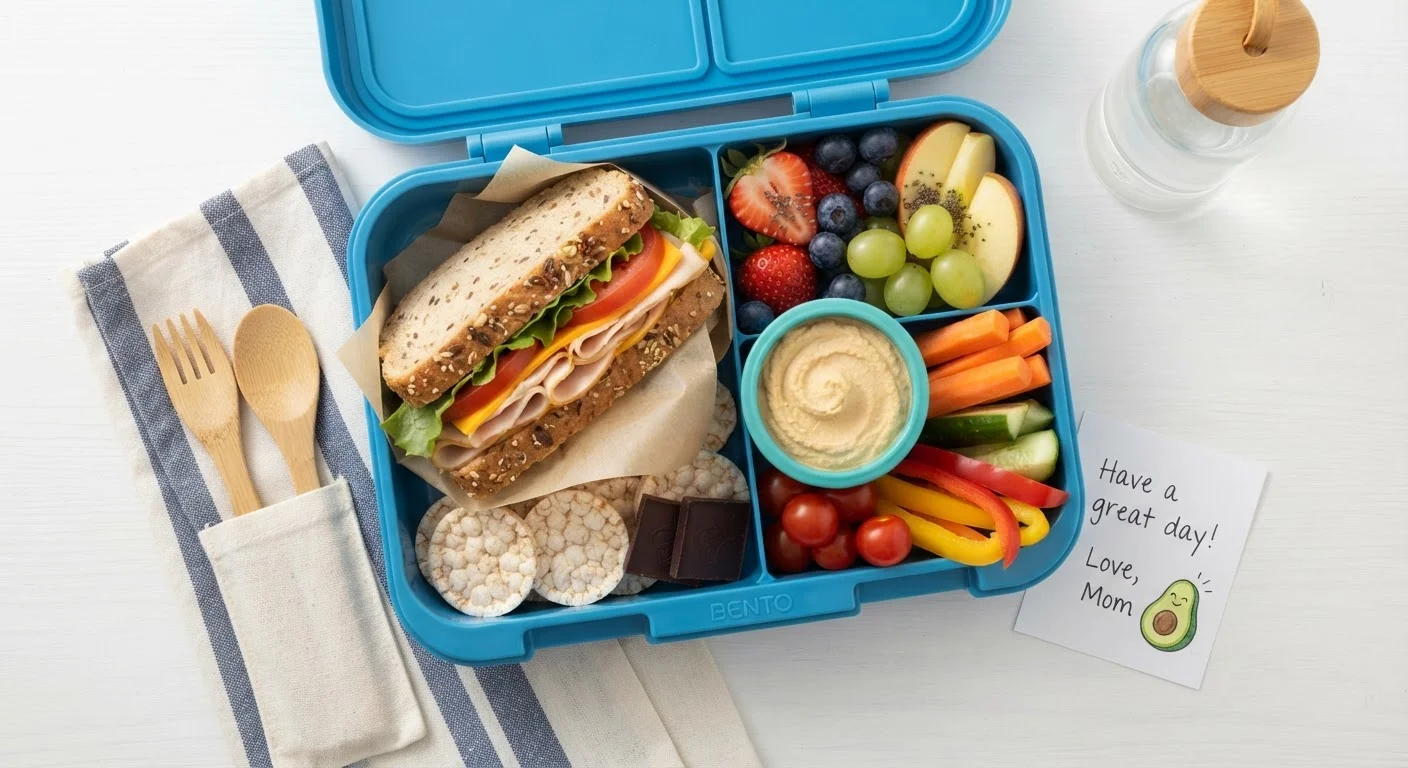
A well-structured school lunch draws from five core categories: a whole-grain carbohydrate, a protein source, at least one vegetable, a piece of whole fruit, and a calcium-rich food. This framework aligns with current evidence-based dietary guidance for school-age children and ensures coverage of key macronutrients — carbohydrates for energy, protein for growth and satiety, and fats (found naturally in foods like eggs, cheese, and hummus) for brain function and fat-soluble vitamin absorption.
Below you'll find the tools you'll need before you begin, followed by a step-by-step approach to assembling each component.
What you will need
Insulated lunch box with ice pack
Keeps perishable foods such as dairy, proteins, and cut produce at a safe temperature until lunchtime.
Small airtight containers (2–4 oz)
Separate dips, fruits, and vegetables to maintain texture and prevent sogginess.
Reusable silicone bags
Eco-friendly alternative to single-use plastic bags for sandwiches, crackers, or snacks.
Leak-proof thermos
Useful for warm protein options such as soup, pasta, or beans when a cold lunch isn't preferred.
Step-by-Step: Building the Lunch Box
Follow these steps each time you pack a lunch to ensure all nutritional bases are covered. Most steps take only a minute or two once you've developed a weekly prep routine.
Choose a whole-grain carbohydrate as the base
Whole-grain foods provide complex carbohydrates and dietary fiber, which support sustained energy release — important for a child's concentration during afternoon classes. Options include whole-wheat bread or wraps, whole-grain pita, brown rice cakes, or cooked whole-grain pasta stored in a thermos.
Aim for the grain component to make up roughly a quarter of the overall lunch. Refined grain products (white bread, standard crackers) are not harmful in moderation but offer less fiber and fewer micronutrients than their whole-grain equivalents.
Add a quality protein source
Protein supports muscle development, immune function, and satiety. It also helps stabilize blood glucose — reducing the mid-afternoon energy dip many children experience. Suitable options include:
- Hard-boiled eggs
- Sliced cooked chicken or turkey
- Canned tuna or salmon (watch sodium on labels)
- Hummus or bean dip
- Low-sodium cheese cubes or string cheese
- Edamame (where nut-free policies allow legumes)
A portion roughly the size of the child's palm is a reasonable guide for school-age children, though individual needs vary by age and activity level.
Include at least one vegetable
Vegetables are the component most commonly skipped or returned uneaten. Increasing the odds of consumption comes down to preparation: cut vegetables into bite-sized pieces, pair them with a familiar dip (hummus, plain yogurt dip, or guacamole), and keep them crisp by storing them in a separate sealed container with an ice pack.
Good portable options include baby carrots, cucumber slices, cherry tomatoes, sugar snap peas, celery sticks, and bell pepper strips. Rotating through two or three favorites reduces monotony without overwhelming the child.
Add a piece or serving of whole fruit
Whole fruit provides natural sugars alongside fiber, vitamins, and antioxidants — a nutritionally superior option compared to fruit juice or fruit-flavored snacks. Easy-to-pack choices include apple slices (toss in lemon juice to prevent browning), grapes, a small banana, mandarin segments, berries in a sealed container, or melon cubes.
A child-sized portion — roughly half a cup of cut fruit or one small whole piece — is appropriate for most school-age children. Fruit contributes to both fluid intake and micronutrient diversity.
Include a calcium-rich food
Calcium is critical during childhood and adolescence for bone development. Dairy foods are the most concentrated dietary source for most children, but non-dairy alternatives can also contribute meaningfully. Options include:
- Low-fat milk or a plant-based fortified milk alternative in a sealed bottle
- Plain or lightly sweetened yogurt (check added sugar on labels)
- Cheese — a small cube or slice alongside the protein component
- Fortified plant-based yogurt alternatives (for dairy-free children)
For children who do not consume dairy, consult a registered dietitian to ensure calcium and vitamin D needs are met through food or supplementation.
Check portion sizes and pack safely
A lunch that is too large may be overwhelming; one that is too small won't fuel the afternoon. As a general guide, school-age children (roughly 6–12 years) typically need a moderate, not adult-sized, lunch. Teens have higher caloric and protein requirements due to rapid growth and are more likely to need larger portions and a more substantial protein component.
Food safety matters: perishable items should be kept below 40°F (4°C) using a well-frozen ice pack. Discard any perishable food that has been unrefrigerated for more than two hours. Using an insulated bag with a dedicated ice compartment is the most reliable approach.
Involve Your Child in the Process
Research consistently suggests that children who participate in choosing and preparing their food are more likely to eat it. Offer two or three nutritious options in each category and let your child have a say. This builds food literacy alongside healthy habits.
Making It Sustainable: Planning Ahead and Reducing Waste
The most nutritious lunch plan will fail if it's too time-consuming to maintain on busy mornings. Integrating lunch preparation into a broader weekly meal planning habit is one of the most effective strategies families can use. For a practical framework, see our weekly dinner planning walkthrough, which includes strategies that transfer directly to lunch preparation.
Batch-cooking proteins, washing and cutting produce on Sunday, and portioning snack components into reusable containers at the start of the week reduces morning assembly to a matter of minutes. If budget is a consideration, our guide to stretching a grocery budget without cutting nutrition offers strategies for maintaining quality without overspending — including how to prioritize seasonal produce and reduce food waste.
School lunch nutrition is one dimension of a broader complete family nutrition and meal planning resource that addresses every meal and life stage. Building good habits at lunch helps establish a pattern of nutritional awareness children are more likely to carry forward into adulthood.
This article is for general informational and educational purposes only. It is not a substitute for professional medical or dietary advice. If your child has specific health conditions, food allergies, or nutritional concerns, consult a qualified healthcare provider or registered dietitian.