

Key Takeaways
- The top number (systolic) measures pressure when your heart beats; the bottom (diastolic) measures pressure between beats.
- A reading below 120/80 mmHg is generally considered normal for most adults by major clinical guidelines.
- Pulse pressure — the difference between systolic and diastolic — can provide additional cardiovascular context.
- A single reading rarely tells the full story; patterns over multiple readings matter more.
- Technique, posture, and timing significantly affect the numbers your monitor displays.
- Always share a log of home readings with your healthcare provider rather than acting on individual results alone.
Blood Pressure Reading
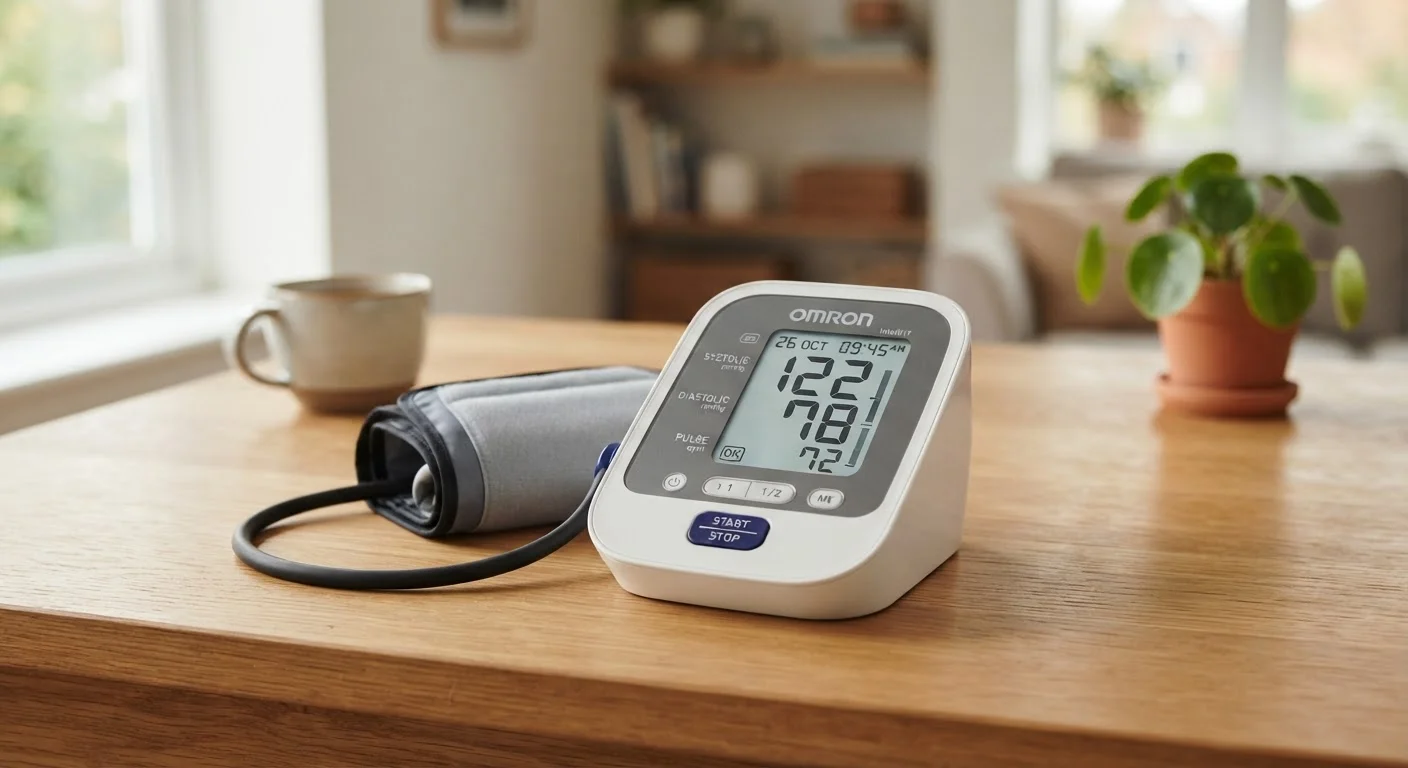
A blood pressure reading is a measurement of the force your blood exerts against artery walls as your heart pumps. It is expressed as two numbers — systolic over diastolic — measured in millimeters of mercury (mmHg). Your home monitor may also display a pulse rate and, on some models, an irregular heartbeat indicator.
Blood pressure is a pulsatile pressure; systolic captures peak force during cardiac contraction, while diastolic represents the resting baseline between beats.
The Two Core Numbers: Systolic and Diastolic
Every blood pressure reading contains two values separated by a slash. The systolic pressure — the larger, top number — measures the force your heart generates when it contracts and pushes blood into your arteries. The diastolic pressure — the smaller, bottom number — captures the pressure remaining in your arteries while your heart rests between beats.
Both values are recorded in mmHg. A reading of 118/76 mmHg, for example, means a systolic pressure of 118 and a diastolic pressure of 76. The American Heart Association and American College of Cardiology classify blood pressure into ranges:
- Normal: below 120/80 mmHg
- Elevated: 120–129 systolic, diastolic below 80 mmHg
- High Blood Pressure Stage 1: 130–139/80–89 mmHg
- High Blood Pressure Stage 2: 140/90 mmHg or higher
- Hypertensive crisis: above 180/120 mmHg — seek prompt care if accompanied by symptoms
Low blood pressure (hypotension) is generally defined as readings below 90/60 mmHg, though what constitutes a concern depends heavily on symptoms and individual baseline.
116 million
U.S. adults with high blood pressure
According to the American Heart Association, nearly half of all U.S. adults meet the clinical definition of hypertension.
120/80 mmHg
Normal blood pressure threshold
The American Heart Association and American College of Cardiology define normal blood pressure as a reading below 120/80 mmHg for adults.
~80%
Of hypertension cases uncontrolled
The CDC has reported that the majority of adults with high blood pressure do not have it under adequate control.
Pulse Pressure: The Number You're Probably Ignoring
Pulse pressure is the arithmetic difference between your systolic and diastolic values. For a reading of 120/80 mmHg, the pulse pressure is 40 mmHg. Clinicians sometimes use this figure as an additional data point because it can reflect arterial stiffness — how elastic or rigid the arterial walls are.
A pulse pressure consistently above 60 mmHg in older adults has been associated in research with increased cardiovascular risk, partly because stiff arteries cause systolic pressure to rise while diastolic may remain stable or even fall. Conversely, a very narrow pulse pressure (below 25 mmHg) can occasionally indicate poor cardiac output. These are population-level associations, not diagnostic rules — your provider interprets pulse pressure alongside your full clinical picture.
For most people tracking readings at home, the standard systolic/diastolic pair is the primary focus. Understanding pulse pressure simply gives you richer context if your doctor brings it up. For broader context on how blood pressure fits alongside other key health numbers, see our overview of blood pressure, cholesterol, and blood sugar.
What the Pulse Rate and Irregular Heartbeat Indicators Mean
Most upper-arm home monitors also display a pulse rate — your heart rate in beats per minute — captured by the same oscillometric sensor used to measure blood pressure. A typical adult resting heart rate falls between 60 and 100 beats per minute, though trained athletes may read lower without any concern. Pulse rate alone does not determine cardiovascular health; it is one data point among many.
Some monitors display an irregular heartbeat symbol (often a heart icon with a jagged line) when the device detects variability in pulse rhythm during measurement. This flag does not diagnose atrial fibrillation or any other arrhythmia — it simply notes that beat intervals during that measurement were inconsistent. Movement, deep breathing, or swallowing during a reading can all trigger it. If the symbol appears repeatedly across multiple calm, still measurements, note it in your log and mention it to your healthcare provider.
Log Your Readings — Don't Just Glance at Them
Keep a written or digital log that records the date, time, arm used, and both readings from each session. Many healthcare providers offer printable tracking sheets, and some monitors connect to smartphone apps. A week of consistent data gives your provider a far clearer picture than any single number, however high or low it appears.
Reading Patterns, Not Single Numbers
A single blood pressure reading is a snapshot taken under specific conditions at a specific moment. Clinicians and guidelines consistently emphasize that patterns — averages across multiple readings taken under consistent conditions — carry far more diagnostic weight than any individual figure.
Standard practice recommended by guidelines involves taking two to three readings separated by one minute, discarding the first, and averaging the remainder. Doing this in the morning before medication and meals, and again in the evening, over seven consecutive days provides a data set meaningful enough for a clinical conversation.
The quality of those readings depends significantly on technique. Incorrect cuff placement, a crossed-leg posture, a full bladder, or measuring immediately after exercise can all skew results. Our guide to getting an accurate blood pressure reading at home walks through every factor that affects your numbers. Before logging any reading, it is also worth checking our home monitor accuracy checklist to catch common technique and device errors.
This article is for general informational purposes only and does not constitute medical advice. Always consult a qualified healthcare professional regarding your blood pressure readings and any health decisions.