

Key Takeaways
- A single SpO2 reading is a snapshot, not a complete picture of respiratory health.
- Trends over multiple readings reveal far more clinically useful information than any one number.
- Factors like movement, skin tone, and poor circulation can make a reading unreliable without context.
- Readings below 95% or rapid unexplained drops warrant prompt consultation with a healthcare provider.
- Home oximetry is a monitoring aid, not a diagnostic tool — professional evaluation remains essential.
Why One Number Is Never the Whole Story
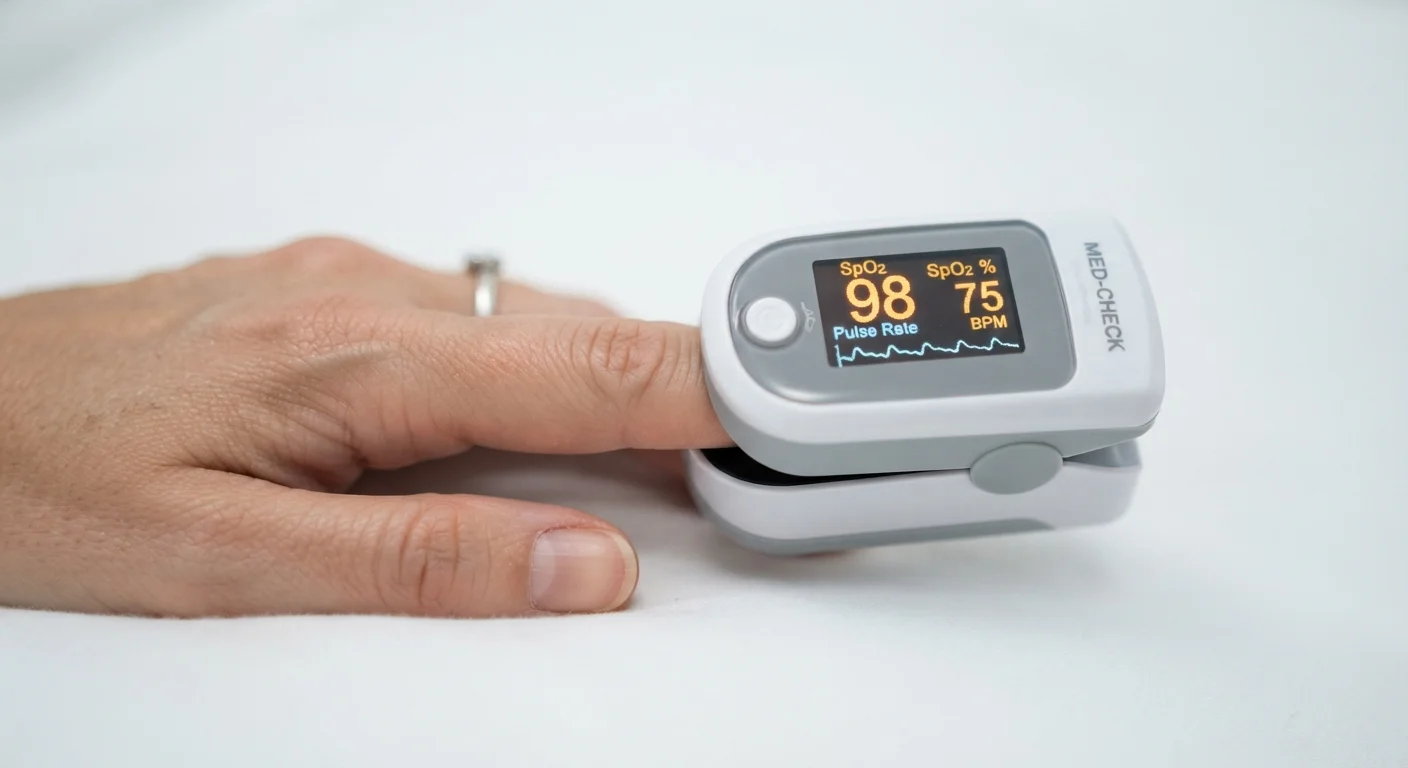
Pulse oximeters have become common household tools, and for good reason — they offer a fast, non-invasive glimpse at blood oxygen saturation (SpO2), the percentage of hemoglobin in the blood carrying oxygen. But that convenience comes with a risk: the immediacy of a digital readout encourages people to treat a single figure as a complete health assessment.
SpO2 is a snapshot, not a story. Oxygen levels fluctuate naturally with breathing patterns, posture, activity, altitude, and even the time of day. A reading taken during a moment of shallow breathing, after climbing stairs, or while the device sits on a cold fingertip tells you only what was happening in that narrow window — and even then, only approximately. To understand what a reading actually means, context is everything. For a broader grounding in how these devices work, see our article on what oxygen saturation numbers really tell you.
~95–100%
Normal SpO2 range for healthy adults at rest
According to the American Lung Association, most healthy adults maintain resting SpO2 values within this range when measured by a calibrated device.
2–3%
Typical oximeter margin of error
FDA guidance notes that cleared pulse oximeters are generally accurate within plus or minus 2–3 percentage points under ideal conditions, meaning a 95% display could reflect a true value between 92% and 98%.
Common Mistakes Families Make With SpO2 Readings
Most errors with home oximetry are not about the device itself — they are about interpretation. The mistakes below are frequent, understandable, and correctable with a small shift in how families use their monitors.
Treating a single reading as a definitive health verdict.
Why it happens: Consumer oximeters display a number instantly, which creates a natural impression that the result is complete and final — similar to stepping on a scale.
Ignoring the waveform or perfusion index when available.
Why it happens: Most people focus entirely on the SpO2 percentage and overlook the signal-quality indicators that many devices also display.
Taking readings immediately after physical activity and treating them as resting values.
Why it happens: It is convenient to check oxygen levels right after noticing breathlessness, but exercise temporarily alters circulation and breathing patterns.
Assuming the device is working correctly without verifying conditions.
Why it happens: Once a reading appears on screen, it looks authoritative — few users consider whether cold hands, nail polish, or motion could be affecting accuracy.
Using a normal reading to delay seeking care for concerning symptoms.
Why it happens: A reading of 97% or 98% feels reassuring, leading some people to dismiss breathlessness, chest tightness, or persistent fatigue as minor.
It is also worth noting that certain physiological factors can skew readings independently of user technique. Skin tone, peripheral circulation, and certain hemoglobin disorders are among the variables that affect accuracy. Our guide on pulse oximeter limitations explores these in detail.
Reassurance From One Normal Reading Can Be Misleading
A single reading in the normal range (95–100%) does not rule out an underlying problem. Oxygen levels can fluctuate significantly throughout the day or drop only during activity or sleep. If symptoms persist despite a normal reading, those symptoms should still be discussed with a clinician.
What to Track Instead — and When to Call a Doctor
Rather than fixating on a single number, clinicians generally find more value in trends: how does a reading compare to that person's own baseline? Is it stable across multiple measurements, or drifting downward over days? Did it drop during a respiratory illness and now recover, or has it stayed low?
A simple log — date, time, activity level before measuring, and reading — gives a healthcare provider far more useful information than a single value ever could. This kind of longitudinal tracking is especially relevant for family members managing chronic lung or heart conditions.
Low Readings Can Require Immediate Attention
An SpO2 reading below 90% is considered a medical emergency in most clinical guidelines. If you or a family member records a reading in this range — especially alongside symptoms like difficulty breathing, confusion, or chest pain — seek emergency care immediately. Do not wait to take additional readings to confirm.
Home oximetry is a monitoring aid. It can prompt timely conversations with a clinician and help track known conditions, but it does not replace clinical assessment. If readings are consistently outside the normal range, trending downward, or accompanied by any symptoms — breathlessness, fatigue, confusion, or chest discomfort — contact a healthcare professional promptly. Similar context-dependent interpretation applies to other home monitors; the gap between home and clinical readings is a common theme explored in our piece on why home blood pressure readings differ from clinical ones.
This article is for general informational purposes only and does not constitute medical advice. Always consult a qualified healthcare professional for guidance specific to your health situation.