
Cold Therapy vs. Heat Therapy: Choosing the Right Approach for Injury Recovery

Key Takeaways
- Cold therapy reduces acute inflammation and numbs pain immediately after an injury occurs.
- Heat therapy improves circulation and relaxes muscle tension, making it better suited for chronic or subacute conditions.
- Using heat on a fresh acute injury can worsen swelling; using cold on stiff muscles may increase tightness.
- Most sprains and strains benefit from cold in the first 48–72 hours, then heat as healing progresses.
- Always use a protective barrier between skin and any cold or heat device to prevent tissue damage.
- Consult a healthcare professional for guidance tailored to your specific injury or condition.
Option A
Cold Therapy (Cryotherapy)
The acute-injury first responder.
Best for: Best for fresh injuries, acute inflammation, and swelling reduction in the first 24–72 hours.
Option B
Heat Therapy (Thermotherapy)
The chronic-tension and stiffness reliever.
Best for: Best for muscle stiffness, chronic pain, and preparing tissues before activity or rehabilitation.
If you have a fresh sprain, strain, or bruise within the first 48 hours
Cold Therapy (Cryotherapy)
Cold constricts blood vessels, limiting swelling and numbing acute pain. Applying heat at this stage can increase inflammation and slow recovery.
If you experience chronic muscle stiffness or tension before activity
Heat Therapy (Thermotherapy)
Heat increases blood flow and tissue extensibility, loosening tight muscles and improving range of motion before exercise or rehabilitation sessions.
If you are managing recurring back or neck pain with no recent acute injury
Heat Therapy (Thermotherapy)
Thermotherapy is widely used for chronic musculoskeletal pain to relax muscle spasms and improve comfort during daily activity.
If you have post-surgical swelling or a sports injury in the early recovery phase
Cold Therapy (Cryotherapy)
Controlled cold application can help manage post-injury edema and pain during the acute inflammatory phase, often as part of a structured recovery plan.
If you are transitioning from acute injury recovery into rehabilitation
Heat Therapy (Thermotherapy)
Once initial swelling has resolved, heat prepares tissues for therapeutic movement and may complement devices like TENS units in a broader recovery plan.
How Cold and Heat Affect Injured Tissue
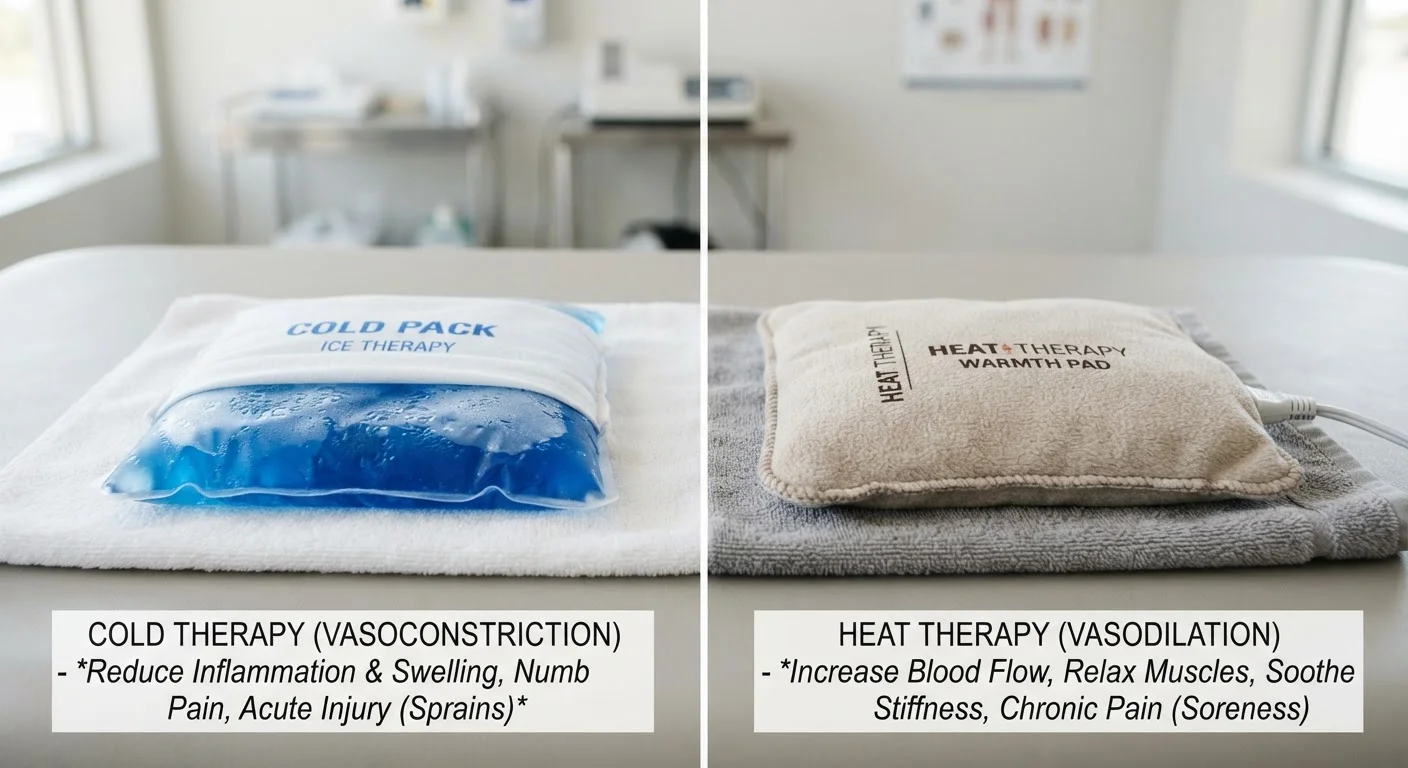
Cold and heat work through opposite physiological mechanisms, which is precisely why choosing correctly matters. Cold therapy — clinically called cryotherapy — causes vasoconstriction (narrowing of blood vessels), which reduces blood flow to the injured area. This limits the accumulation of fluid that causes swelling and tissue pressure, and it slows nerve conduction velocity, dulling pain signals. These effects make cryotherapy most valuable in the acute phase of injury, typically defined as the first 24 to 72 hours.
Heat therapy — or thermotherapy — has the opposite effect: it causes vasodilation (widening of blood vessels), increases local circulation, and raises tissue temperature. This promotes nutrient delivery, speeds metabolic waste removal, and relaxes muscle spindles, reducing involuntary muscle tension. These properties make it appropriate for subacute and chronic conditions where improved mobility and pain management are the goals, rather than controlling inflammation.
| Criterion | Cold Therapy | Heat Therapy |
|---|---|---|
| Primary mechanism | Vasoconstriction, reduces blood flow | Vasodilation, increases blood flow |
| Best injury phase | Acute (0–72 hours post-injury) | Subacute or chronic |
| Effect on swelling | Reduces edema | Can increase swelling if acute |
| Effect on muscle tension | May increase tightness | Relaxes muscle spasms |
| Pain relief mechanism | Slows nerve conduction | Relaxes tissue, improves comfort |
| Common devices | Ice packs, gel packs, cold wraps | Heating pads, warm compresses, heat wraps |
| Primary safety risk | Frostbite with prolonged contact | Burns with excessive heat or duration |
Understanding these mechanisms helps explain why applying heat to a freshly sprained ankle — still swollen and warm to the touch — can worsen the injury, while using ice on a chronically stiff lower back before morning exercise may leave muscles feeling tighter rather than looser.
When to Use Each Therapy: A Practical Timeline
For most common injuries — sprains, strains, contusions — clinicians generally recommend following a phase-based approach. During the acute phase (roughly the first 48–72 hours), cold is the appropriate choice. Apply a cold pack wrapped in a thin cloth for 15–20 minutes at a time, several times daily, to manage swelling and pain. Never apply ice or a frozen pack directly to bare skin, as this risks frostbite.
As the injury moves into the subacute phase — typically after swelling has stabilized and the skin is no longer hot to the touch — many practitioners transition patients to heat to encourage tissue healing and restore mobility. A moist heating pad or warm compress applied for 15–20 minutes can improve flexibility before stretching or rehabilitation exercises.
The RICE and PRICE Protocols
Many clinicians still reference the RICE protocol (Rest, Ice, Compression, Elevation) for acute soft-tissue injuries, though some guidelines now favor PEACE & LOVE (Protection, Elevation, Avoid anti-inflammatory modalities, Compression, Education — followed by Load, Optimism, Vascularization, Exercise). These evolving frameworks reflect ongoing research into whether aggressive inflammation suppression in the earliest hours of injury may interfere with natural healing signals. Discuss the most current approach with your healthcare provider or physical therapist.
For chronic conditions such as recurring lower back pain or osteoarthritis-related stiffness, heat is generally preferred for daily symptom management. Some individuals with chronic pain find that alternating cold and heat — called contrast therapy — offers relief, though this approach should be discussed with a healthcare provider. Cold and heat therapy are frequently used alongside other recovery modalities; for a broader look at tools families use at home, see The Complete Guide to Home Physical Recovery Devices.
Safe Use, Limitations, and When to Seek Professional Guidance
Both modalities carry risks when used incorrectly. For cold therapy, the primary concerns are frostbite and nerve damage from prolonged or direct skin contact. For heat therapy, burns and skin irritation are the main hazards — particularly with electric heating pads used during sleep or by individuals with reduced skin sensitivity. People with diabetes, peripheral neuropathy, or circulatory disorders should exercise particular caution with both, as impaired sensation increases the risk of undetected tissue damage.
It is also important to recognize what these therapies cannot do. Neither cold nor heat addresses the underlying structural cause of an injury. They are symptomatic tools — valuable for managing pain and supporting recovery conditions, but not replacements for proper diagnosis and treatment. If pain is severe, worsening, or persists beyond a few days without improvement, a clinician should evaluate the injury. This is especially true for injuries in children, older adults, or anyone with a chronic health condition.
For readers exploring the broader landscape of home recovery options, Eight Therapeutic Devices Commonly Recommended in Home Recovery Plans provides context on where cold and heat tools fit alongside other approaches. Those curious about pain management options may also find it useful to compare non-device approaches, such as reviewing the distinctions covered in Ibuprofen vs. Acetaminophen: Choosing the Right Pain Reliever.
This article is for general informational purposes only and does not constitute medical advice. Always consult a qualified healthcare professional before beginning any injury treatment, especially for serious, worsening, or recurring symptoms.