

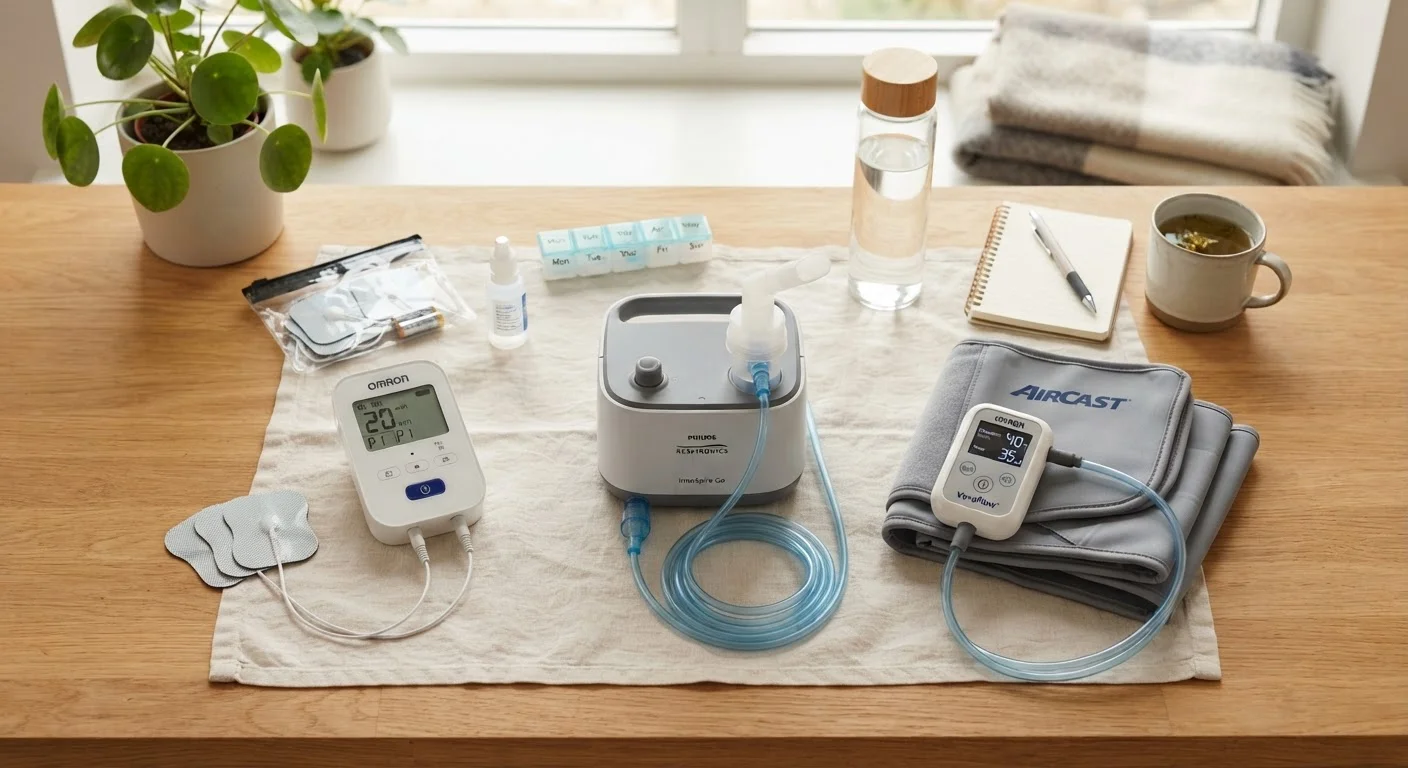
Key Takeaways
- Home recovery devices support pain relief, respiratory function, and circulation — they do not replace clinical diagnosis or treatment.
- TENS units work by delivering low-level electrical pulses to interrupt pain signal transmission along nerve pathways.
- Nebulizers convert liquid medication into a fine mist, making them useful for managing respiratory conditions at home.
- Compression devices aid circulation and are commonly used after surgery or for chronic venous conditions.
- All therapeutic devices should be used according to clinician guidance and manufacturer instructions.
- Older adults and children have unique safety considerations — always consult a qualified professional before use.
What Home Recovery Devices Are — and Aren't
Home recovery devices are FDA-regulated therapeutic tools intended to relieve symptoms, support rehabilitation, or maintain physiological function outside a clinical setting. They differ importantly from diagnostic devices — which measure and detect — by actively delivering a therapeutic effect to the body. For a contrast, see our overview of diagnostic tools and the beginner's guide to home health monitoring devices.
These devices do not diagnose conditions, prescribe treatment, or replace professional medical care. They are most effective when integrated into a recovery plan developed with a physician or physical therapist. Understanding what each device does — and its boundaries — helps families use them safely and get genuine benefit.
These Devices Do Not Replace Diagnosis
Home therapeutic devices are designed to support symptom management and recovery — not to identify the underlying cause of pain, breathing difficulty, or swelling. Using a device without understanding your diagnosis can mask a condition that requires timely clinical attention. Always obtain a professional evaluation before relying on any home device for ongoing symptom management.
Pain Management Devices: TENS and Ultrasound Therapy
TENS units (Transcutaneous Electrical Nerve Stimulation) deliver low-voltage electrical pulses through electrode pads placed on the skin. The pulses are thought to interfere with pain signal transmission along nerve pathways — a mechanism supported by the gate control theory of pain — and may also stimulate the release of endorphins, the body's natural pain-modulating chemicals. TENS units are commonly used for musculoskeletal pain, including lower back pain and joint discomfort.
Therapeutic ultrasound devices use sound waves at frequencies above human hearing (typically 1–3 MHz) to generate gentle heat within soft tissues. This is believed to increase local blood flow and tissue flexibility, supporting rehabilitation of muscle injuries and chronic pain conditions. Home-use ultrasound devices are lower-powered than clinical versions and should only be used as directed by a clinician.
When using a TENS unit for the first time, start at the lowest intensity setting and increase gradually — the sensation should feel like a gentle tingling, never a sharp shock or muscle contraction.
Starting too high can cause muscle spasm or skin irritation, and an uncomfortable experience often leads to abandonment of a genuinely useful therapy.
After each nebulizer treatment, disassemble the medication cup, mouthpiece, and tubing and rinse with sterile or distilled water — then allow all parts to air dry completely before the next use.
Residual moisture is a breeding ground for mold and bacteria, which can be inhaled directly into the lungs during the next treatment.
For a broader inventory of these tools, see eight therapeutic devices commonly recommended in home recovery plans.
Respiratory Support Devices: Nebulizers and More
A nebulizer converts liquid medication — typically bronchodilators or corticosteroids prescribed by a physician — into a fine aerosol mist that can be inhaled directly into the lungs. This delivery method is particularly effective for people who have difficulty using pressurized inhalers, including young children and older adults. Nebulizers are commonly used in the home management of asthma and chronic obstructive pulmonary disease (COPD).
There are two main types of home nebulizers: jet nebulizers, which use compressed air, and ultrasonic nebulizers, which use high-frequency vibrations. Both require careful cleaning after each use to prevent bacterial contamination. Always use only the medications and concentrations specified in the prescriber's instructions.
Note: Nebulizers are prescription-adjacent devices — the device itself may not require a prescription, but the medications used in them typically do. Never use a nebulizer with over-the-counter solutions not approved by a clinician.
Compression and Circulation Devices
Compression garments and pneumatic compression devices apply graduated external pressure to the limbs, supporting venous blood return toward the heart. Static compression garments (sleeves and stockings) are widely used for chronic venous insufficiency, lymphedema management, and post-surgical swelling. Pneumatic compression devices — which use an air pump to inflate and deflate sleeves in cycles — are sometimes prescribed for more significant circulatory conditions.
Compression levels are measured in millimeters of mercury (mmHg). Over-the-counter garments typically fall in the 15–20 mmHg range, while medical-grade compression (20 mmHg and above) generally requires clinical measurement and guidance. Applying compression that is too tight or using it in conditions such as peripheral arterial disease can cause harm — always confirm the appropriate compression level with a healthcare provider.
Compression Devices Require Clinical Guidance
Using compression garments or pneumatic devices in the presence of peripheral arterial disease (PAD), active infection, or deep vein thrombosis (DVT) can worsen these conditions and cause serious harm. Before using any compression device, confirm with your healthcare provider that arterial circulation is adequate and that compression is appropriate for your specific condition.
Families supporting older adults with these devices should review therapeutic devices for older adults: key considerations for safe home use for additional guidance.
Using Devices Safely as a Family
Safe home device use depends on three core principles: correct indication (the device is appropriate for the condition), correct technique (it is used as instructed), and correct maintenance (it is cleaned and stored properly). Families should retain and read the Instructions for Use provided with every device.
- Check that the device carries FDA clearance or approval, indicated by a 510(k) number or PMA designation on the label or manufacturer's website.
- Never use a device on broken skin, over implanted electronic devices (such as pacemakers), or in areas with reduced sensation unless specifically approved by a clinician.
- Follow the recommended session duration and frequency — more is not always better, and overuse can cause adverse effects.
- Store devices according to temperature and humidity guidelines to preserve accuracy and function.
For an accessible glossary of terms you'll encounter on device labels and documentation, visit key terms on every at-home diagnostic device. Our home therapeutic devices family reference guide also provides a useful quick-reference overview.
When to Involve a Healthcare Professional
Home recovery devices are supportive tools, not substitutes for professional evaluation. A healthcare provider should be involved when:
- Symptoms are new, severe, or unexplained — a device should never be used to defer diagnosis of a serious condition.
- The device is intended for a child, pregnant person, or older adult with multiple health conditions.
- Pain or symptoms worsen during or after device use.
- You are uncertain whether a specific device or setting is appropriate for your situation.
Families with an interest in broader physical wellness goals can explore resources through the physical wellness hub. This article is general health information and does not constitute medical advice. Always consult a qualified healthcare professional before beginning any new therapeutic device regimen.
This article is for informational purposes only and is not a substitute for professional medical advice, diagnosis, or treatment. Always seek the guidance of a qualified healthcare provider with any questions you may have regarding a medical condition or device use.