

| TENS Unit — Primary Use | Temporary relief of localized pain; muscle stimulation (FDA Consumer Information on TENS Devices) |
| Nebulizer — Primary Use | Delivering inhaled medication for respiratory conditions (American Lung Association) |
| CPAP Machine — Primary Use | Managing obstructive sleep apnea during sleep (American Academy of Sleep Medicine) |
| Compression Pump — Primary Use | Improving circulation; reducing limb swelling (edema) (National Lymphedema Network) |
| Ultrasound Therapy — Primary Use | Deep tissue heating to support soft-tissue recovery (American Physical Therapy Association) |
| Paraffin Wax Bath — Primary Use | Moist heat therapy for joint stiffness and arthritis (Arthritis Foundation) |
| Regulatory Oversight | Most home therapeutic devices are regulated by the FDA as Class II medical devices (U.S. Food and Drug Administration) |
| Prescription Requirement | Some devices (e.g., CPAP) require a prescription; others (e.g., TENS) are available OTC with clinician guidance recommended (FDA Device Classification Database) |
What Are Home Therapeutic Devices?
Home therapeutic devices are FDA-regulated tools designed to deliver a specific therapy — such as pain relief, airway support, or muscle rehabilitation — outside a clinical setting. Unlike diagnostic tools, which measure or detect health conditions, therapeutic devices are intended to actively support or treat a health concern under a care plan.
Most home therapeutic devices fall into one of three broad categories: pain management (such as TENS units and ultrasound therapy tools), respiratory support (such as nebulizers and CPAP machines), and physical rehabilitation (such as compression pumps and paraffin wax baths). Families often bring these devices home following a healthcare provider's recommendation or as part of a formal discharge plan.
TENS Unit
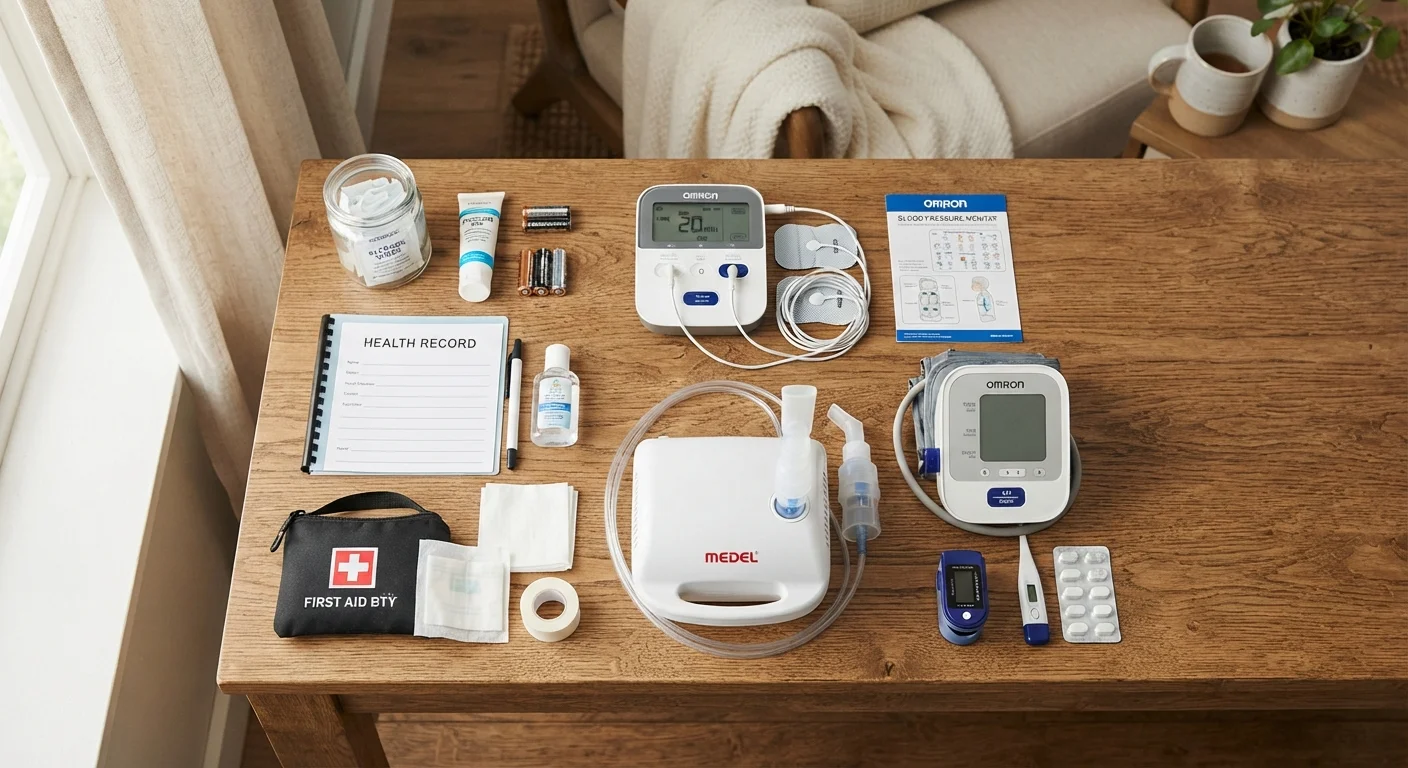
Transcutaneous Electrical Nerve Stimulation (TENS) unit. A small, battery-powered device that delivers mild electrical impulses through electrode pads placed on the skin, commonly used for temporary pain relief. It does not cure underlying conditions but may reduce pain signal transmission.
Nebulizer
A device that converts liquid medication into a fine mist inhaled directly into the lungs. Nebulizers are commonly used to manage asthma, COPD, and other respiratory conditions, delivering medication more efficiently than some oral routes for certain patients.
Ultrasound Therapy Device
A therapeutic tool that uses high-frequency sound waves to generate gentle heat within soft tissues. Clinically, it is used to support recovery from musculoskeletal injuries; home-use versions are lower-intensity and intended only for trained or instructed users.
Compression Pump
Also called a pneumatic compression device, this tool uses inflatable sleeves to apply sequential pressure to limbs, supporting circulation and reducing swelling. It is often recommended following surgery or for conditions affecting lymphatic drainage.
CPAP Machine
Continuous Positive Airway Pressure (CPAP) machine. A respiratory device that delivers a steady stream of pressurized air through a mask to keep the airway open during sleep, primarily prescribed for obstructive sleep apnea.
Paraffin Wax Bath
A device that melts paraffin wax to a therapeutic temperature, allowing hands, feet, or joints to be coated for moist heat therapy. Commonly used to relieve stiffness and discomfort associated with arthritis or related conditions.
This article is for general informational purposes only and does not constitute medical advice. Always consult a qualified healthcare professional before starting, stopping, or changing any home therapy.
Quick Reference: Common Devices and Their Primary Uses
The table below summarizes frequently used home therapeutic devices, their primary mechanism, and the conditions for which they are commonly recommended. This is a general educational reference — suitability for individual use should always be confirmed by a clinician.
| TENS Unit — Primary Use | Temporary relief of localized pain; muscle stimulation (FDA Consumer Information on TENS Devices) |
| Nebulizer — Primary Use | Delivering inhaled medication for respiratory conditions (American Lung Association) |
| CPAP Machine — Primary Use | Managing obstructive sleep apnea during sleep (American Academy of Sleep Medicine) |
| Compression Pump — Primary Use | Improving circulation; reducing limb swelling (edema) (National Lymphedema Network) |
| Ultrasound Therapy — Primary Use | Deep tissue heating to support soft-tissue recovery (American Physical Therapy Association) |
| Paraffin Wax Bath — Primary Use | Moist heat therapy for joint stiffness and arthritis (Arthritis Foundation) |
| Regulatory Oversight | Most home therapeutic devices are regulated by the FDA as Class II medical devices (U.S. Food and Drug Administration) |
| Prescription Requirement | Some devices (e.g., CPAP) require a prescription; others (e.g., TENS) are available OTC with clinician guidance recommended (FDA Device Classification Database) |
For a deeper look at how these tools fit into structured recovery, see The Complete Guide to Home Physical Recovery Devices and Eight Therapeutic Devices Commonly Recommended in Home Recovery Plans.
Using Therapeutic Devices Safely at Home
Safe and effective use of home therapeutic devices depends on three core principles: proper setup, consistent maintenance, and ongoing communication with a healthcare provider. Before using any device, read the manufacturer's instructions fully and ensure the device is appropriate for the intended user — considerations differ for children, older adults, and individuals with chronic conditions or implanted medical hardware such as pacemakers.
Regular cleaning and inspection matter as much as correct operation. Electrode pads on TENS units degrade over time, nebulizer components can harbor bacteria if not cleaned properly, and tubing on respiratory devices should be checked for cracks or blockages. Our Home Therapeutic Device Maintenance Checklist provides a structured approach to keeping equipment in working order.
If you are unsure whether a device is appropriate for your situation, talking to your doctor before starting home therapy is always the right first step. Discuss your diagnosis, goals, and any relevant health history so recommendations can be properly tailored.
Special Populations: Ask Before You Start
Therapeutic devices carry specific contraindications for certain groups. TENS units are generally not recommended for individuals with pacemakers or during pregnancy without direct medical guidance. CPAP settings are prescribed individually and should not be adjusted without clinician oversight. If the intended user is a child, an older adult, or someone managing a chronic condition, consult a healthcare professional before beginning any home device therapy.